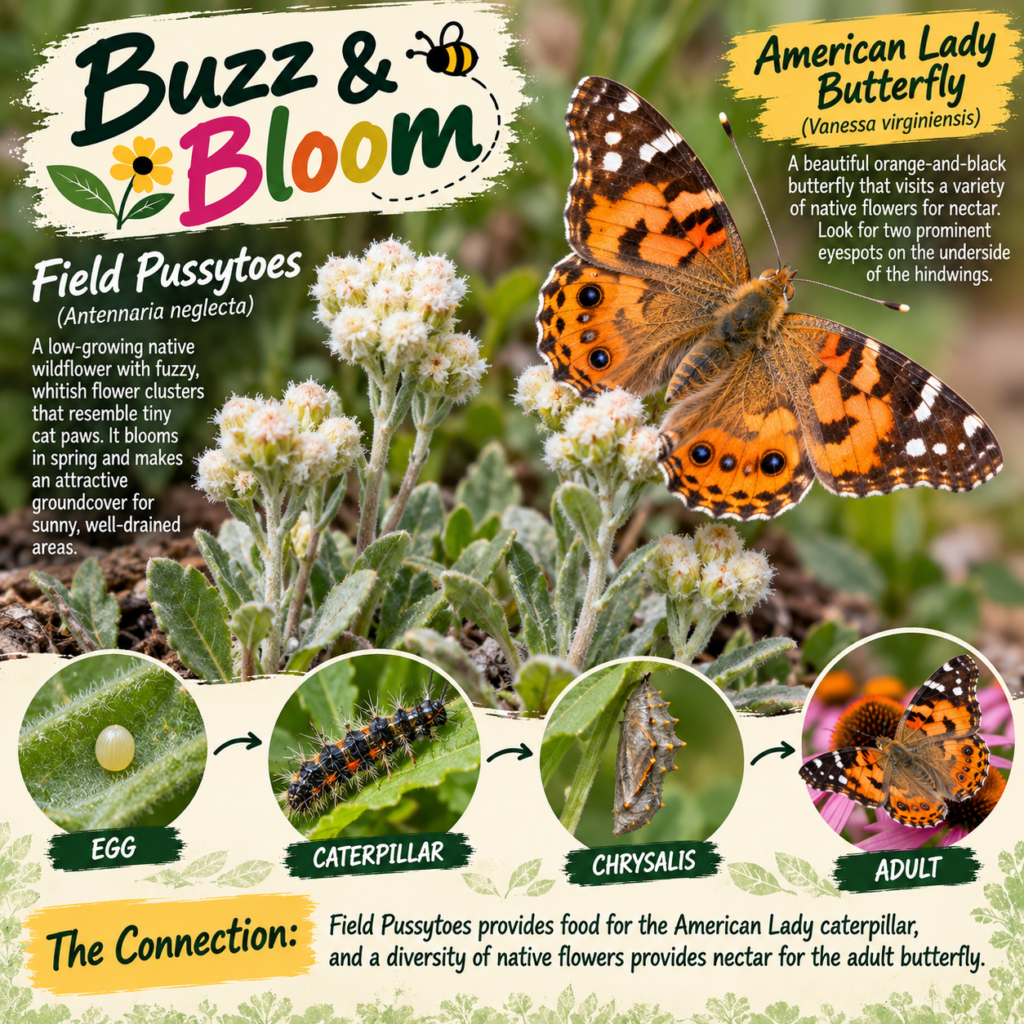
Buzz & Bloom
🌼🐝 Where Flowers and Pollinators Meet! 🦋🌸 A blooming garden is more than a beautiful space—it’s a busy habitat! Native flowers provide nectar and pollen for bees, butterflies, moths, beetles, […]
🖤🐝 Pollinator Spotlight: Great Black Wasp (Sphex pensylvanicus) Big, black, and a little intimidating at first glance, the Great Black Wasp (Sphex pensylvanicus) is actually a fascinating native pollinator and
🌿 Native Plant Highlight: White-Tinged Sedge (Carex albicans) 🌿 Looking for a native plant that brings texture and year-round interest to a shady garden? White-tinged sedge (Carex albicans) is a
Think you know your native plants and pollinators? Put your knowledge to the test! Drop your answers in the comments, and we’ll post the answers tomorrow. 1️⃣ Which native wildflower
Every bird, bee, butterfly, frog, and fox needs a place to call home. Habitats provide the food, water, shelter, and space wildlife needs to survive and thrive. When native habitats
How many native wildflowers can you discover on your next walk? Your challenge is simple:🌿 Find 5 native flowering plants in your yard, neighborhood, local park, or nature preserve.📸 Take
🌿 Habitat Fragmentation: Why It Matters & What You Can Do As cities grow and roads expand, natural habitats are often broken into smaller, isolated patches—a process called habitat fragmentation.
🐝 Georgia Native Bee Spotlight Meet one of Georgia’s most important pollinators: the southeastern blueberry bee (Habropoda laboriosa). This fuzzy, fast-flying native bee is a spring specialist—and it has a
I don’t have any events this week. I am prepping for next week’s events and starting prep for June’s events. I am working up at Cherokee Veteran’s Park this week
Extinction of 40% of the world’s insect population over the next few decades in inching closer. Habitat loss, pollution, and biologic factors continue to contribute to insect’s demise. Remediation technologies,
Koalas officially named endangered in eastern Australia due to drought, bush fires, and development. Scientists estimate without intervention koala are at risk of extinction by 2050. Climate-driven weather events, development,