What happens when neighbors stop thinking of their yards as separate spaces and start seeing them as pieces of one larger habitat?
In Princeton, New Jersey, a small group of neighbors is doing exactly that. By replacing portions of traditional lawn with native and pollinator-friendly plants, their individual gardens are beginning to function together as a native plant corridor. (Sustainable Princeton)
🦋 And even small yards can make a difference. One family reports seeing more birds, butterflies, and hummingbirds after transitioning their landscape. Their plantings include milkweed, bee balm, coneflowers, buttonbush, winterberry, sumac, jewelweed, and redbud. (Sustainable Princeton)
The neighbors are also learning from one another. Ideas for managing rainwater have traveled from yard to yard, while other residents are removing invasive plants, composting leaves and food waste, leaving plants standing through fall and winter, avoiding pesticides, and gradually replacing lawn with habitat. (Sustainable Princeton)
🌱 That’s where the idea becomes powerful.
One native garden may seem small. But add the yard next door…and the yard across the street…and another down the block.
Suddenly, those individual patches begin creating a corridor where wildlife can find food, shelter, and places to reproduce as they move through the neighborhood.
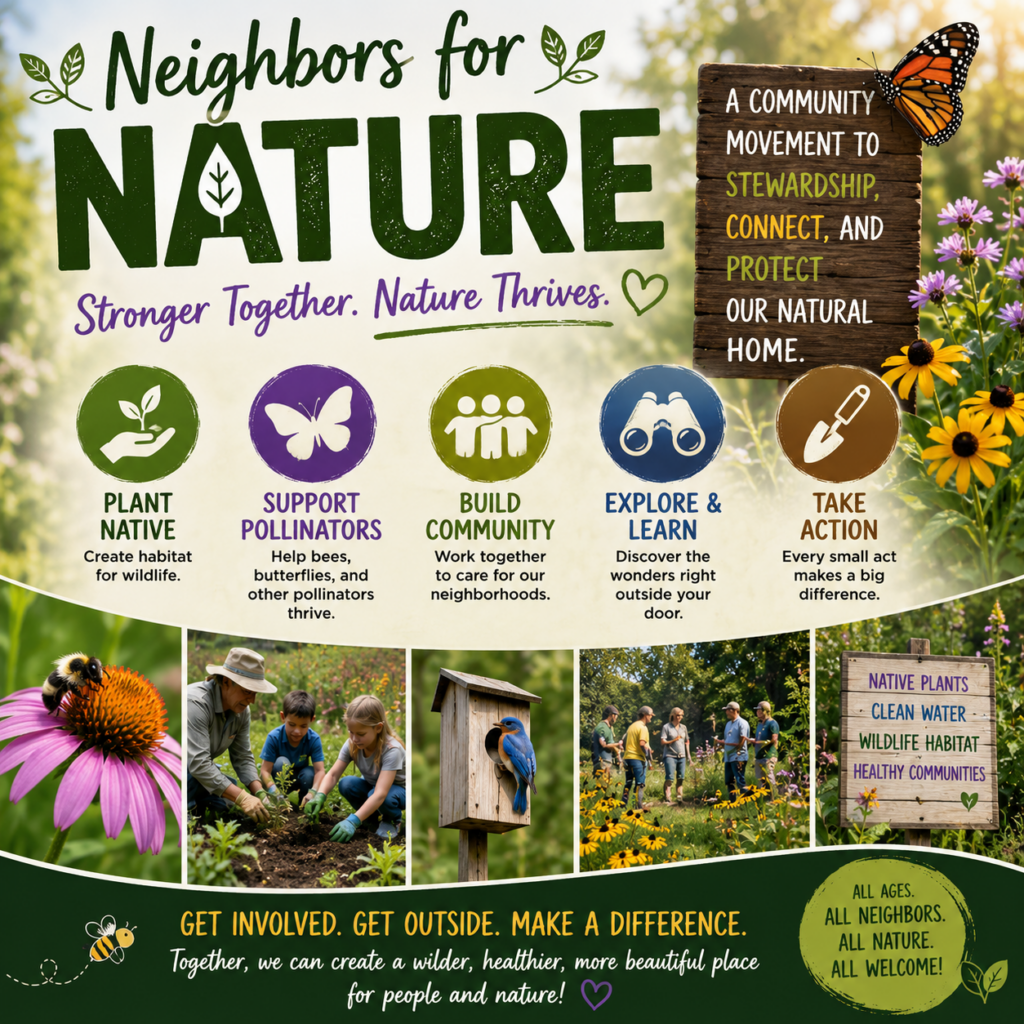
💚 Neighbors for Nature Challenge: Could your neighborhood create its own native plant corridor? Start with one native plant, share what you learn with a neighbor, and imagine what could happen if several homes joined in.
Your yard doesn’t have to work alone. Connect it to something bigger. 🌎🦋🐝
Read “Princeton Neighbors Create a Native Plant Corridor” from Sustainable Princeton
#NeighborsForNature #NatureOnTheBrink #NativePlantCorridor #NativePlants #PollinatorHabitat #WildlifeHabitat #PlantNative #HabitatAtHome #CommunityConservation #NeighborhoodHabitat