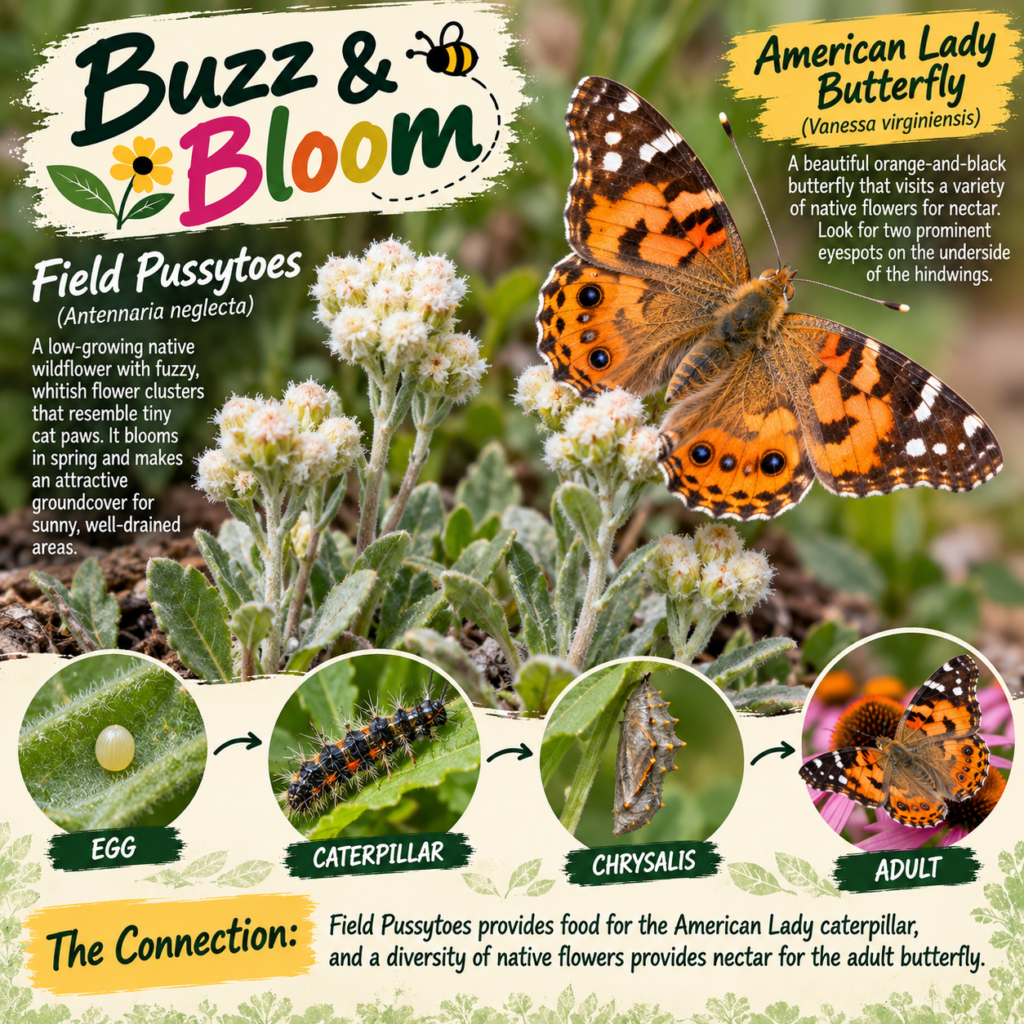
Sometimes one of the most important plants in a butterfly garden is also one of the smallest! This week’s Buzz & Bloom celebrates the connection between Field Pussytoes (Antennaria neglecta) and the beautiful American Lady butterfly (Vanessa virginiensis).
🌿 THE BLOOM: Field Pussytoes
This low-growing native wildflower gets its charming name from clusters of fuzzy, whitish flowers that resemble tiny cat paws. Blooming in spring, Field Pussytoes makes an attractive native groundcover for sunny, well-drained areas.
But its greatest value may be something you don’t notice at first glance…
🐛 It’s a host plant!
🦋 THE BUZZ: American Lady Butterfly
The American Lady uses pussytoes and other suitable plants as food for its caterpillars. Look closely and you may even discover a caterpillar hiding within leaves it has pulled together with silk to create a protective shelter.
Adult American Ladies are striking orange-and-black butterflies. One helpful identification clue can be found on the underside of the hindwings: two prominent eyespots.
🌸 The connection:
Field Pussytoes → Caterpillar → American Lady Butterfly
That’s why creating a butterfly garden involves more than planting flowers for adult butterflies. Nectar plants feed the adults. Host plants feed the next generation.
Imagine a garden with Field Pussytoes growing beneath taller native wildflowers, while coneflowers, asters, goldenrods, and other native blooms provide nectar throughout the season. Together, they create layers of habitat supporting butterflies through multiple stages of their lives.
💚 Plant the bloom. Feed the caterpillar. Welcome the butterfly.
Sometimes a small patch of native plants can make a very big difference.
#BuzzAndBloom #NatureOnTheBrink #FieldPussytoes #AmericanLady #AntennariaNeglecta #VanessaVirginiensis #NativePlants #HostPlants #ButterflyGarden #PollinatorHabitat #GardenForWildlife #PlantNative