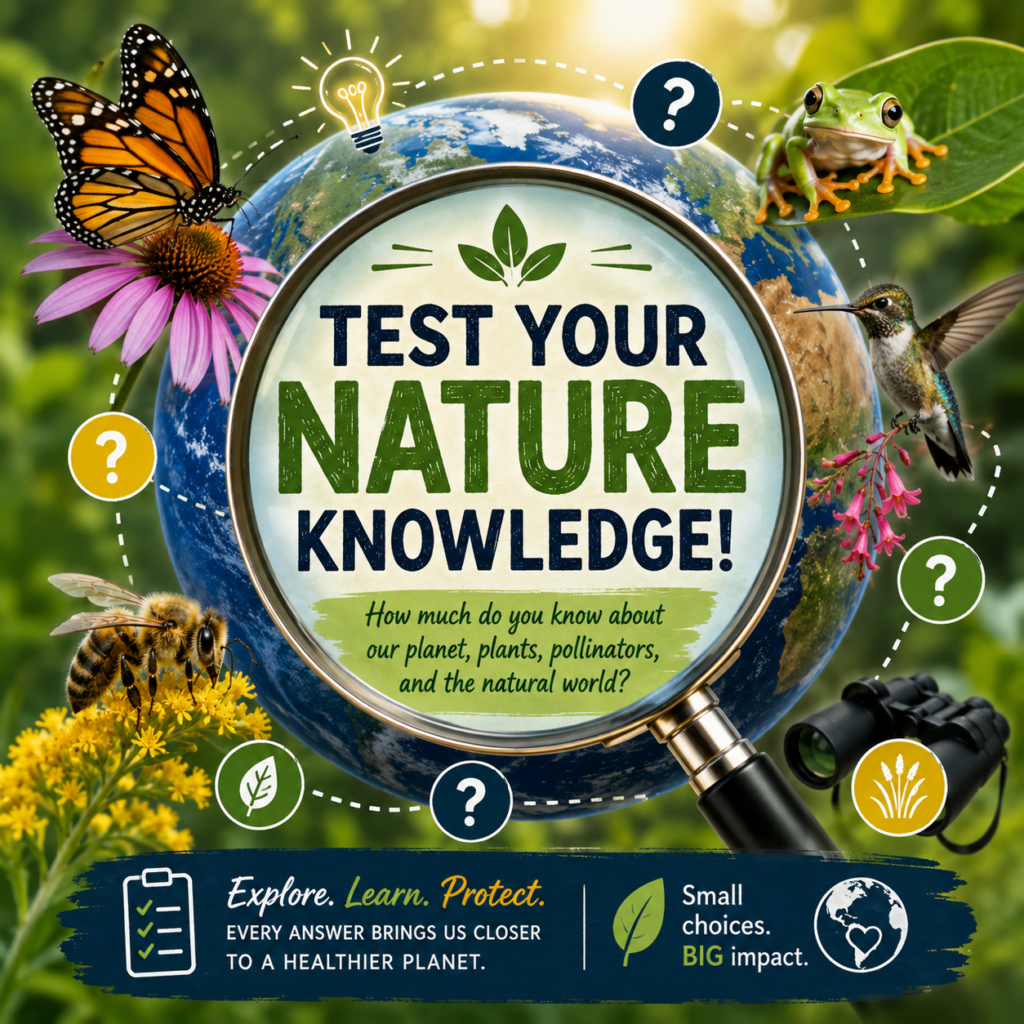
How much did you learn from this week’s Nature on the Brink posts? Test your nature knowledge with these six questions about New Jersey tea, the Mottled Duskywing, and the important connection between native plants and wildlife.
1. New Jersey tea (Ceanothus americanus) is best known for:
A. Its bright red berries
B. Clusters of small, fragrant white flowers
C. Its tall tree-like growth
D. Its bright purple blooms
2. Which butterfly uses New Jersey tea as a larval host plant?
A. Monarch
B. Eastern Tiger Swallowtail
C. Mottled Duskywing
D. Red Admiral
3. What do Mottled Duskywing caterpillars feed on?
A. Grass blades
B. New Jersey tea leaves
C. Oak leaves
D. Milkweed leaves
4. In addition to being a host plant, New Jersey tea provides:
A. Only shade for wildlife
B. Nectar and pollen for many pollinators
C. Nuts for squirrels
D. A place for birds to build nests (but no insect benefits)
5. Why is it important to include native host plants like New Jersey tea in our landscapes?
A. They make the yard look tidy
B. They provide a place for butterflies to lay eggs and for caterpillars to grow
C. They keep deer away
D. They stay green all winter
6. True or False? Planting native shrubs like New Jersey tea helps support the entire life cycle of butterflies by providing both nectar for adults and food for caterpillars.
A. True
B. False
How did you do? Post your answers in the comments!
Native plants do more than add beauty to our landscapes. They provide food, shelter, and host relationships that help wildlife complete their life cycles. Learn. Explore. Make a difference.
#TestYourNatureKnowledge #NatureOnTheBrink #NewJerseyTea #MottledDuskywing #NativePlants #HostPlants #PollinatorHabitat #ButterflyGarden #PlantNative #HabitatAtHome