🌙🦇 HABITAT UPDATE: When the Sun Goes Down, the Habitat Wakes Up
When we think about wildlife habitat, we often picture what happens during the day—but after sunset, an entirely different community comes to life.
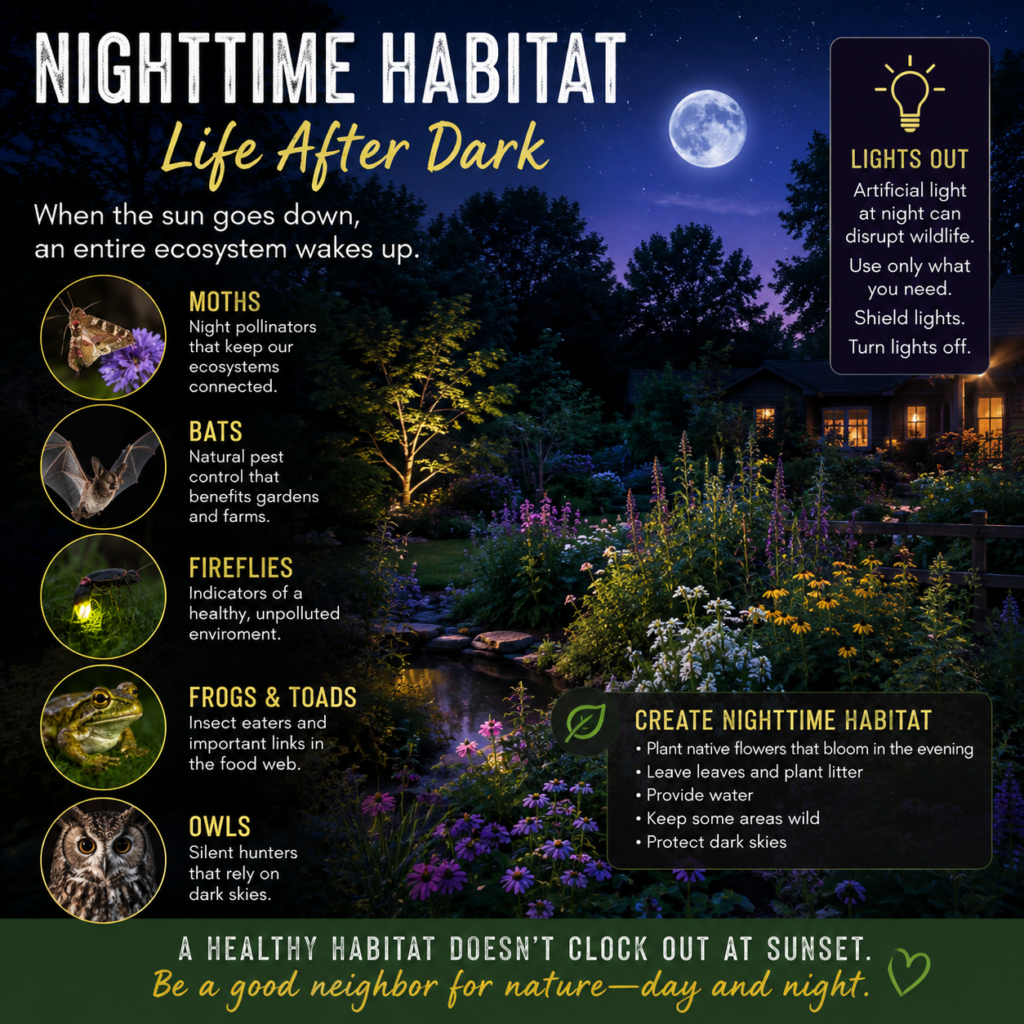
🦋 Moths visit night-blooming flowers and serve as important nighttime pollinators.
🦇 Bats emerge to hunt flying insects, including many agricultural and garden pests.
✨ Fireflies flash across lawns and woodland edges looking for mates. Their larvae spend much of their lives near the ground, where leaf litter and moist soil provide important habitat.
🐸 Frogs and toads become active, feeding on insects and filling summer evenings with their calls.
🦉 Owls quietly patrol the darkness in search of prey.
But nighttime wildlife faces a growing challenge: artificial light at night. Bright outdoor lighting can disrupt natural behaviors, interfere with navigation and reproduction, and attract insects away from the places where they normally feed and reproduce.
🌿 Make your yard friendlier after dark:
Turn off unnecessary outdoor lights, use motion sensors or timers when lighting is needed, and direct lights downward rather than toward the sky. Leave some leaf litter, native plants, shrubs, and natural areas where nocturnal wildlife can feed, hide, and reproduce.
And remember—when you plant native flowers, grasses, shrubs, and trees, you’re not just creating daytime habitat.
🌙 A healthy habitat doesn’t clock out at sunset.
Tonight, step outside after dark, listen for the frogs, watch for bats overhead, and look for the flicker of fireflies. You may discover a whole ecosystem that has been there all along.
#HabitatUpdate #NighttimeHabitat #NocturnalWildlife #DarkSkies #Fireflies #Moths #Bats #NativePlants #WildlifeHabitat #HabitatAtHome #NatureOnTheBrink