When we admire the brilliant red berries of Winterberry in November, it’s easy to forget that their story began months earlier — with tiny spring flowers and the busy insects that visited them!
Meet Winterberry (Ilex verticillata), a beautiful native deciduous holly that demonstrates one of nature’s most remarkable connections: the relationship between spring pollinators and winter wildlife.
Those colorful berries that nourish birds during the colder months wouldn’t exist without successful pollination earlier in the year.
And native bees play an important part in making that happen!
🌸 It All Begins With a Flower
In late spring and early summer, Winterberry produces clusters of small, greenish-white flowers.
They may not be as showy as the flowers of native azaleas or coneflowers, but these modest blooms offer valuable resources to visiting insects.
Native bees and other flower visitors collect nectar or pollen as they move among the blossoms.
When pollen is transferred from a male Winterberry flower to a receptive female flower, fertilization can occur, allowing berries to develop.
What begins as a tiny flower can eventually become part of a winter feast for wildlife!
🐝 Meet Winterberry’s Spring Visitors
Winterberry flowers attract a variety of insects, including:
🐝 Native Bumble Bees (Bombus species) — These fuzzy, hardworking bees visit many kinds of native flowers while collecting nectar and pollen.
🐝 Sweat Bees (Halictidae) — Many of these small native bees visit open flowers, gathering pollen and nectar.
🐝 Mining Bees (Andrena species) — Ground-nesting native bees that forage on spring flowers, with some species active during Winterberry’s flowering period.
🪰 Flower Flies (Syrphidae) — Often mistaken for bees, these flies visit flowers for nectar and pollen and can contribute to pollination.
🐝 Other Native Solitary Bees — Depending on the habitat and flowering conditions, additional native bees may visit Winterberry blossoms.
Not every flower visitor is equally effective at transferring pollen, but a diverse community of insects helps support pollination throughout native plant habitats.
🌿 Did You Know? Winterberry Needs Two Kinds of Plants!
Winterberry is dioecious, meaning individual plants produce either male flowers or female flowers.
🌼 Male plants produce pollen-bearing flowers.
🌸 Female plants produce flowers that can develop into berries after successful pollination.
Because pollen must move between separate plants, insect visitors play an important role in Winterberry reproduction.
A female Winterberry may bloom beautifully but produce few or no berries if a compatible male plant isn’t growing nearby.
💡 Gardening Tip: When planting Winterberry, include male and female plants with overlapping flowering periods. One compatible male can often pollinate several female shrubs.
🍒 From Pollination to a Winter Feast
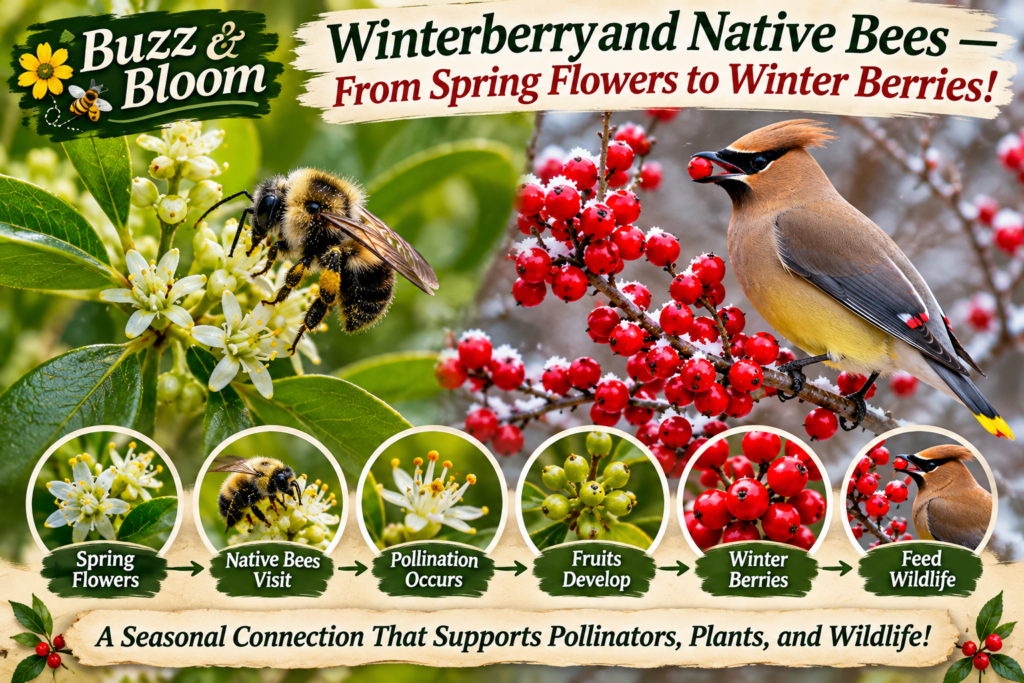
Let’s follow Winterberry’s remarkable journey through the seasons!
🌸 Spring: Flowers Open
Small Winterberry blossoms provide nectar and pollen resources for visiting insects.
🐝 Late Spring to Early Summer: Pollinators Get to Work
Bees and other insects move between flowers, transferring pollen from male plants to female plants.
🌱 Summer: Fruits Develop
Successfully pollinated female flowers begin developing small green fruits.
🍁 Autumn: Berries Ripen
As the leaves turn yellow and fall, the fruits become bright red, creating Winterberry’s spectacular seasonal display.
❄️ Winter: Birds Enjoy the Harvest
American Robins, Cedar Waxwings, Eastern Bluebirds, and other fruit-eating birds may feed on the berries.
These birds can also disperse Winterberry seeds into new locations.
One native shrub. Multiple seasons. An entire network of ecological connections!
🐦 The Connection Between Bees and Birds
Imagine a native bee visiting a Winterberry flower in June.
As it moves among the blossoms, it may transfer pollen that helps a female plant produce fruit.
Months later, a Cedar Waxwing arrives and swallows one of those berries.
The bird receives food, while the plant gains an opportunity to disperse its seeds.
That single berry represents a connection between a plant, an insect, and a bird — separated by months but linked through the same ecological process.
This is what makes native plant communities so fascinating!
Their relationships extend across species, habitats, and seasons.
🌎 Why Native Bee Conservation Matters Year-Round
When we think about helping pollinators, we often focus on summer flowers.
But native bees need suitable habitat throughout their entire life cycles.
Many native bees spend much of the year developing or resting in underground nests, hollow stems, or other protected nesting sites.
Their survival depends on more than the flowers available during a few warm months.
They also need:
🌼 Season-long floral resources — Native plants blooming from early spring through autumn.
🌱 Safe nesting habitat — Undisturbed soil, appropriate hollow stems, and natural cavities.
🍂 Overwintering protection — Leaf litter, standing stems, and other natural habitat features.
💧 Healthy landscapes — Suitable moisture, shelter, and freedom from unnecessary pesticide exposure.
🌿 Native plant diversity — Different flowers supporting different pollinators throughout the growing season.
By protecting these resources, we help sustain the insects responsible for many of the fruits and seeds that wildlife relies upon.
🏡 Five Ways to Support Native Bees and Winter Wildlife
1. Plant Winterberry and Other Native Berry-Producing Shrubs.
Choose regionally appropriate plants that provide spring flowers and seasonal fruits. Winterberry is especially well suited to moist, acidic soils.
2. Provide Flowers Throughout the Growing Season.
Combine early-blooming native trees and shrubs with summer and autumn wildflowers to support pollinators across the seasons.
3. Protect Native Bee Nesting Sites.
Leave some well-drained, undisturbed bare soil for ground-nesting bees, and retain suitable standing stems for cavity-nesting species.
4. Reduce Pesticide Use.
Avoid unnecessary insecticide applications, especially on flowering plants visited by bees and other beneficial insects.
5. Leave the Winter Garden Standing.
Keep fallen leaves in garden beds where practical, preserve native plant stems, and leave berries for birds.
A garden that supports insects in spring and summer can also provide food and shelter for wildlife during winter.
🔍 Your Buzz & Bloom Nature Challenge: Follow a Berry Back to Its Flower!
This week, look for Winterberry or another native fruit-producing tree or shrub in your neighborhood.
Observe its berries and ask yourself:
🍒 What did this fruit look like when it was a flower?
🐝 Which insects might have visited those flowers?
🌸 Did the plant need pollen from another individual?
🐦 Which birds might eat the fruit?
🌱 How might those birds help disperse the seeds?
Try creating a simple nature journal illustration showing the connection:
Spring Flower → Native Bee → Pollination → Developing Fruit → Winter Berry → Hungry Bird → Seed Dispersal
It’s a wonderful activity for children, families, classrooms, and budding naturalists!
💚 The Bigger Picture: Nature’s Living Tapestry
A Winterberry shrub covered in brilliant red fruits is a beautiful sight.
But look a little closer, and you’ll discover a much bigger story.
Those berries connect the work of spring pollinators with the survival of winter wildlife.
Native bees help plants reproduce. Plants produce fruits. Birds consume those fruits and disperse seeds. New plants can establish and eventually provide resources for future generations of insects and wildlife.
Every connection matters.
By protecting native bees and planting native species, we’re not simply creating beautiful gardens.
We’re helping sustain the living tapestry of nature — one flower, one bee, and one berry at a time!
🌿 Nature on the Brink
Inspiring the Next Generation of Environmental Stewards
Explore. Discover. Connect. Protect.
#NatureOnTheBrink #BuzzAndBloom #Winterberry #IlexVerticillata #NativeBees #NativePollinators #Pollination #WinterBerries #CedarWaxwing #NativePlants #GeorgiaNativePlants #PollinatorGardens #WildlifeHabitat #NativePlantGardening #Biodiversity #PlantNative