When autumn leaves fall and winter settles across our landscapes, something remarkable happens in our native woodlands, forests, and neighborhood gardens.
The brilliant red berries of Winterberry, the blue berry-like cones of Eastern Red Cedar, and the colorful fruits of other native trees and shrubs become much more than seasonal decorations.
They become part of nature’s winter food supply!
For birds and other wildlife, native fruits can provide valuable energy when insects are less active and many other food sources are harder to find.
And the connection between native plants and wildlife extends far beyond a single winter meal.
🍒 A Winter Buffet Hidden in Plain Sight
Throughout spring and summer, many birds feed heavily on insects, particularly when raising their young.
But as temperatures drop and insect activity decreases, fruits become an increasingly important food source for many species.
Native berry-producing plants help support wildlife through this seasonal transition.
Some of our most recognizable winter visitors, including Cedar Waxwings, American Robins, Eastern Bluebirds, and Northern Mockingbirds, take advantage of available fruits.
Different plants produce and retain their fruits at different times, creating a changing menu throughout autumn and winter.
🌳 Meet the Native Plants Feeding Winter Wildlife
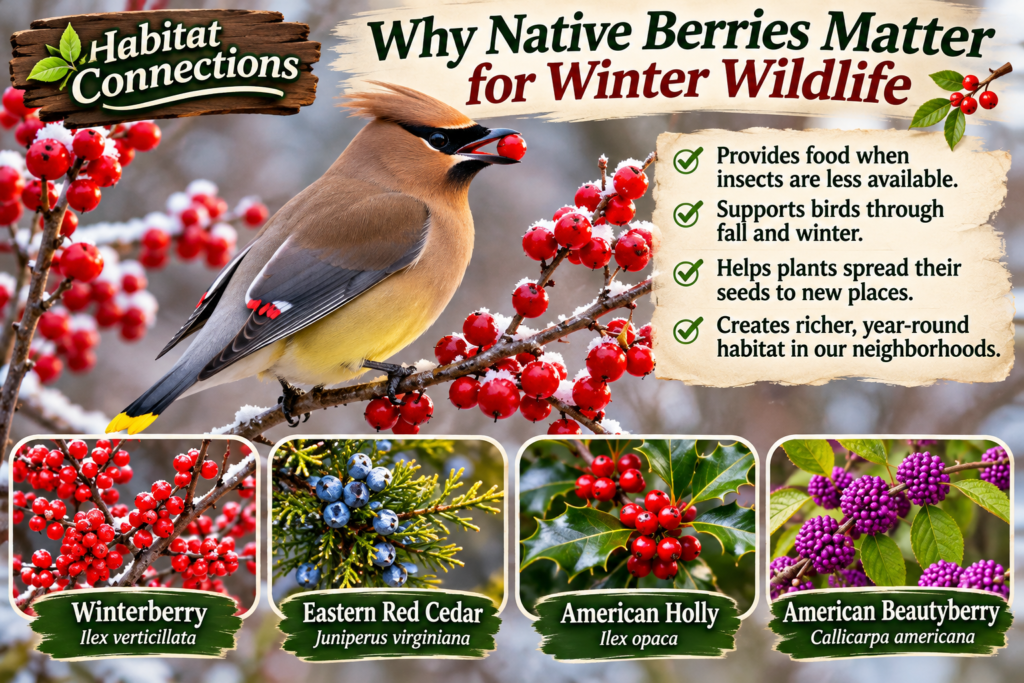
❤️ Winterberry (Ilex verticillata)
Unlike evergreen hollies, Winterberry loses its leaves in autumn, revealing clusters of brilliant red berries along its branches.
These fruits may persist into winter, providing food for birds such as American Robins and Cedar Waxwings.
Winterberry thrives in moist, acidic soils and makes a beautiful addition to rain gardens and woodland edges.
💙 Eastern Red Cedar (Juniperus virginiana)
Despite its name, Eastern Red Cedar is actually a native juniper!
Its blue, berry-like cones provide food for Cedar Waxwings and many other birds.
Its dense evergreen branches also offer valuable shelter and protection from winter weather.
❤️ American Holly (Ilex opaca)
This familiar native evergreen produces red fruits on female trees when a compatible male is nearby.
Its persistent foliage provides protective cover, while its fruits offer food for birds during the colder months.
💜 American Beautyberry (Callicarpa americana)
Known for its spectacular clusters of purple fruits, American Beautyberry provides seasonal food for birds and other wildlife.
Its fruits may remain into winter, although they are often consumed earlier.
❤️ Flowering Dogwood (Cornus florida)
Flowering Dogwood produces bright red fruits that are especially valuable to birds during late summer and autumn.
These fruits help migrating and resident birds build energy reserves before winter.
Although Dogwood fruits generally do not persist throughout the coldest months, they are an important part of the seasonal food supply.
🐦 The Cedar Waxwing Connection
This week’s Wildlife Spotlight features the beautiful Cedar Waxwing (Bombycilla cedrorum), a bird with a remarkable appetite for fruit!
Cedar Waxwings often travel in flocks, searching for trees and shrubs loaded with berries.
When they discover an abundant food source, an entire flock may descend upon it, feeding together before moving on.
But these birds provide something in return.
🌱 Birds: Nature’s Seed Dispersers
When birds swallow fruits, many seeds pass through their digestive systems and are deposited elsewhere.
This process helps plants spread into new areas.
Imagine a Cedar Waxwing feeding on berries in one woodland, then flying to another habitat and depositing seeds along the way.
Through this relationship, birds can help native plants reproduce and colonize suitable habitat.
It’s a beautiful example of mutualism — an ecological relationship in which both organisms can benefit.
The bird receives nourishment, while the plant gains an opportunity to disperse its seeds.
Of course, birds can also spread invasive plants, which is one reason choosing native species matters.
🍂 Why Habitat Diversity Matters
A healthy winter habitat provides more than berries.
Wildlife also needs:
🌲 Evergreen shelter — Dense branches that protect birds from cold winds and predators.
🌿 Native shrubs — Layered vegetation offering cover and resting places.
🌾 Standing seed heads — Native grasses and wildflowers providing food for seed-eating birds.
🍁 Leaf litter — Shelter for overwintering insects and other small organisms that support the food web.
🪵 Dead wood and snags — Habitat for insects and cavity-nesting wildlife.
💧 Water — Accessible water sources when natural supplies are limited or frozen.
Together, these elements create a more complete habitat that supports wildlife throughout the year.
🏡 Five Ways to Create a Winter Wildlife Buffet
1. Plant a Variety of Native Berry-Producing Species.
Choose plants that produce fruits at different times of the year. This helps extend food availability across seasons.
2. Include Both Evergreen and Deciduous Plants.
Combine fruit-producing shrubs with evergreen trees such as Eastern Red Cedar and American Holly to provide food and protective cover.
3. Preserve Existing Native Trees and Shrubs.
Before removing a shrub or small tree, identify it! That seemingly ordinary plant may be an important seasonal food source.
4. Replace Invasive Berry-Producing Plants.
Invasive species such as Chinese Privet and certain non-native honeysuckles may provide fruit, but they can displace native vegetation and reduce habitat quality. Replace them with appropriate native alternatives.
5. Leave Your Winter Garden Standing.
Allow native grasses, wildflower stems, fallen leaves, and natural plant debris to remain where practical. These materials support insects, birds, and other wildlife.
💡 Did You Know?
Not all berries are equally nutritious!
Fruits differ in their sugar, fat, water, and other nutrient content.
Some fruits are especially useful for providing energy during migration, while others remain available later in the season.
That’s why planting a diversity of native fruit-producing species is more beneficial than relying on just one.
🔍 Your Habitat Challenge: Discover Nature’s Winter Food Sources!
This week, explore your neighborhood, local park, or woodland trail.
Look for native trees and shrubs displaying berries or other fruits.
Ask yourself:
🍒 What colors are the fruits?
🐦 Are birds feeding on them?
🌳 Are the plants evergreen or deciduous?
🍂 What other food and shelter resources are nearby?
🌿 Could your neighborhood benefit from additional native berry-producing plants?
Take photographs, record your observations, and share your discoveries with family, friends, or neighbors.
Remember: Never eat unidentified berries, and leave wild fruits for the animals that depend on them.
💚 The Bigger Picture: Connecting Habitats Across Our Communities
A single Winterberry shrub can provide food for visiting birds.
A group of native berry-producing trees and shrubs can offer even more.
But imagine what happens when entire neighborhoods begin planting native species!
Gardens, parks, schoolyards, and woodland edges can become a connected network of seasonal food sources and shelter.
These habitat connections help wildlife move through increasingly developed landscapes, finding resources along the way.
From spring flowers supporting native bees to winter fruits nourishing Cedar Waxwings, every native plant contributes to the living tapestry of our ecosystems.
A wildlife-friendly garden doesn’t close for winter — it continues giving!
🌿 Nature on the Brink
Inspiring the Next Generation of Environmental Stewards
Explore. Discover. Connect. Protect.
#NatureOnTheBrink #HabitatConnections #NativeBerries #WinterWildlife #Winterberry #CedarWaxwing #NativePlants #GeorgiaNativePlants #BirdFriendlyGardens #WildlifeHabitat #EasternRedCedar #AmericanHolly #AmericanBeautyberry #SeedDispersal #HabitatConnectivity #PlantNative #Biodiversity