When we think about wildlife habitat, colorful wildflowers, shrubs, and trees often get all the attention.
But look a little closer at a patch of native grasses, and you’ll discover an entire habitat hiding among the blades.
🌾 SHELTER FROM THE ELEMENTS
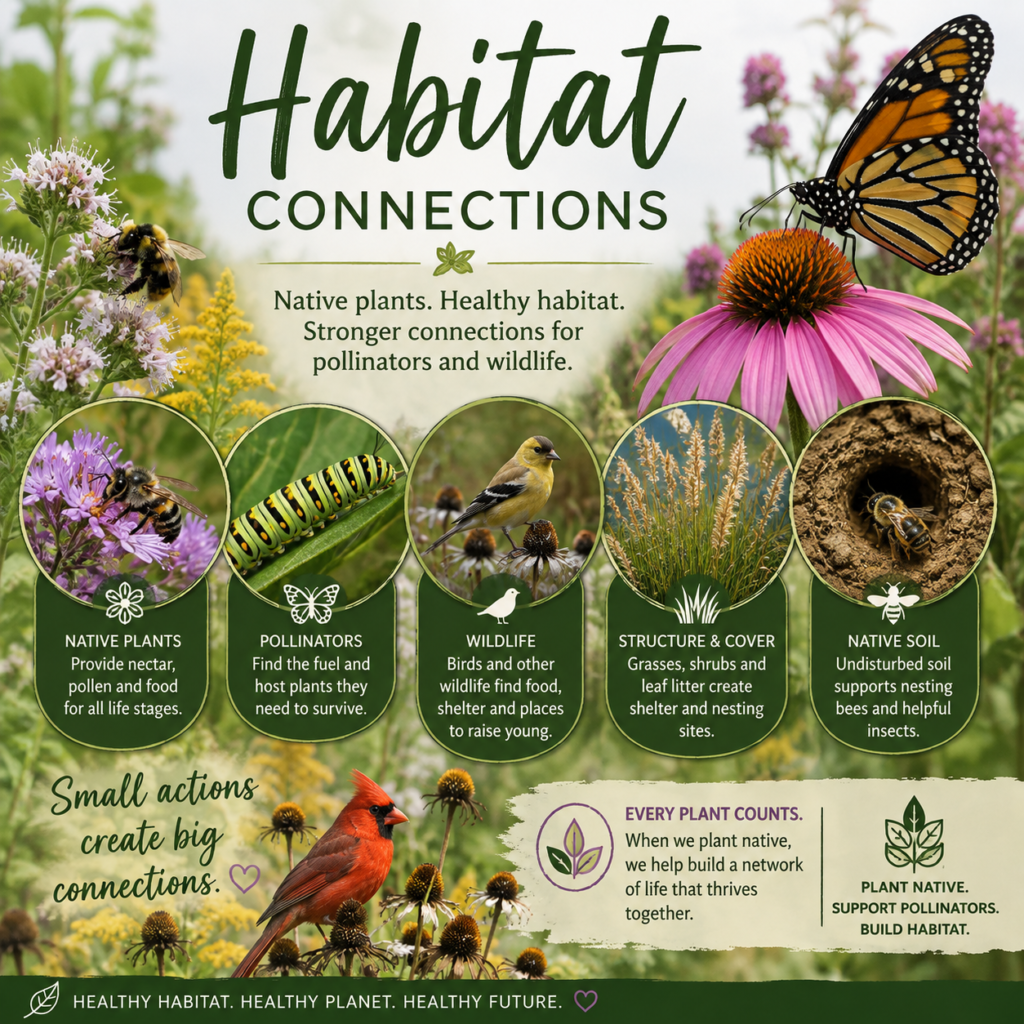
Native bunchgrasses create dense clumps that provide protected spaces near the ground. Insects and other small animals can find refuge among the stems, while birds use grassy areas for cover, nesting, and protection from predators.
🐛 A NURSERY FOR BUTTERFLIES
Several butterflies and moths depend on native grasses as caterpillar host plants. Many skipper butterflies, for example, lay their eggs on grasses where their caterpillars will later feed and develop.
🐦 FOOD FOR BIRDS
As summer turns to fall, native grasses produce seeds that become food for sparrows and other seed-eating birds. The insects living among those grasses also provide an important food source for birds and other wildlife.
❄️ WINTER HABITAT MATTERS
Those beautiful dried stems aren’t dead space.
Standing grasses continue providing cover, seeds, nesting material, and overwintering habitat long after the growing season ends. Their hollow stems, dense crowns, and accumulated plant material create protected places for insects and other small creatures.
🌱 AND DON’T FORGET THE ROOTS
What happens underground may be just as impressive.
Prairie grasses can develop extensive root systems that help hold soil, capture water, build organic matter, and support the underground community of fungi, microorganisms, and other soil life.
🌿 CREATE GRASSLAND HABITAT AT HOME
Consider adding native grasses such as Little Bluestem, Broomsedge, Switchgrass, Indiangrass, or River Oats, choosing species appropriate for your site’s sun, moisture, and soil conditions.
Then resist the urge to cut everything down in fall.
Let those grasses stand through winter.
A patch of native grass isn’t simply landscaping.
🌾 It’s a dining room. A nursery. A hiding place. A winter shelter. And a living piece of habitat.
#HabitatUpdate #NativeGrasses #GrasslandHabitat #LittleBluestem #Switchgrass #Indiangrass #RiverOats #NativePlants #WildlifeHabitat #NativeButterflies #BirdHabitat #PlantNative #NatureOnTheBrink
🌾🐦 HABITAT UPDATE: Native Grasses Are More Than Grass
When we think about wildlife habitat, colorful wildflowers, shrubs, and trees often get all the attention.
But look a little closer at a patch of native grasses, and you’ll discover an entire habitat hiding among the blades.
🌾 SHELTER FROM THE ELEMENTS
Native bunchgrasses create dense clumps that provide protected spaces near the ground. Insects and other small animals can find refuge among the stems, while birds use grassy areas for cover, nesting, and protection from predators.
🐛 A NURSERY FOR BUTTERFLIES
Several butterflies and moths depend on native grasses as caterpillar host plants. Many skipper butterflies, for example, lay their eggs on grasses where their caterpillars will later feed and develop.
🐦 FOOD FOR BIRDS
As summer turns to fall, native grasses produce seeds that become food for sparrows and other seed-eating birds. The insects living among those grasses also provide an important food source for birds and other wildlife.
❄️ WINTER HABITAT MATTERS
Those beautiful dried stems aren’t dead space.
Standing grasses continue providing cover, seeds, nesting material, and overwintering habitat long after the growing season ends. Their hollow stems, dense crowns, and accumulated plant material create protected places for insects and other small creatures.
🌱 AND DON’T FORGET THE ROOTS
What happens underground may be just as impressive.
Prairie grasses can develop extensive root systems that help hold soil, capture water, build organic matter, and support the underground community of fungi, microorganisms, and other soil life.
🌿 CREATE GRASSLAND HABITAT AT HOME
Consider adding native grasses such as Little Bluestem, Broomsedge, Switchgrass, Indiangrass, or River Oats, choosing species appropriate for your site’s sun, moisture, and soil conditions.
Then resist the urge to cut everything down in fall.
Let those grasses stand through winter.
A patch of native grass isn’t simply landscaping.
🌾 It’s a dining room. A nursery. A hiding place. A winter shelter. And a living piece of habitat.
#HabitatUpdate #NativeGrasses #GrasslandHabitat #LittleBluestem #Switchgrass #Indiangrass #RiverOats #NativePlants #WildlifeHabitat #NativeButterflies #BirdHabitat #PlantNative #NatureOnTheBrink