🐝🪰 POLLINATOR SPOTLIGHT: Meet the Bee Fly!
Is it a bee? Is it a fly?
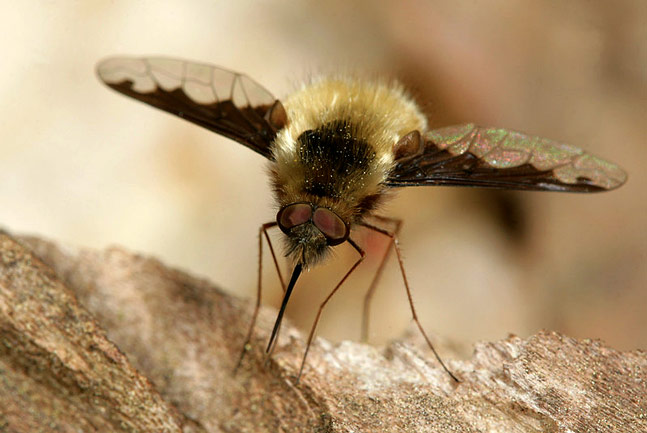
If you spot a fuzzy little insect hovering over your flowers and extending a surprisingly long “straw” into the blooms, you may have discovered a bee fly!
Bee flies belong to the family Bombyliidae, a diverse group of true flies whose furry bodies and buzzing flight can make them remarkably convincing bee mimics. But look closely and you’ll find one important clue: like other flies, they have one functional pair of wings, while bees have two pairs.
🌸 POLLINATORS WITH A PROBOSCIS
Many adult bee flies use a long proboscis to sip nectar from flowers, sometimes hovering almost like tiny hummingbirds as they feed. As they travel among blossoms, they can also transfer pollen, making them part of the diverse community of insects contributing to pollination.
But their adult lives are only half the story.
🐝 A SURPRISING CHILDHOOD
The larvae of many bee fly species are parasitoids of other insects. Depending on the species, their young may develop in the nests of solitary bees and wasps or use other insects as hosts.
Some female bee flies have an extraordinary way of getting their eggs near those hosts. They hover near the entrance of a ground-nesting bee or wasp burrow and flick their eggs toward it—sometimes while still in flight!
🌿 WHY BEE FLIES MATTER
Bee flies remind us that a pollinator garden isn’t just about butterflies and bees. Flies, beetles, wasps, moths, and countless other insects are part of the intricate web surrounding our native plants.
The next time something fuzzy buzzes past you in the garden, take another look.
🔎 That “bee” might actually be a fly!
Photo: Rowan University Arboretum
#BeeFly #Bombyliidae #PollinatorSpotlight #Pollinators #NativePollinators #NativePlants #InsectDiversity #PollinatorGarden #HabitatAtHome #NatureOnTheBrink