When we think about protecting pollinators during winter, we often hear about leaving the leaves and standing stems. But did you know that some of our most important native pollinators spend the winter right beneath our feet?
While our gardens may appear quiet during the colder months, an incredible world of wildlife is sheltered underground!
And among these hidden residents are ground-nesting native bees, including sweat bees, mining bees, and other important pollinators.
🐝 MEET THE UNDERGROUND POLLINATORS!
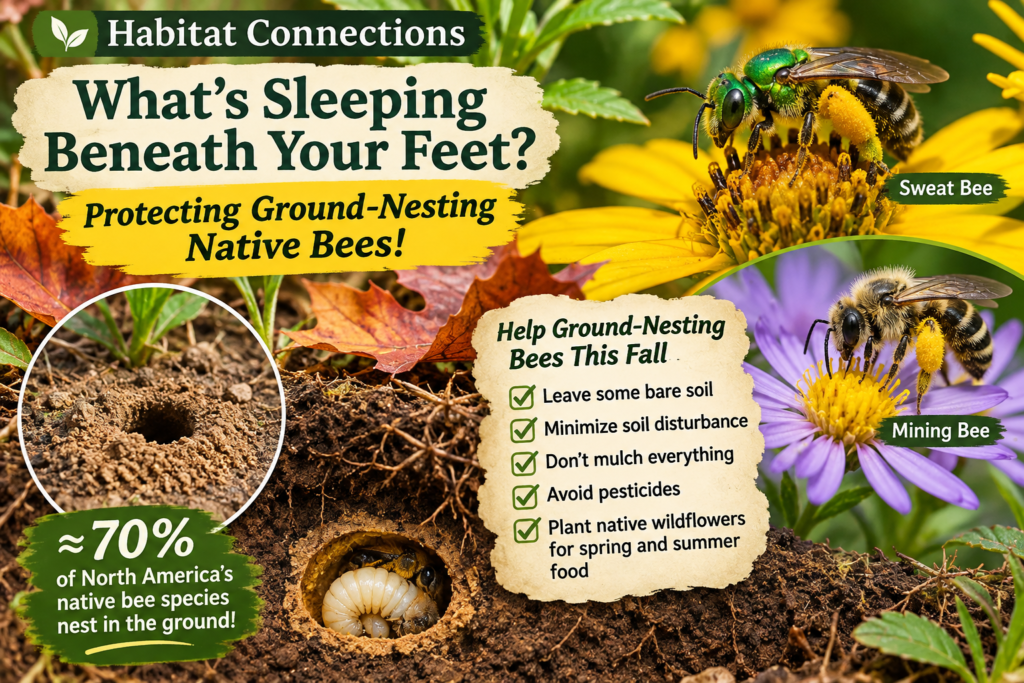
Did you know that approximately 70% of North America’s native bee species nest in the ground?
Unlike honey bees that live in large colonies or cavity-nesting bees that use hollow stems and tunnels in wood, many native bees excavate their own underground nests.
Some familiar ground-nesting bees include:
🐝 Sweat Bees (Family Halictidae): Often small, sometimes displaying beautiful metallic green or bronze coloring. Many species nest in underground tunnels, and some overwinter as mated adult females.
🐝 Mining Bees (Andrena spp.): Important spring pollinators that excavate nests in soil. Many overwinter underground as adults, emerging when spring flowers begin blooming.
🐝 Digger Bees (various genera): Solitary ground-nesting bees that construct underground tunnels and chambers for their developing young.
🌱 WHAT’S HAPPENING UNDERGROUND?
Beneath the soil surface, these remarkable bees have created a network of tunnels and nesting chambers.
Depending on the species, winter may find them:
❄️ Sheltering as mated adult females, waiting for warmer temperatures.
🐛 Developing or resting as immature bees within protected underground chambers.
🌿 Remaining dormant until seasonal conditions signal that it’s time to emerge.
Their survival depends on having suitable soil habitat that remains relatively undisturbed!
🍂 WHY FALL GARDEN CLEANUP MATTERS
Traditional fall gardening practices can unintentionally disturb these hidden pollinators.
Heavy tilling, digging, soil compaction, and covering every exposed patch of ground with thick mulch or landscape fabric can damage nesting sites or make suitable habitat harder to find.
But protecting ground-nesting bees doesn’t mean abandoning garden maintenance.
It means recognizing that healthy wildlife habitat exists both above and below ground!
🏡 FIVE WAYS TO PROTECT GROUND-NESTING NATIVE BEES
🌱 1. Leave Some Bare Soil
Maintain small patches of exposed, well-drained soil in sunny or partially sunny locations. Many ground-nesting bees need access to uncovered soil to establish nests.
🍂 2. Avoid Unnecessary Soil Disturbance
Limit tilling, digging, and heavy cultivation in established garden beds and known bee nesting areas, especially during fall and winter.
🌿 3. Rethink Mulching Everything
Mulch is valuable for many plants, but not every garden surface needs to be covered. Leave suitable patches of undisturbed soil available for nesting bees.
🚫 4. Avoid Pesticides
Insecticides and some soil treatments can harm native bees and other beneficial organisms. Choose wildlife-friendly management practices whenever possible.
🌼 5. Plant Native Wildflowers
Provide nectar and pollen throughout the growing season with native plants such as:
🌼 Golden Alexander (Zizia aurea)
💜 Wild Bergamot (Monarda fistulosa)
🌻 Black-Eyed Susan (Rudbeckia fulgida)
💜 Aromatic Aster (Symphyotrichum oblongifolium)
💛 Goldenrods (Solidago spp.)
A diversity of native flowers helps support bees from spring through fall.
🔎 DID YOU KNOW?
Many ground-nesting native bees are solitary!
Instead of living in large colonies, individual females construct nests and provision underground chambers with pollen and nectar for their offspring.
You might occasionally notice several small nesting holes close together. This doesn’t necessarily mean the bees live in one colony—some solitary species simply prefer similar nesting conditions.
Most solitary ground-nesting bees are not aggressive when left undisturbed.
🌎 YOUR HABITAT CONNECTIONS CHALLENGE!
Take a walk through your garden or neighborhood this week and look at the ground beneath your feet.
Ask yourself:
🐝 Are there patches of exposed soil where native bees could nest?
🌱 Could I reduce digging or soil disturbance in one garden area?
🍂 Am I protecting overwintering habitat both above and below ground?
🌼 Could I add more native flowers to provide food when bees emerge in spring?
Choose one small area of your landscape to protect as an undisturbed pollinator refuge!
💚 THE BIGGER PICTURE
We often focus on what we can see in a wildlife-friendly garden—colorful flowers, fluttering butterflies, and buzzing bees.
But some of the most important conservation work happens out of sight.
Beneath the soil, native bees are waiting for another season of pollination, helping support the plants, wildlife, and ecosystems that depend on them.
Leave the leaves. Save the stems. Protect the soil.
🐝🌿 Because sometimes the most important pollinator habitat is right beneath our feet!
#HabitatConnections #NatureOnTheBrink #GroundNestingBees #NativeBees #SweatBees #MiningBees #PollinatorConservation #OverwinteringPollinators #NativeBeeHabitat #WildlifeFriendlyGardening #SoilHabitat #NativePlants #Biodiversity #ProtectPollinators #PlantNative