When we think of wildlife, we often picture vast forests, remote mountains, or untouched wilderness. But did you know that some of nature’s most fascinating creatures live right alongside us in our cities, neighborhoods, and suburban communities?
From red-tailed hawks soaring above busy streets to raccoons exploring backyard gardens, wildlife has found remarkable ways to survive in human-dominated landscapes.
🌿 Welcome to the World of Urban Wildlife!
According to The Wildlife Society’s Urban Wildlife Working Group, urban wildlife includes animals that live in or regularly use environments shaped by human activity.
Some species adapt remarkably well to city life, while others struggle with habitat loss, pollution, and development.
🦝 Meet Our Wild Neighbors!
🦊 Red Foxes & Coyotes – Adaptable Survivors!
These resourceful predators can navigate suburban environments, finding food and shelter in green spaces and wooded corridors.
🦉 Hawks & Songbirds – Wildlife Above Our Heads!
Red-tailed Hawks, Northern Cardinals, and American Robins are among the birds that can thrive in developed landscapes where suitable habitat remains.
🦝 Raccoons & Opossums – Neighborhood Explorers!
These adaptable mammals take advantage of diverse food sources and shelter opportunities. Their success reminds us why securing garbage and pet food is important for preventing wildlife conflicts.
🦌 White-Tailed Deer – Visitors from the Woodland Edge!
As neighborhoods expand into formerly natural areas, deer increasingly encounter people, gardens, and roads.
🌎 The Challenges of Urban Living
Although some animals adapt successfully, urbanization presents serious challenges for wildlife:
🏘️ Habitat Loss: Development replaces natural areas with buildings, roads, and pavement.
🚧 Habitat Fragmentation: Roads and neighborhoods divide natural habitats, making it difficult for wildlife to move safely between them.
💡 Light & Noise Pollution: Artificial lighting and traffic noise can disrupt feeding, communication, and movement patterns.
💧 Water Pollution: Chemical runoff can threaten amphibians and other wildlife dependent on healthy aquatic habitats.
🌱 Invasive Species: Some introduced species compete with native wildlife for food, nesting sites, and habitat.
💚 Here’s the Good News: Green Spaces Make a Difference!
Urban parks, wooded corridors, neighborhood natural areas, and connected green spaces can serve as important stepping-stones for wildlife.
These connections help animals move between habitats, find resources, and maintain healthier populations.
🏡 How Can YOU Be a Good Neighbor to Nature?
🌿 Protect existing trees, native vegetation, and natural areas.
🌸 Plant native flowers, shrubs, and trees to support local biodiversity.
🐦 Keep cats indoors to help protect native and migratory birds.
🦝 Secure garbage cans and avoid leaving pet food outdoors.
🌙 Reduce unnecessary nighttime lighting.
💧 Protect waterways by minimizing chemical runoff.
🌳 Support parks, wildlife corridors, and conservation efforts in your community.
🐾 Did You Know?
Not all wildlife benefits equally from urban development! Scientists recognize different groups of urban wildlife, including species that exploit human resources, species that adapt to developed environments, and species that avoid urban areas because their habitat needs are too specialized.
That’s why protecting biodiversity requires more than simply having wildlife present—it means creating conditions where a wide variety of native species can survive.
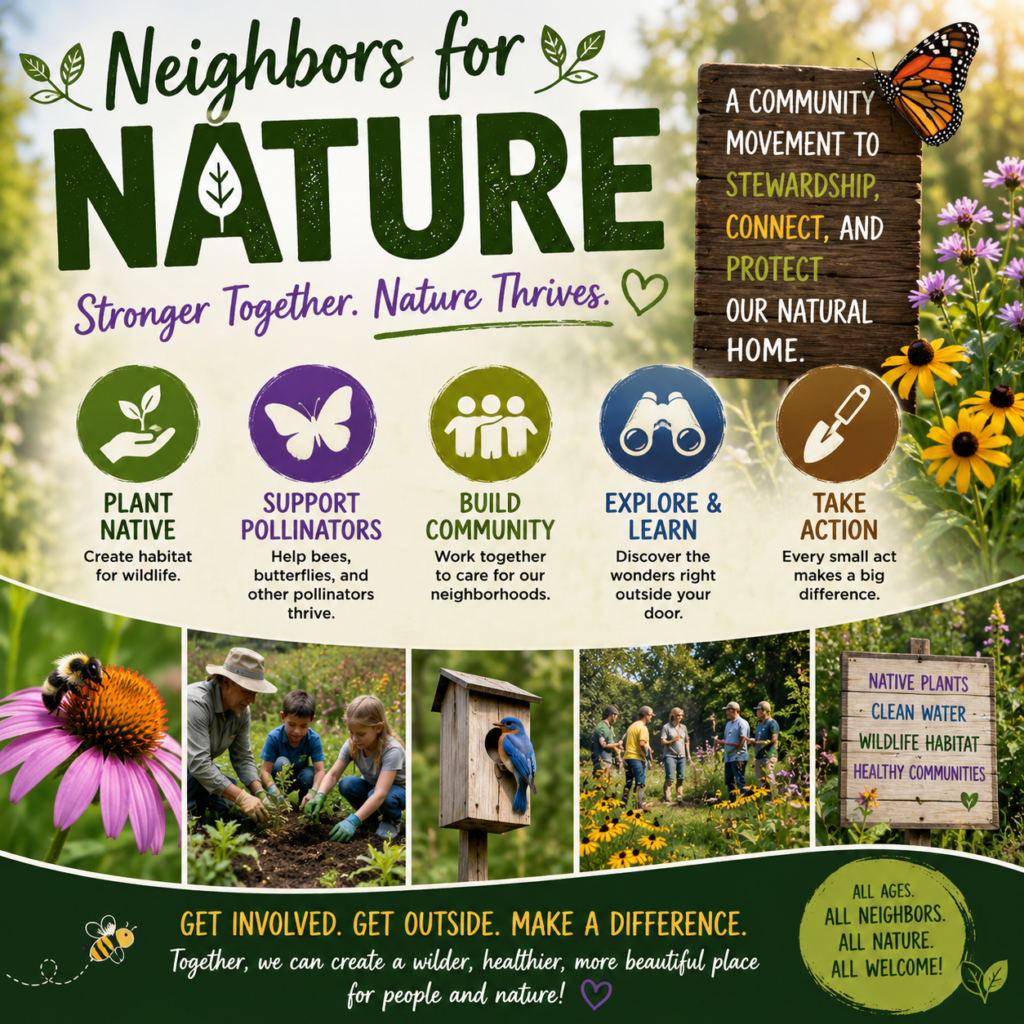
🌎 The Neighbors for Nature Connection
Our neighborhoods are part of a much larger ecosystem. Every tree we preserve, green space we protect, and wildlife-friendly decision we make can help strengthen the connections between people and nature.
💚 We don’t have to live in the wilderness to make a difference for wildlife. We can start right outside our own doors!
🌿 Your Nature Challenge!
Take a walk through your neighborhood this week. Look for birds, mammals, insects, or other wildlife making their homes among the houses, trees, and green spaces.
💬 What wildlife have you spotted in your neighborhood? Share your discoveries in the comments!
📖 Learn More: The Urban Wildlife Working Group of The Wildlife Society
https://urbanwildlifegroup.org/urban-wildlife-information
🌎 Nature on the Brink – Educating the public about our fragile ecosystem.
#NatureOnTheBrink #NeighborsForNature #UrbanWildlife #BackyardWildlife #WildlifeConservation #HabitatConnections #UrbanEcology #GeorgiaWildlife #WildlifeCorridors #Biodiversity #NativePlants #HealthyEcosystems #CoexistingWithWildlife #ConservationStartsAtHome