As the sun sets and the world grows quiet, a whole new cast of wildlife begins to stir. Among the most fascinating nighttime residents are owls—nature’s mysterious hunters of the night!
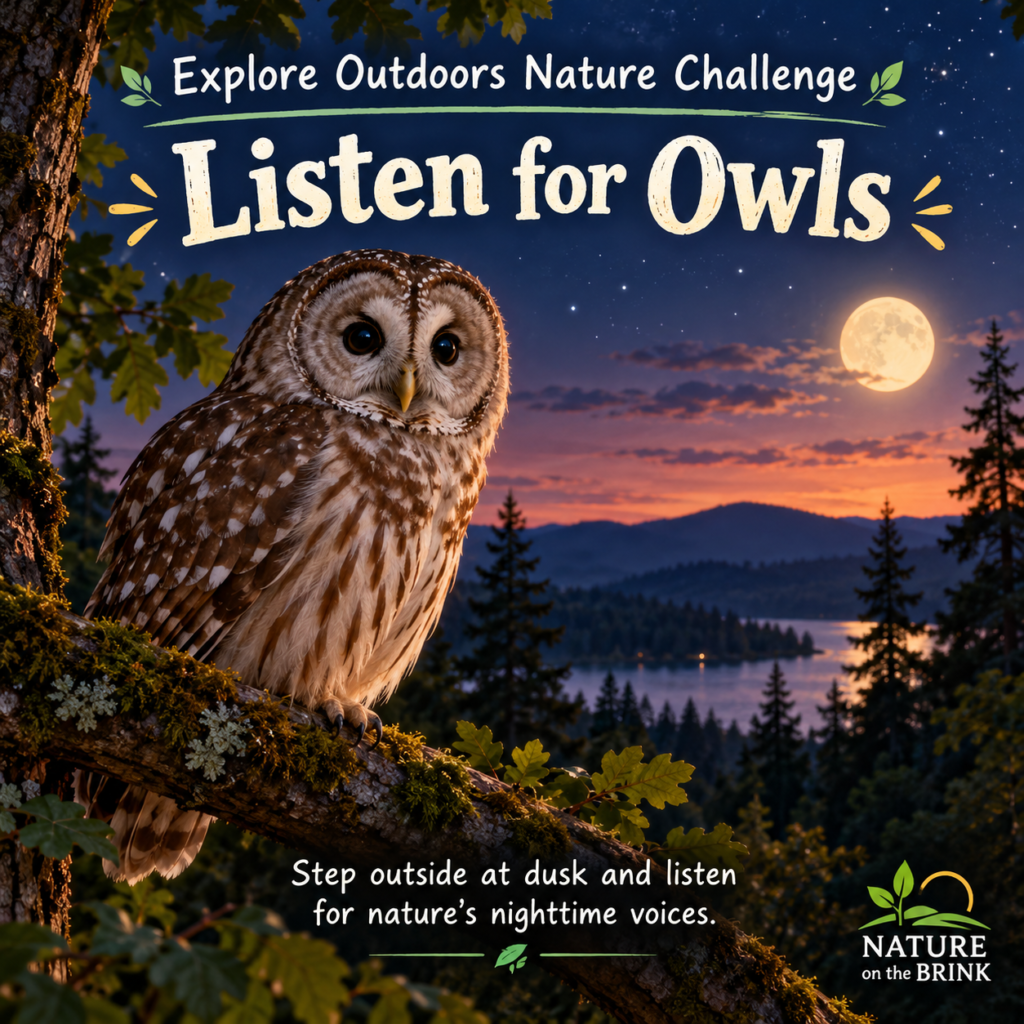
Have you ever stepped outside after dark and heard a haunting “Who cooks for you? Who cooks for you-all?” echoing through the trees? You may have heard a Barred Owl, one of Georgia’s remarkable woodland residents!
This week’s nature challenge invites you to slow down, listen carefully, and discover the hidden world of owls living in your neighborhood.
🦉 Meet Some of Georgia’s Owls!
🌳 Barred Owl (Strix varia)
Known for its distinctive “Who cooks for you? Who cooks for you-all?” call, the Barred Owl inhabits mature forests, wooded wetlands, and neighborhoods with large trees.
🌙 Great Horned Owl (Bubo virginianus)
One of North America’s most powerful owls! Listen for its series of deep, resonant hoots. Great Horned Owls often begin their breeding activities during winter, making fall and winter wonderful times to listen.
🍂 Eastern Screech-Owl (Megascops asio)
Don’t let its name fool you! Rather than a typical screech, this small owl produces a haunting, descending whinny and a soft, trembling trill. Eastern Screech-Owls often live surprisingly close to homes and gardens!
🔍 Your Nature Challenge: Become an Owl Listener!
🌅 Step 1: Choose Your Listening Time
Head outside around dusk or shortly after sunset. Some owls are especially vocal during evening and nighttime hours.
🌲 Step 2: Find a Quiet Spot
Choose a safe location near trees, woodland edges, or a natural area. Your own backyard may be the perfect place!
👂 Step 3: Stop, Look & Listen
Turn off music, put away your phone, and spend 10–15 minutes listening. Can you distinguish owl calls from other nighttime sounds?
🦉 Step 4: Learn Their Voices
Visit the Cornell Lab of Ornithology’s All About Birds website to hear recordings of Georgia’s owls. Learning their calls makes identifying them much easier!
📝 Step 5: Record Your Discovery
Write down the time, location, weather conditions, and sounds you hear. If you’re lucky enough to hear an owl, try identifying the species!
🌿 Did You Know?
🦉 Many owls have specialized wing feathers that help them fly quietly, allowing them to approach prey with little sound.
🐭 Owls are important predators that help regulate populations of rodents and other small animals.
🌳 Tree cavities, mature trees, and natural wooded habitats provide essential shelter and nesting opportunities for several owl species.
🍂 Leaving natural areas undisturbed and reducing unnecessary outdoor lighting can help protect nocturnal wildlife.
💚 Be a Respectful Owl Observer!
Remember, owls are wild animals that deserve their space. Listen from a distance, avoid shining bright lights into trees, and never play recorded owl calls to lure birds closer. Playback can disturb owls, especially during breeding season.
🌙 Your Challenge This Week!
Spend one evening outdoors listening for owls. You don’t need special equipment—just patience, curiosity, and a willingness to experience nature after dark!
💬 Have you ever heard an owl calling in your backyard? Was it a Barred Owl, Great Horned Owl, or Eastern Screech-Owl? Share your experience in the comments!
🌎 Nature on the Brink – Educating the public about our fragile ecosystem.
#NatureOnTheBrink #ExploreOutdoors #NatureChallenge #ListenForOwls #OwlWatching #GeorgiaWildlife #BarredOwl #GreatHornedOwl #EasternScreechOwl #BirdWatching #NocturnalWildlife #WildlifeConservation #NatureEducation #BackyardWildlife #ProtectWildlifeHabitats