Butterflies often steal the spotlight, but their lesser-known relatives, moths, are equally fascinating members of our native ecosystems. This week, we’re shining a light on the Witch Hazel Dagger Moth (Acronicta hamamelis), a native moth with a special connection to our featured native plant, American Witch Hazel!
🌳 Meet the Witch Hazel Dagger Moth
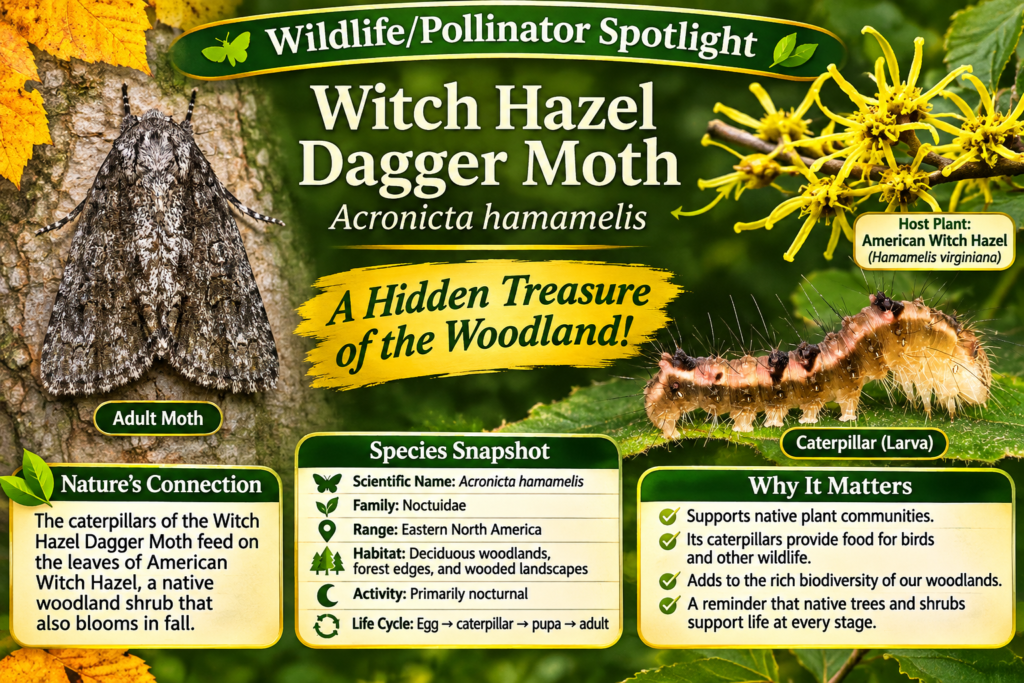
The Witch Hazel Dagger Moth belongs to the family Noctuidae, one of the largest families of moths. Found throughout much of eastern North America, this woodland inhabitant is easily overlooked because of its subtle coloration and primarily nocturnal lifestyle.
Its gray, intricately patterned wings provide excellent camouflage against tree bark, helping it avoid predators while resting during the day.
🔍 Species Profile
- Scientific Name: Acronicta hamamelis
- Common Name: Witch Hazel Dagger Moth
- Family: Noctuidae
- Native Range: Eastern North America
- Habitat: Deciduous woodlands, forest edges, and wooded landscapes
- Activity: Primarily nocturnal
- Life Cycle: Complete metamorphosis — egg, caterpillar, pupa, and adult
🐛 A Special Connection to Native Plants
American Witch Hazel (Hamamelis virginiana) is among the host plants that support the caterpillars of this native moth.
While adult moths are the stage we often recognize, caterpillars depend on suitable host plants to obtain the nourishment they need to grow and develop.
This relationship highlights why planting native trees and shrubs is just as important as planting native wildflowers. A healthy woodland garden provides resources for insects throughout their life cycles.
🌙 Discover the Wonderful World of Moths
Moths are an incredibly diverse group of insects that play important roles in our ecosystems.
Although many are active at night, their contributions continue around the clock. Moths and their caterpillars help sustain nature’s living tapestry by:
🌿 Connecting native plants to the woodland food web.
🐛 Providing essential food for insect-eating birds, particularly during the nesting season.
🦇 Supporting bats and other nocturnal predators.
🌼 Contributing to pollination, in species that visit flowers as adults.
🌎 Adding to the biodiversity and ecological richness of our native habitats.
🍂 Where Do Moths Go in Winter?
As temperatures drop, many native moth species survive winter in protected locations as eggs, caterpillars, pupae, or adults.
Leaf litter, loose bark, undisturbed soil, and native vegetation provide important shelter for overwintering insects.
What may look like a messy woodland floor to us can be an essential winter refuge for countless tiny creatures.
🏡 Five Ways to Support Native Moths
- Plant native trees and shrubs. Include American Witch Hazel and other regionally appropriate native woody plants.
- Leave the leaves. Preserve natural leaf litter beneath trees and shrubs.
- Reduce nighttime lighting. Turn off unnecessary outdoor lights to protect nocturnal insects.
- Avoid unnecessary pesticide use. Protect caterpillars and other beneficial insects.
- Create diverse woodland habitats. Include native trees, shrubs, grasses, ferns, and wildflowers.
💡 Did You Know?
Dagger moths get their common name from the dark, dagger-like markings found on the wings of many species in the genus Acronicta.
🔦 Your Nature Challenge
Become a nighttime naturalist!
On a mild evening, briefly observe the insects visiting an outdoor light. Look for different wing shapes, colors, patterns, and sizes.
Photograph any moths you discover and try identifying them using a field guide or iNaturalist. Turn off the light when you finish observing.
How many different moth species can you discover?
💚 The Bigger Picture
The Witch Hazel Dagger Moth reminds us that some of nature’s most important connections happen quietly, often unnoticed.
Every native tree, shrub, and wildflower has the potential to support an entire community of living organisms. By protecting native plants and creating diverse habitats, we help sustain the insects, birds, and other wildlife that depend on them.
Plant Native. Protect the Night. Celebrate Moths.
🌿 Nature on the Brink
Inspiring the Next Generation of Environmental Stewards
Explore. Discover. Connect. Protect.
Photo: Moth-Maryland Biodiversity Project; Caterpillar-Maryland Biodiversity Project
#NatureOnTheBrink #WildlifeSpotlight #PollinatorSpotlight #WitchHazelDaggerMoth #AcronictaHamamelis #AmericanWitchHazel #NativeMoths #MothConservation #NativePlants #HostPlants #WoodlandHabitat #LeaveTheLeaves #NocturnalWildlife #Biodiversity #PlantNative