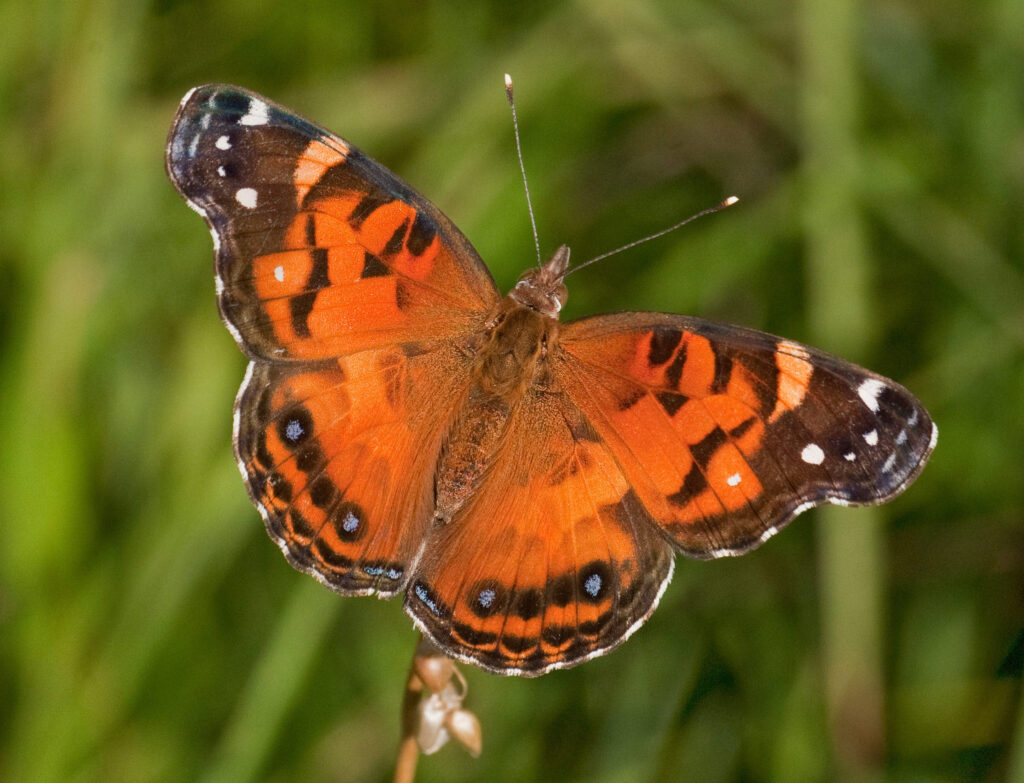
With brilliant orange wings and bold black-and-white markings, the American Lady (Vanessa virginiensis) is a beautiful visitor to gardens, meadows, roadsides, and other open habitats. But its story begins long before the adult butterfly appears at our flowers.
🐛 It all starts with the host plant.
American Lady caterpillars feed on several plants in the sunflower family, including pussytoes (Antennaria spp.). Caterpillars often create a distinctive shelter by using silk to pull leaves together, hiding inside while they feed and grow.
🌿 Look for the connection:
Planting native Field Pussytoes (Antennaria neglecta) can provide valuable caterpillar habitat, while a diversity of native flowering plants provides nectar for the adults.
🦋 How can you recognize an American Lady?
Look for orange-and-black patterned wings with small white spots near the tips of the forewings. One of its most distinctive features is underneath: the hindwings have two large eyespots, which can help distinguish the American Lady from the similar Painted Lady.
🌸 Adult American Ladies visit a variety of flowers for nectar, moving from bloom to bloom and contributing to the activity and diversity of a healthy habitat.
💚 The wildlife connection:
Field Pussytoes → Caterpillar → American Lady Butterfly
Creating butterfly habitat means thinking beyond nectar. Adult butterflies need flowers, but their caterpillars need the right host plants to complete the next generation.
🌱 Add native host plants.
🌼 Provide flowers throughout the growing season.
🚫 Reduce or eliminate pesticide use.
🍂 Leave some natural areas for wildlife.
Plant for the butterfly—and don’t forget to plant for the caterpillar! 🐛➡️🦋
Photo: Alabama Butterfly Atlas, University of South Florida
#PollinatorWildlifeSpotlight #NatureOnTheBrink #AmericanLady #VanessaVirginiensis #FieldPussytoes #NativePlants #HostPlants #ButterflyGarden #PollinatorHabitat #GardenForWildlife #PlantNative