
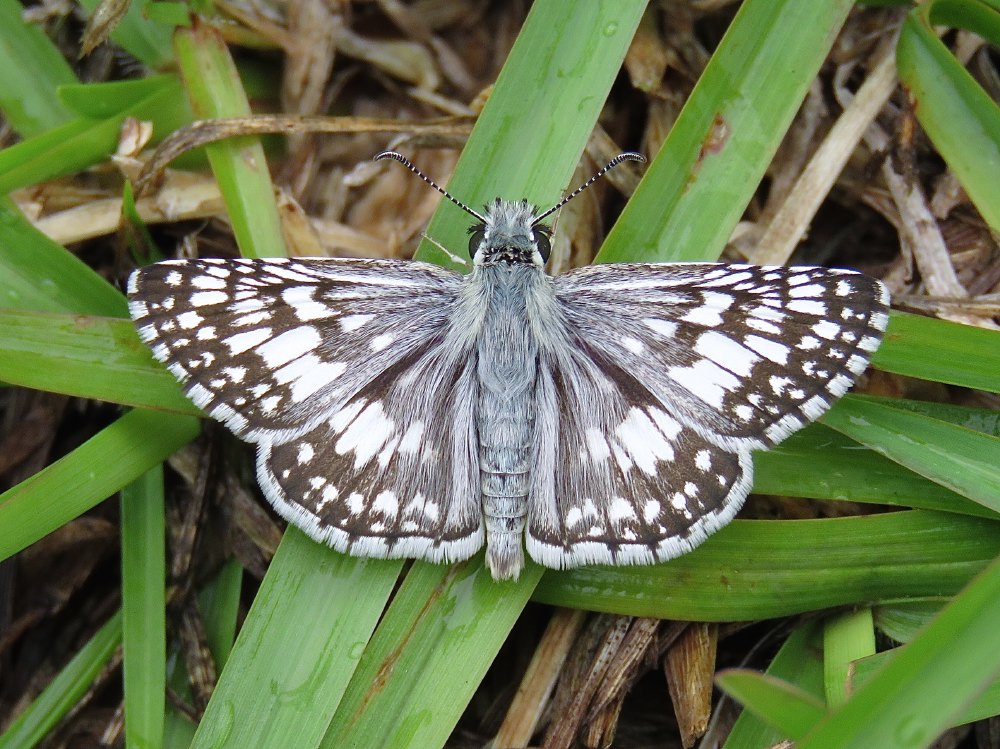
Small, fast, and easy to overlook—the Common Checkered-Skipper (Burnsius communis, formerly Pyrgus communis) proves that some of our most interesting butterflies come in tiny packages.
🔎 LOOK FOR THE CHECKERBOARD
With a wingspan of only about an inch, this little butterfly gets its name from the striking black-and-white checkered pattern covering its wings. Look closely and you may also notice a soft bluish-gray appearance near the body.
Like other skippers, it often flies with quick, darting movements before suddenly landing on a flower.
🌸 A SPECIAL CONNECTION TO MALLOWS
The Common Checkered-Skipper has an important relationship with plants in the mallow family (Malvaceae).
Female butterflies lay their eggs on suitable mallow host plants. After hatching, the caterpillars feed on the leaves—and Purple Poppy Mallow (Callirhoe involucrata), also known as Winecups, is one native plant that can help support their life cycle.
🐛 LOOK FOR A LITTLE LEAF SHELTER
Common Checkered-Skipper caterpillars don’t always sit out in the open. They can use silk to pull or fold portions of a leaf together, creating a protective shelter where they can hide while feeding.
🌿 ADULTS NEED FLOWERS, TOO
Once they become butterflies, Common Checkered-Skippers visit a variety of flowers for nectar. Providing a succession of native blooms alongside caterpillar host plants helps support both stages of the butterfly’s life.
That’s an important lesson for creating wildlife habitat:
🌸 Nectar plants feed the adult.
🌿 Host plants feed the caterpillar.
🦋 Together, they help complete the life cycle.
The next time you see a tiny checkered butterfly darting among the flowers, stop and take a closer look.
You may have found a Common Checkered-Skipper hiding in plain sight!
Photo: Alabama Butterfly Atlas, Univserity of South Florida
#PollinatorSpotlight #WildlifeSpotlight #CommonCheckeredSkipper #BurnsiusCommunis #PurplePoppyMallow #Winecups #HostPlants #NativeButterflies #NativePlants #PollinatorGarden #PlantNative #NatureOnTheBrink