When we think about plants that support pollinators and wildlife, colorful flowers often come to mind. But some of nature’s most valuable plants never bloom at all!
Meet Southern Lady Fern (Athyrium asplenioides), a graceful Georgia native whose delicate, feathery fronds help create shelter and habitat for wildlife living along the forest floor.
🌿 Who Benefits from Lady Fern?
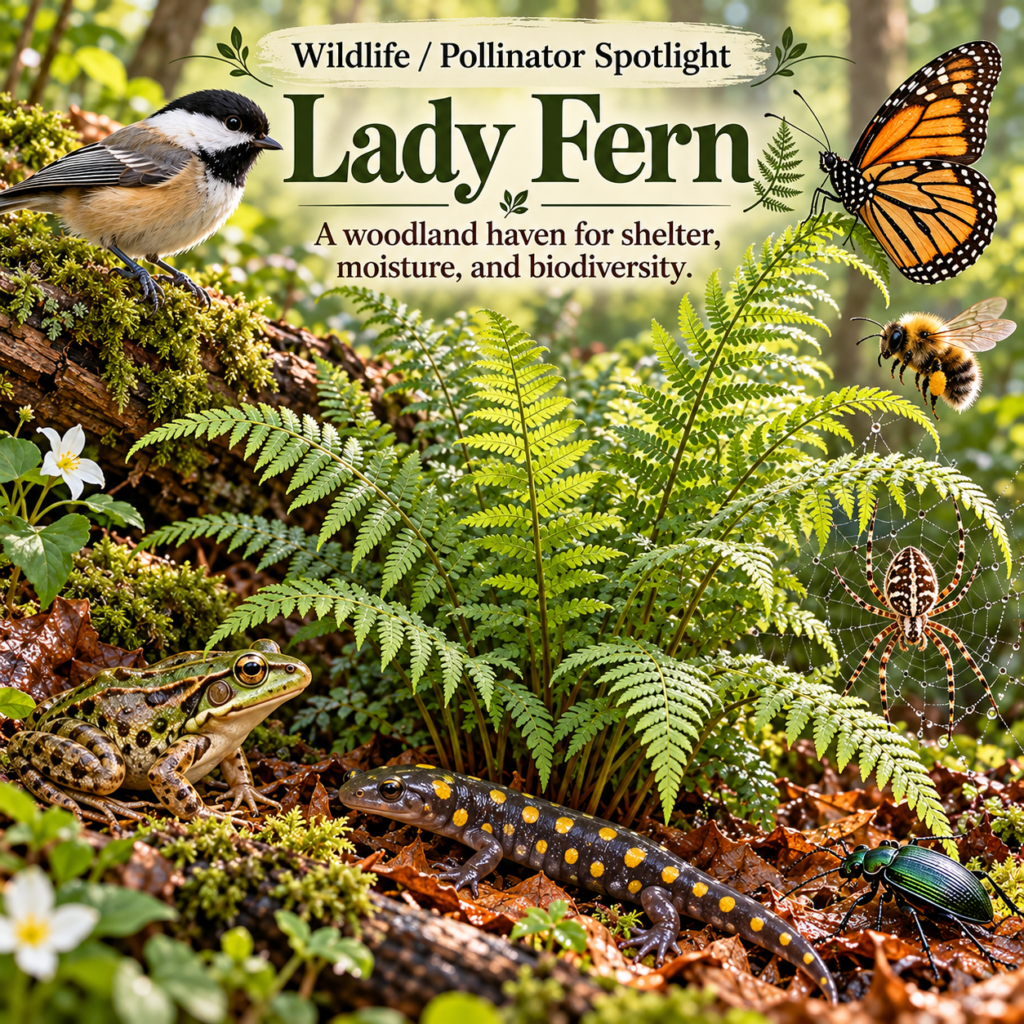
🐸 Frogs & Salamanders – Cool Woodland Retreats
Lady Fern thrives in moist, shady environments that amphibians also favor. Its arching fronds provide protective cover, helping create sheltered spaces where frogs and salamanders can avoid predators and escape the drying effects of sunlight.
🕷️ Spiders – Nature’s Tiny Pest Controllers
Spiders can use fern foliage as hunting grounds and sheltered spaces. These important predators help regulate populations of mosquitoes, flies, and other small insects.
🐞 Beetles & Beneficial Insects – Forest Floor Residents
The leaf litter and protected ground beneath Lady Fern provide habitat for ground beetles and other small invertebrates. These creatures play important roles as predators, scavengers, and participants in nutrient cycling.
🦋 Moths & Caterpillars – An Overlooked Connection
Ferns may not have flowers, but some fern species serve as host plants for moth caterpillars! Lady Fern and its close relatives are associated with certain fern-feeding moths, demonstrating that even nonflowering plants can support insect life.
🐦 Songbirds – Building Nests & Finding Food
Birds can use dried fern material in nest construction, while insect-eating songbirds benefit from the small arthropods living within woodland vegetation.
🐝 Native Bees & Butterflies – Habitat Beyond Flowers
Lady Fern doesn’t produce nectar or pollen, so it isn’t a direct food source for bees and butterflies. However, its foliage contributes to the sheltered, diverse woodland habitat that supports insects and the broader ecological community.
🌎 Did You Know?
Unlike flowering plants, Lady Fern reproduces through tiny spores found on the undersides of its fronds. It doesn’t need pollinators for reproduction!
🍂 Create a Wildlife-Friendly Woodland Garden!
Plant Southern Lady Fern in shady areas with moist, organically rich soil. Combine it with native woodland wildflowers, sedges, and shrubs to create a layered habitat.
🌱 Leave fallen leaves around your ferns to protect soil organisms and maintain natural woodland conditions.
🌱 Avoid pesticides that harm beneficial insects.
🌱 Include flowering native plants nearby to provide nectar and pollen for pollinators.
💚 The Bigger Picture: Every Plant Has a Purpose!
Lady Fern reminds us that supporting biodiversity isn’t just about providing flowers. It’s also about creating safe places to hide, hunt, reproduce, and survive.
A healthy ecosystem needs flowers for food AND foliage for shelter! 🌿
🌎 Nature on the Brink – Educating the public about our fragile ecosystem.
#NatureOnTheBrink #WildlifeSpotlight #PollinatorSpotlight #LadyFern #SouthernLadyFern #GeorgiaNativePlants #NativePlants #WildlifeHabitat #WoodlandEcosystems #FrogsAndSalamanders #BeneficialInsects #NativeGardening #LeaveTheLeaves #Biodiversity #HabitatConservation