One Native Plant, One Beautiful Butterfly, and a Connection That Supports Biodiversity!
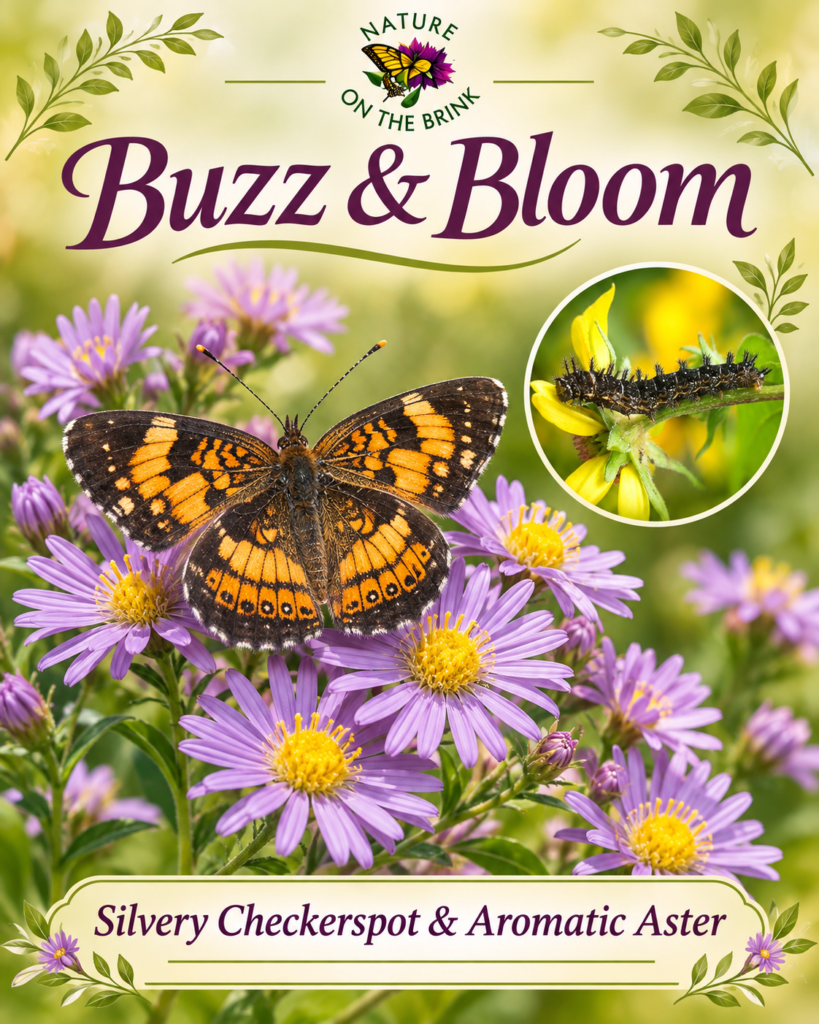
As autumn settles in and many wildflowers fade, Aromatic Aster (Symphyotrichum oblongifolium) bursts into bloom, providing a colorful late-season feast for pollinators. Among the butterflies that may visit these lavender-purple flowers is the beautiful Silvery Checkerspot (Chlosyne nycteis).
Together, they remind us that native plants do more than beautify our landscapes—they help sustain entire ecosystems!
🌸 Meet Aromatic Aster: A Fall Pollinator Favorite!
Aromatic Aster is a hardy North American native perennial that produces masses of lavender-purple, daisy-like flowers from late summer through fall.
🐝 Late-Season Nectar: Its abundant flowers provide nectar for butterflies, bees, hoverflies, and other beneficial insects when many other blooms have disappeared.
🌿 Wildlife Support: Its dense growth provides cover for small creatures, while standing stems and plant litter contribute to overwintering habitat.
☀️ Garden Friendly: This drought-tolerant perennial thrives in sunny locations and well-drained soils, making it a wonderful addition to native plant gardens.
🦋 Meet the Silvery Checkerspot: A Butterfly With Native Plant Connections!
The Silvery Checkerspot is a native butterfly recognized by its striking orange-and-black checkered wings and distinctive silvery-white markings on the undersides.
🌼 Nectar Seeker: Adult butterflies visit a variety of wildflowers, including members of the aster family, to obtain the energy they need for flight and reproduction.
🐛 Caterpillar Connections: Silvery Checkerspot caterpillars depend on certain plants in the aster family (Asteraceae), particularly wingstem (Verbesina alternifolia), as food sources.
🍂 Winter Survival: These butterflies overwinter as partially grown caterpillars, making undisturbed vegetation and leaf litter important components of their habitat.
🌎 The Buzz & Bloom Connection: Why Does It Matter?
Native plants and butterflies share relationships that extend far beyond a single flower visit.
🌸 Flowers provide nectar that helps fuel adult butterflies and other pollinators.
🐛 Host plants provide food for developing caterpillars, supporting the next generation of butterflies.
🍂 Natural garden habitats provide shelter for insects during their most vulnerable life stages.
🌿 Plant diversity supports biodiversity, creating healthier and more resilient ecosystems.
Although Aromatic Aster is an excellent nectar source, wingstem and other documented host plants are especially important for Silvery Checkerspot caterpillars. Including both nectar plants and caterpillar host plants creates a more complete butterfly habitat!
💚 How Can You Help?
✅ Plant Aromatic Aster for valuable late-season nectar.
✅ Include native caterpillar host plants such as wingstem to support butterfly reproduction.
✅ Leave fallen leaves and standing vegetation undisturbed where possible during winter.
✅ Avoid pesticides that can harm caterpillars, butterflies, and other beneficial insects.
✅ Plant a diversity of native flowers that bloom throughout the growing season.
🔎 Did You Know?
Aromatic Aster was recognized as a 2023 Georgia Pollinator Plant of the Year! Its late-season blooms are especially valuable when nectar sources become scarce.
🦋 Nature on the Brink reminds us that every native plant has a story, and every butterfly has a connection to the plants around it. By understanding these relationships, we can create habitats where pollinators thrive through every stage of life!
💬 Have you spotted butterflies or bees visiting asters in your garden this fall? Share your observations or photos in the comments!
🌿 Plant Native. Support Pollinators. Protect Biodiversity.
#NatureOnTheBrink #BuzzAndBloom #SilveryCheckerspot #AromaticAster #ChlosyneNycteis #SymphyotrichumOblongifolium #NativePlants #PollinatorConservation #ButterflyHabitat #CaterpillarHostPlants #NativeBees #FallPollinators #GeorgiaNativePlants #Biodiversity #HabitatConnections