What if the most important infrastructure in our neighborhoods isn’t something we build with concrete or steel—but something we grow? 🌼🦋
When we think about infrastructure, we imagine roads, bridges, sidewalks, and buildings. But there’s another essential network running through our communities—one that often goes unnoticed.
It’s the network of plants, pollinators, soil, and wildlife habitats that helps keep our ecosystems healthy.
And according to a fascinating research initiative by landscape architecture and design firm RIOS, our cities have an opportunity to become part of the solution!
🌎 THE INVISIBLE INFRASTRUCTURE ALL AROUND US
In its research project, Invisible Infrastructure: Integrating Pollinators into Urban Sites, RIOS explores how urban landscapes can be designed to support pollinators rather than displace them.
Pollinators—including bees, butterflies, moths, beetles, flies, birds, and bats—play essential roles in plant reproduction, food production, and healthy ecosystems.
Yet as cities expand, natural habitats can become fragmented, leaving pollinators with fewer places to find food, shelter, and nesting opportunities.
What if every neighborhood could help reconnect those habitats?
🏙️ REIMAGINING OUR URBAN LANDSCAPES
RIOS demonstrates how spaces within our built environment can become valuable opportunities for pollinator conservation.
🌼 Rooftop Pollinator Gardens: A garage rooftop at ROW DTLA demonstrates how an overlooked urban surface can become a flowering landscape.
🌿 Living Green Walls: A 3,000-square-foot pollinator canopy wall on Sunset Boulevard illustrates how vertical spaces can incorporate habitat into urban design.
🦋 Seasonal Planting: RIOS developed planting diagrams showing when different plants bloom and which pollinators they attract, emphasizing the importance of providing floral resources throughout the growing season.
🐝 Pollinator Shelters: The research explored insect habitat structures that can provide shelter in urban areas where natural nesting opportunities are limited.
🌱 Research and Monitoring: RIOS also investigated soil improvements, plant combinations, and pollinator habitat prototypes to better understand which approaches attract wildlife.
These examples illustrate an important idea:
Our built environments don’t have to be separate from nature. They can help support it!
🏡 BRINGING INVISIBLE INFRASTRUCTURE INTO OUR NEIGHBORHOODS
You don’t need to redesign an entire city to make a difference.
Imagine what could happen if neighbors worked together to create a connected network of wildlife-friendly spaces!
Here are five ways to get started:
🌼 1. Plant Native Flowers
Choose native plants that provide pollen and nectar from spring through fall. A succession of blooms helps support pollinators throughout the growing season.
🐛 2. Include Caterpillar Host Plants
Butterflies need more than nectar! Native host plants provide food for developing caterpillars and help support the next generation of butterflies.
🌱 3. Protect Natural Nesting Habitat
Leave some bare, undisturbed soil for ground-nesting bees. Preserve suitable standing stems, fallen leaves, and other natural habitat features where appropriate.
🌿 4. Connect Your Green Spaces
Talk with neighbors about planting native flowers along property borders, in community gardens, around schools, and in shared neighborhood spaces.
Even small habitat patches can become more valuable when they are part of a larger network.
🐝 5. Observe and Celebrate Your Pollinators
Spend time watching the bees, butterflies, and other insects visiting your plants. Record observations through citizen science projects such as iNaturalist.
Share your discoveries with neighbors and encourage others to participate!
💚 THE BIGGER PICTURE: A NEIGHBORHOOD IS AN ECOSYSTEM
A single pollinator garden is valuable.
But imagine a street where every yard provides native flowers.
A neighborhood where schools, libraries, parks, and businesses incorporate pollinator habitat.
A community where green spaces are designed not just for appearance, but for ecological function.
Together, these spaces can help create the living infrastructure that supports pollinators and other wildlife.
🌎 YOUR NEIGHBORS FOR NATURE CHALLENGE!
Take a walk around your neighborhood this week.
🔎 Can you identify three spaces that could support more pollinator habitat?
Perhaps it’s an unused planting bed, a sunny corner of a community park, or a strip of lawn near a sidewalk.
Then ask yourself:
What could this space become if we designed it with nature in mind?
💬 Share your ideas in the comments! Where would you like to see more native plants and pollinator habitat in your community?
🌿 Small Spaces. Connected Habitats. Thriving Communities.
Together, we can make nature’s invisible infrastructure visible—and help it flourish!
📖 Read the original RIOS research project:
Source: RIOS, Invisible Infrastructure: Integrating Pollinators into Urban Sites (2019).
#NeighborsForNature #NatureOnTheBrink #InvisibleInfrastructure #PollinatorConservation #UrbanEcology #NativePlants #PollinatorHabitat #WildlifeCorridors #HabitatConnectivity #UrbanBiodiversity #NativePollinators #CommunityConservation #WildlifeFriendlyGardening #GreenInfrastructure #Biodiversity
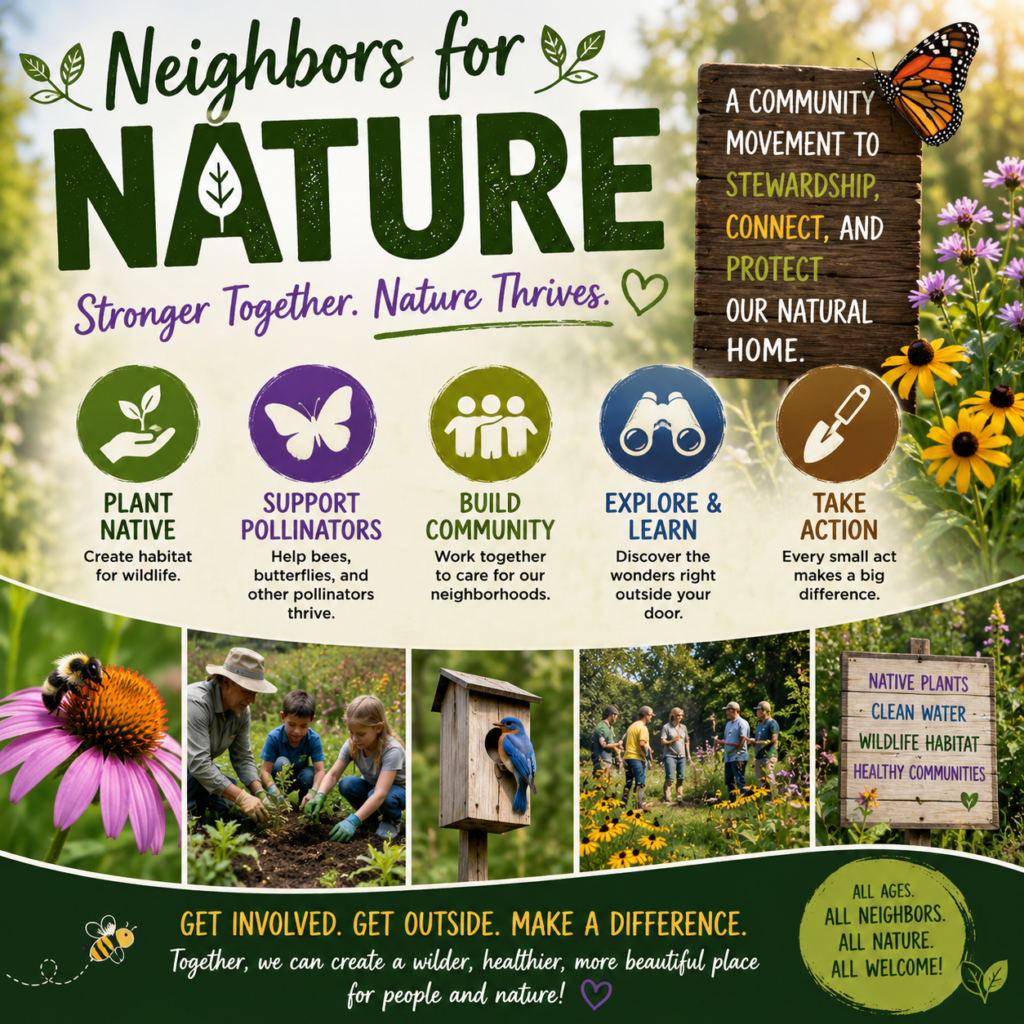
The post adapts RIOS’s 2019 research into a community-focused Neighbors for Nature message, connecting its urban design examples with practical actions for homeowners, schools, and neighborhoods. RIOS