Did you know that some of the most important pollinator habitats are hiding right beneath your feet?
When we think about bees, we often imagine them buzzing among colorful flowers or visiting a hive. But many of our native bees live very different lives!
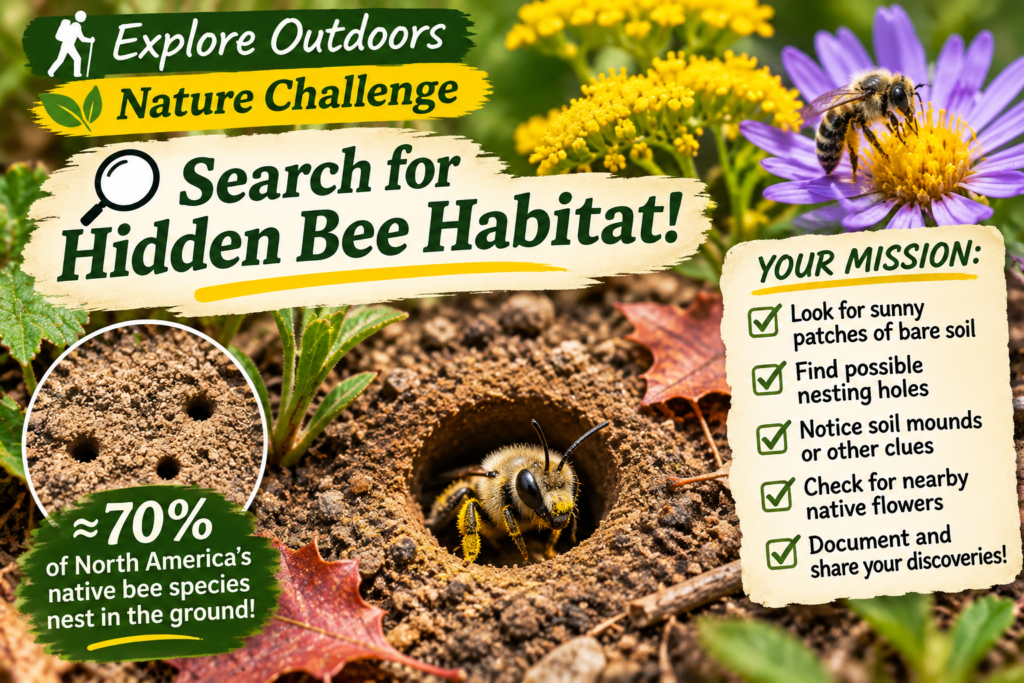
Approximately 70% of North America’s native bee species nest in the ground, creating underground tunnels and chambers where they raise their young.
And during the colder months, some of these remarkable pollinators are sheltered beneath the soil, waiting for spring!
This week’s Explore Outdoors Nature Challenge invites you to become a Native Bee Habitat Detective! 🕵️♀️🐝
🌱 YOUR MISSION: SEARCH FOR HIDDEN BEE HABITAT!
Head outside to your backyard, garden, neighborhood, or local park and investigate places where ground-nesting native bees might make their homes.
You don’t need special equipment—just curiosity, careful observation, and a willingness to look a little closer!
🔎 STEP 1: FIND FIVE POTENTIAL BEE NESTING AREAS
Look for places such as:
☀️ Sunny Patches of Bare Soil: Many ground-nesting bees prefer exposed soil that receives plenty of sunlight.
🌿 Sparsely Vegetated Garden Edges: Areas with little vegetation may provide suitable nesting conditions.
🏡 Undisturbed Soil Along Pathways: Some native bees establish nests in relatively firm, well-drained soil near walking paths.
🍂 Open Areas Beneath Native Plants: Small gaps between plants can provide nesting opportunities when the soil isn’t covered by thick mulch.
🌱 Natural Soil Banks or Gentle Slopes: Certain ground-nesting bees prefer sloped or exposed soil surfaces for excavating their tunnels.
Remember: You’re searching for potential habitat—not digging for bees!
🐝 STEP 2: LOOK FOR CLUES!
Once you’ve found a promising location, carefully examine the soil surface.
Can you spot:
🔎 Tiny round holes in the ground?
🌱 Small mounds of loose soil near an opening?
🐝 Bees entering or leaving holes during warmer, active seasons?
☀️ Exposed, well-drained soil that could provide nesting opportunities?
Some bee nests have small entrances that are easy to overlook. Others may be surrounded by tiny piles of excavated soil.
Important: Not every hole belongs to a bee! Ants, beetles, wasps, and other animals also create underground openings.
In fall and winter, you may not see any bee activity because many species are dormant.
🍂 STEP 3: BECOME A HABITAT INVESTIGATOR!
Ask yourself:
🌿 Is the soil covered with thick mulch or landscape fabric?
☀️ Does the area receive sunlight?
🌱 Is the ground relatively undisturbed?
🐝 Could a native bee safely establish a nest here?
🌼 Are there native flowers nearby to provide pollen and nectar during the growing season?
A good bee habitat needs more than just nesting space. Bees also need nearby flowering plants to provide food for themselves and their developing young.
📸 STEP 4: DOCUMENT YOUR DISCOVERIES!
Become a citizen scientist by recording what you observe!
📷 Photograph potential nesting areas.
📝 Record the location and soil conditions.
☀️ Note whether the area receives sun or shade.
🐝 If you observe a bee entering a nest, photograph it from a respectful distance.
🌼 Make a list of flowering native plants nearby.
You can also use iNaturalist to document bee observations and contribute to biodiversity research.
🌎 STEP 5: PROTECT ONE PATCH OF BEE HABITAT!
Now that you’ve explored potential nesting sites, it’s time to take action!
Choose one small area of your yard or garden where you can help protect ground-nesting native bees.
🌱 Leave a patch of suitable bare soil.
🍂 Avoid unnecessary digging or tilling.
🌿 Don’t cover every inch of soil with mulch.
🚫 Avoid pesticides.
🌼 Plant native wildflowers that provide nectar and pollen throughout the growing season.
Even a small patch of protected habitat can make a difference!
💡 DID YOU KNOW?
Many ground-nesting native bees are solitary!
Unlike honey bees, which live in large colonies, solitary bees generally build and provision their own nests.
You might find several tiny nesting holes close together because multiple bees have chosen the same favorable soil conditions.
And here’s something remarkable: Some native bees spend much of their lives underground, emerging as adults for only a few weeks each year!
That makes protecting their nesting habitat especially important.
🐝 BONUS CHALLENGE: CONNECT THE HABITAT!
Look around your neighborhood.
Could nearby gardens provide both nesting habitat and native flowers?
Imagine what would happen if several neighbors protected small patches of soil and planted native wildflowers.
Together, those gardens could create a network of habitat supporting native pollinators throughout their life cycles!
💚 THE BIGGER PICTURE
We often measure a pollinator garden by the flowers we see and the bees visiting them.
But a healthy pollinator habitat includes much more!
🌼 Flowers provide food.
🌿 Native plants support biodiversity.
🌱 Soil provides nesting and overwintering habitat.
🐝 Together, they help support future generations of native bees.
This fall, remember that protecting pollinators isn’t just about what grows above the ground—it’s also about what lives beneath it!
📸 SHARE YOUR DISCOVERIES!
Did you find a promising bee nesting area? Have you ever noticed tiny bee nests in your yard?
Share your observations or photos in the comments!
🌿🐝 Explore Outdoors. Discover Hidden Habitats. Protect Native Bees!
#ExploreOutdoors #NatureChallenge #NatureOnTheBrink #GroundNestingBees #NativeBees #BeeHabitat #PollinatorConservation #NativePollinators #HabitatConnections #WildlifeFriendlyGardening #NatureDetective #CitizenScience #FallNatureActivities #Biodiversity #ProtectPollinators
Shorten this post for social mediaAdd a clear safety reminder