Looking for a native wildflower that brings sunshine to your garden while supporting butterflies, bees, and beneficial insects?
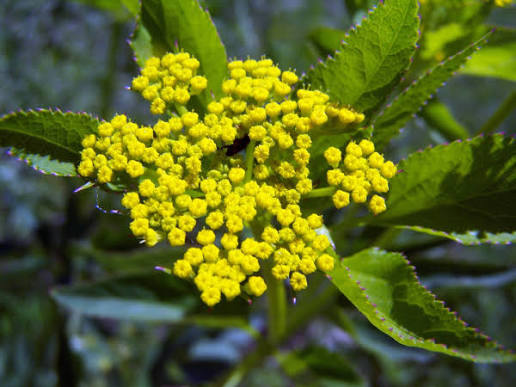
Meet Golden Alexander (Zizia aurea), a cheerful North American native perennial that brightens the spring landscape with clusters of tiny golden-yellow flowers!
This often-overlooked member of the carrot family (Apiaceae) is much more than a pretty face. It’s an important part of the native plant–pollinator connection!
🌼 MEET GOLDEN ALEXANDER!
🌿 Scientific Name: Zizia aurea
🌎 Native Range: Eastern and central North America, including Georgia
☀️ Sunlight: Full sun to partial shade
💧 Soil: Prefers moist, well-drained soil but tolerates a range of conditions
📏 Height: Approximately 1–3 feet
🌸 Bloom Time: Spring to early summer
🌱 Growth Habit: Herbaceous perennial
Golden Alexander produces beautiful, flat-topped clusters of tiny yellow flowers called umbels. These open flower clusters make nectar and pollen accessible to a variety of visiting insects.
🐛🦋 A SPECIAL CONNECTION: THE BLACK SWALLOWTAIL
One of Golden Alexander’s most important ecological relationships is with the Black Swallowtail butterfly (Papilio polyxenes).
Golden Alexander serves as a native larval host plant for this beautiful butterfly!
Here’s how the relationship works:
🥚 Female Black Swallowtails lay eggs on suitable host plants, including Golden Alexander.
🐛 After hatching, the caterpillars feed on the plant’s foliage as they grow.
🦋 The caterpillars eventually form chrysalises and transform into adult butterflies.
🌼 Adult butterflies visit flowers for nectar, helping support the next generation.
By planting Golden Alexander, you’re providing more than nectar—you’re helping support the butterfly’s entire life cycle!
🐝 A WELCOME MAT FOR NATIVE POLLINATORS
Golden Alexander’s tiny, accessible flowers attract a fascinating variety of insects, including:
🐝 Small native bees
🪰 Flower flies (hoverflies)
🦋 Butterflies
🐞 Other beneficial insects
Many of these insects contribute to pollination, while some also help maintain ecological balance by feeding on garden pests.
🌱 WHY PLANT GOLDEN ALEXANDER?
Golden Alexander offers several benefits for wildlife-friendly gardens:
🌼 Early-season blooms: Provides floral resources during spring, when many pollinators are becoming active.
🐛 Butterfly host plant: Supports Black Swallowtail caterpillars.
🐝 Pollinator diversity: Attracts a range of native bees and beneficial insects.
🌿 Native garden beauty: Its golden flowers pair beautifully with native spring wildflowers and grasses.
🌎 Biodiversity: Helps support the interconnected relationships between plants, insects, and other wildlife.
🏡 GARDENING WITH GOLDEN ALEXANDER
Plant Golden Alexander in a sunny or partially shaded native plant garden, meadow edge, or pollinator planting.
For a beautiful spring display, consider pairing it with native plants such as:
💜 Wild Blue Phlox (Phlox divaricata)
💙 Virginia Bluebells (Mertensia virginica)
🌿 Pennsylvania Sedge (Carex pensylvanica)
And remember: If you discover Black Swallowtail caterpillars feeding on your Golden Alexander, celebrate! Those chewed leaves are a sign that your garden is supporting wildlife.
🌎 YOUR NATIVE PLANT CHALLENGE!
This week, take a closer look at the native plants growing in your yard or neighborhood.
Ask yourself:
🌱 Which plants provide nectar for adult butterflies?
🐛 Which plants provide food for their caterpillars?
🌼 Could you add a native host plant like Golden Alexander to your landscape?
Remember, a butterfly garden isn’t complete without plants for caterpillars!
💚 THE BIGGER PICTURE
Every native plant has a story to tell, and Golden Alexander’s story is one of connection.
From its golden spring blossoms to the Black Swallowtail caterpillars that depend on its leaves, this remarkable wildflower reminds us that even the smallest plants can play an important role in a healthy ecosystem.
🌼 Plant the flowers. Feed the caterpillars. Welcome the pollinators. Grow a healthier habitat! 🦋🐝
Photo: Michigan State University Extension Native Plants and Ecosystem Services
#NativePlantHighlight #NatureOnTheBrink #GoldenAlexander #ZiziaAurea #NativePlants #BlackSwallowtail #ButterflyHostPlants #PollinatorGarden #NativeBees #PollinatorConservation #GeorgiaNativePlants #WildlifeHabitat #Biodiversity #PlantNative #GrowNative