What if your neighborhood could become a thriving network of wildlife habitats?
Across our communities, backyards, parks, woodlots, and shared green spaces hold incredible potential for conservation. And when neighbors work together, even small changes can make a big difference!
A recent article from University of Minnesota Extension reminds us that protecting biodiversity doesn’t require owning acres of land. It begins with recognizing the ecological value of the spaces around us—and working together to make them better.
🌱 ONE YARD CAN MAKE A DIFFERENCE. A NEIGHBORHOOD CAN MAKE AN IMPACT!
Here are six ways neighbors can strengthen their local ecosystems:
🌸 1. Plant Native!
Replace portions of traditional lawns with native wildflowers, grasses, shrubs, and trees. Native plants provide essential food and shelter for insects, birds, and other wildlife. When neighbors plant natives together, they help connect isolated habitat patches.
🌿 2. Work Together to Remove Invasive Plants
Invasive species can crowd out native vegetation and reduce habitat quality. Coordinating with neighbors to identify and manage invasive plants can help prevent their spread and give native species room to recover.
🌳 3. Protect Mature Trees
Large trees are irreplaceable wildlife resources! They provide nesting cavities, shelter, food, and important habitat for birds, mammals, and insects. Protecting established trees benefits wildlife for generations.
🐝 4. Create Layers of Habitat
Healthy ecosystems contain more than flowers! Combine native groundcovers, grasses, wildflowers, shrubs, and trees to provide food, nesting opportunities, and shelter for a greater diversity of wildlife.
🍂 5. Leave Some Nature Undisturbed
Standing dead trees, fallen logs, branches, and brush piles provide valuable wildlife habitat when they can be safely retained.
Woodpeckers use snags for nesting, salamanders shelter beneath decaying logs, and countless organisms depend on deadwood as part of a healthy ecosystem.
💧 6. Protect Streams, Ponds, and Shorelines
Native vegetation along waterways helps reduce erosion, improve water quality, and provide habitat for amphibians, turtles, birds, and other wildlife.
💚 THE POWER OF CONNECTED HABITATS
Imagine a neighborhood where one yard provides nectar for butterflies, another offers native shrubs for nesting birds, and a nearby park preserves mature trees and fallen logs.
Together, these spaces can form a network of habitat that helps wildlife move, feed, shelter, and reproduce.
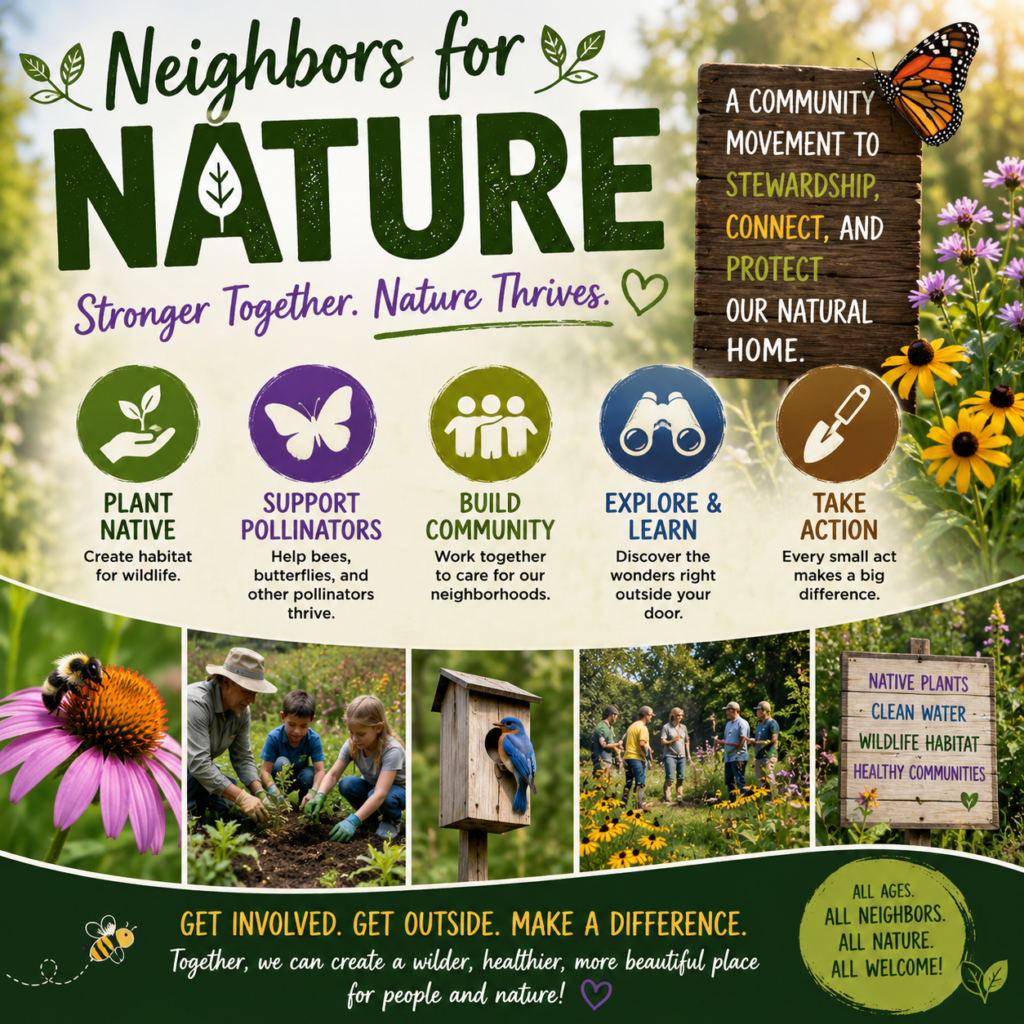
That’s the power of Neighbors for Nature!
🌎 YOUR NEIGHBORS FOR NATURE CHALLENGE
This week, look around your neighborhood and ask:
🌱 Where could we replace turfgrass with native plants?
🦋 Could several neighbors create connected pollinator gardens?
🌳 Are there mature trees or natural areas we could protect?
🤝 Could we organize a neighborhood habitat restoration day?
Start with one conversation, one shared project, or one small patch of native plants.
Conservation doesn’t stop at our property lines—and neither should our efforts to protect nature!
🌿 Small actions. Connected habitats. Stronger communities.
📖 Read the original article:
Habitat at Home: How Communities Can Strengthen Ecosystems Together
Source: Peter Dieser, University of Minnesota Extension, March 30, 2026.
#NeighborsForNature #NatureOnTheBrink #CommunityConservation #HabitatAtHome #NativePlants #WildlifeHabitat #PollinatorHabitat #Biodiversity #HabitatConnectivity #EnvironmentalStewardship #CommunityHabitat #PlantNative #WildlifeFriendlyGardening #ConservationStartsAtHome