From Spiny Caterpillar to Beautiful Butterfly!
Meet the Silvery Checkerspot (Chlosyne nycteis), a fascinating native North American butterfly whose life cycle highlights the important connections between native plants, pollinators, and healthy ecosystems!
With its striking orange-and-black patterned wings and distinctive silvery-white markings underneath, this butterfly is a beautiful sight in meadows, woodland edges, and wildflower gardens.
🐛 The Caterpillar: Small but Mighty!
Before becoming a butterfly, the Silvery Checkerspot begins life as a tiny caterpillar with some fascinating behaviors!
🌿 Picky Eaters: Caterpillars feed on plants in the sunflower family (Asteraceae), including wingstem, sunflowers, asters, and black-eyed Susans.
🐛 Safety in Numbers: Female butterflies lay clusters of eggs, and newly hatched caterpillars feed together in groups, sometimes creating protective silk webbing around their feeding areas.
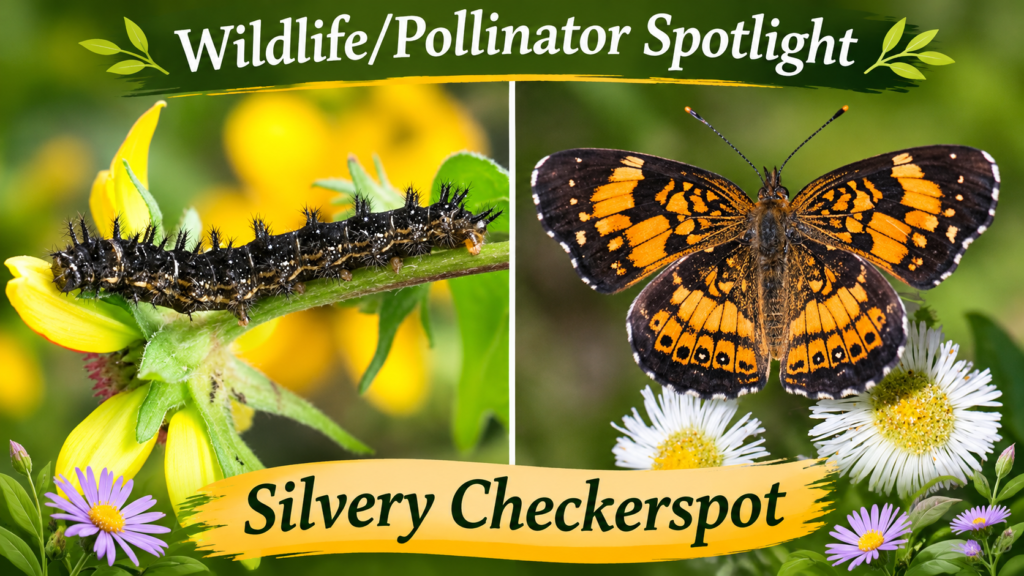
🛡️ Spiny Protection: As they grow, the caterpillars develop dark bodies covered in branching spines, often accented with yellow-orange stripes.
🍂 Winter Survivors: Silvery Checkerspots overwinter as partially grown caterpillars, making undisturbed leaf litter and natural habitat important for their survival.
🦋 The Butterfly: A Colorful Pollinator!
Once transformed, the adult Silvery Checkerspot becomes a nectar-seeking visitor to native wildflowers.
🌼 Nectar Favorites: Adults visit asters, goldenrods, milkweeds, coneflowers, and other nectar-producing flowers.
☀️ Habitat: Look for these butterflies in sunny woodland openings, meadows, roadsides, and areas near streams.
🦋 Distinctive Wings: Their orange-and-black checkered wings feature small pale spots, while the undersides reveal beautiful cream and silvery-white markings.
🌸 Native Plant Connection: Aromatic Aster
Our featured native plant this week, Aromatic Aster (Symphyotrichum oblongifolium), belongs to the aster family and offers valuable late-season nectar for butterflies and other pollinators.
Silvery Checkerspot caterpillars can use certain asters as host plants, demonstrating why gardens need more than nectar-rich flowers—they also need plants that nourish caterpillars!
💚 How You Can Help!
🌿 Plant a diversity of native wildflowers, including asters, wingstem, sunflowers, and black-eyed Susans.
🍂 Leave fallen leaves and some standing vegetation undisturbed through winter to protect overwintering insects.
🚫 Avoid pesticides that can harm caterpillars and adult butterflies.
🌼 Create a continuous supply of blooms from spring through fall.
🌎 Did You Know?
The Silvery Checkerspot’s life cycle reminds us that a butterfly garden isn’t just about feeding adult butterflies. It’s about supporting every stage of life—from egg to caterpillar, chrysalis to butterfly!
💚 Nature on the Brink encourages you to look beyond the flowers and discover the incredible wildlife connections happening in your own backyard!
💬 Have you ever spotted a group of spiny caterpillars feeding together on a native plant? Share your observations in the comments!
Photo: Alabama Butterfly Atlas
#NatureOnTheBrink #WildlifePollinatorSpotlight #SilveryCheckerspot #ChlosyneNycteis #ButterflyConservation #NativePlants #CaterpillarHostPlants #AromaticAster #PollinatorHabitat #ButterflyGarden #Biodiversity #LeaveTheLeaves #GeorgiaWildlife #HabitatConnections