What if we stopped thinking of our yards simply as landscapes—and started seeing them as living ecosystems?
A healthy yard can be much more than grass, shrubs, and flowers. It can be a network of relationships where plants, insects, birds, fungi, and other wildlife depend on one another. 🐝🦋🐦
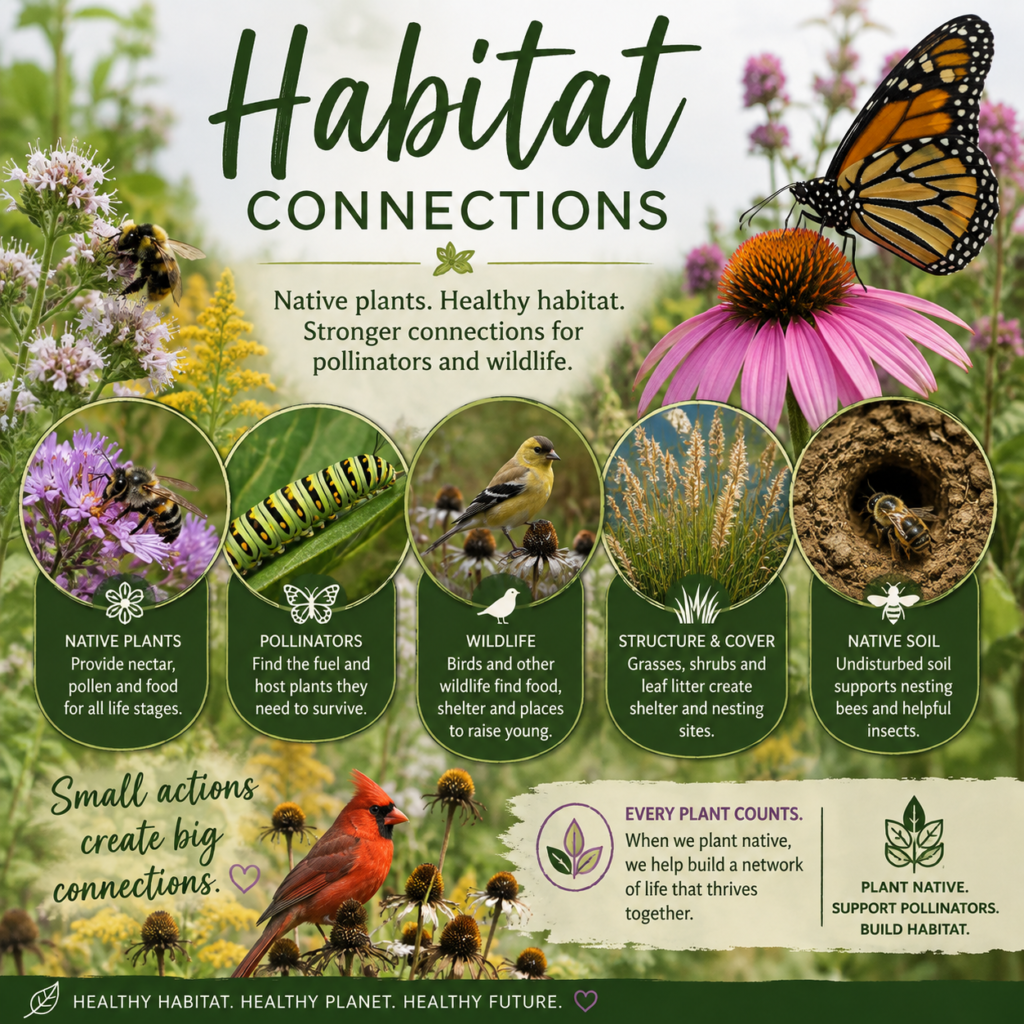
🌱 Native plants provide food and shelter.
🐛 Caterpillars and insects become food for birds and other wildlife.
🍂 Fallen leaves shelter insects and enrich the soil as they decompose.
🌾 Grasses and standing stems provide seeds, nesting sites, and winter cover.
💧 Water supports everything from birds and butterflies to amphibians.
🌳 Trees and shrubs provide layers of habitat, nesting places, berries, seeds, and protection.
And those pieces are connected. A native plant may feed a caterpillar. That caterpillar may feed a young bird. Fallen leaves may shelter next year’s moths and butterflies. Those insects may pollinate the flowers that eventually produce seeds and fruit.
That’s an ecosystem.
You don’t need acres of land to make a difference. Even a small yard can become part of a much larger network of habitat when we choose native plants, reduce pesticides, provide water, leave some natural areas, and make room for wildlife.
💚 Habitat Update Challenge: Take a walk around your yard this week and ask yourself: What does my landscape provide—food, water, shelter, and places to raise young?
Don’t just plant a garden. Grow an ecosystem. 🌎
#HabitatUpdate #NatureOnTheBrink #FromYardToEcosystem #NativePlants #WildlifeHabitat #PollinatorHabitat #HabitatAtHome #PlantNative #BackyardHabitat #NatureAtHome