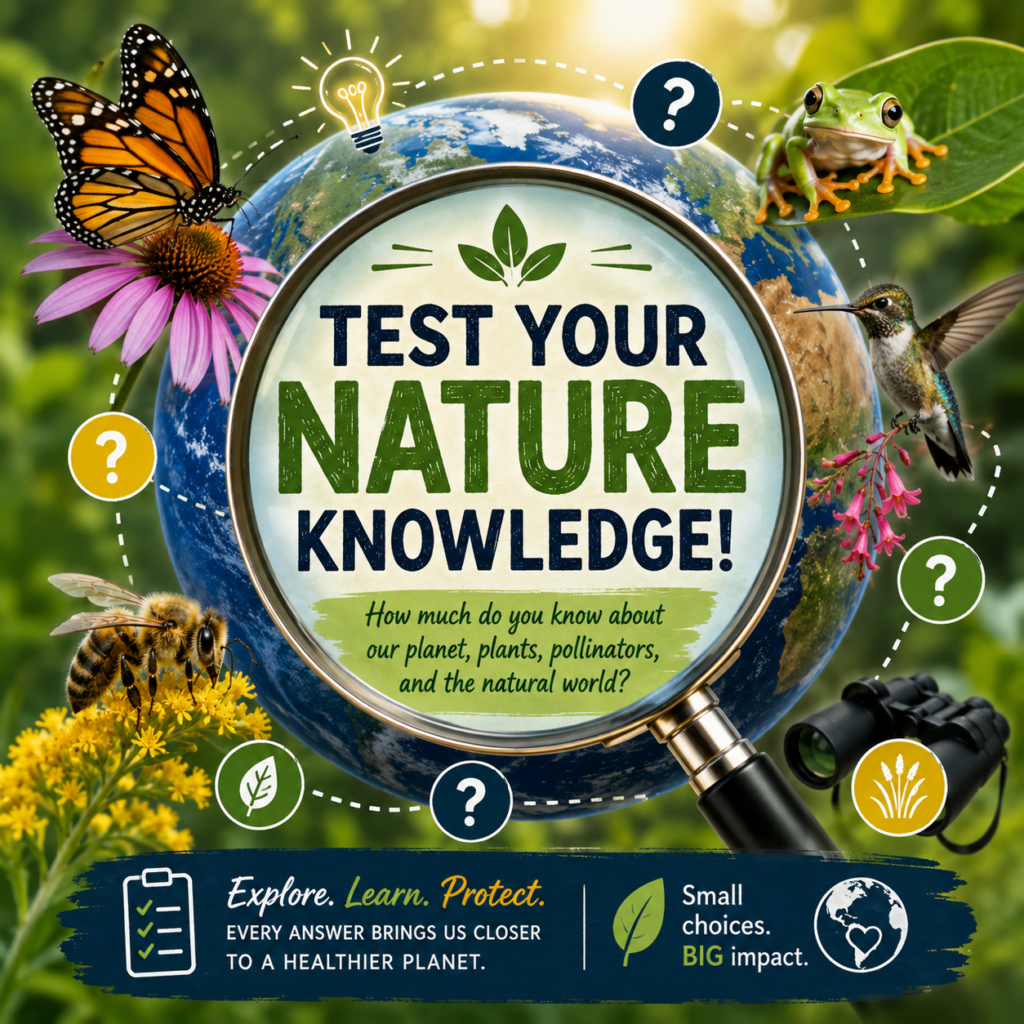
We’ve spent this week looking closer at some amazing connections—from buzz-pollinating bees and hummingbird-like moths to underground habitats and butterflies that depend on asters.
How much do you remember? Let’s find out!
🌸 1. SHAKE IT UP!
Shooting Star (Primula meadia) relies heavily on a special behavior some bees use to release its pollen. What is it called?
A. Buzz pollination
B. Puddle pollination
C. Night pollination
🦋 2. HUMMINGBIRD, BEE, OR MOTH?
The Hummingbird Clearwing (Hemaris thysbe) is unusual because it:
A. Flies only at night
B. Hovers at flowers and is active during the day
C. Doesn’t drink nectar
🌱 3. BENEATH YOUR FEET
Many native bee species make their nests:
A. In birdhouses
B. Underground
C. Underwater
🍄 4. THE UNDERGROUND CONNECTION
Mycorrhizal fungi form relationships with plant roots that can help plants obtain:
A. Water and nutrients
B. Sunlight
C. Pollen
🌼 5. BLOOM + BUTTERFLY
White Woodland Aster (Eurybia divaricata) and other asters are especially important to the Pearl Crescent Butterfly because asters can provide:
A. Only shelter from predators
B. Nectar for adults and host plants for caterpillars
C. Water for caterpillars
⭐ BONUS QUESTION!
What does Shooting Star offer its bee visitors?
Pollen—but no nectar!
👇 HOW DID YOU DO?
Post your answers 1–5 in the comments and challenge a friend to Test Their Nature Knowledge!
This week’s lesson? Nature is all about connections. From the fungi beneath our feet to the butterfly visiting an aster, every piece of habitat has a role to play.
🔎 Look closer. Learn more. Protect the connections.
#TestYourNatureKnowledge #NatureQuiz #ShootingStar #HummingbirdClearwing #PearlCrescent #WhiteWoodlandAster #BuzzPollination #NativeBees #NativePlants #HabitatBeneathYourFeet #Pollinators #NatureOnTheBrink