🌿🐝 Rattlesnake Master & the Great Black Wasp 🖤🌿
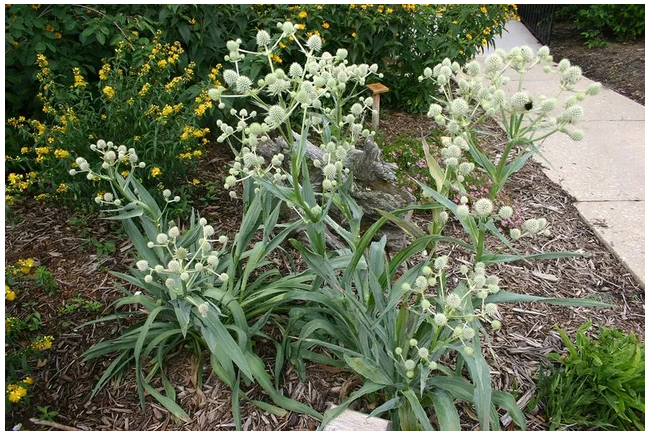
At first glance, Rattlesnake Master (Eryngium yuccifolium) may not look like a typical wildflower. Its stiff, blue-green leaves and round, pale flower heads give it an unmistakable appearance—but to pollinators, those unusual blooms can be an irresistible summertime gathering place.
🐝 MEET THE GREAT BLACK WASP
One striking visitor to Rattlesnake Master is the Great Black Wasp (Sphex pensylvanicus). This large native wasp may look intimidating, but adults are frequent flower visitors, sipping nectar from native plants while helping move pollen from flower to flower.
Female Great Black Wasps also play another ecological role. They hunt katydids and other members of the grasshopper family, carrying captured prey to underground nests where it becomes food for their developing young.
🌱 A GRASSLAND CONNECTION
Rattlesnake Master is a native of prairies and other open habitats, where its flowers attract an impressive assortment of bees, wasps, beetles, flies, and butterflies. Its relationship with insects such as the Great Black Wasp demonstrates why restoring native grassland plants can support much more than beautiful flowers.
Plant Rattlesnake Master in a sunny landscape and then spend some time watching those unusual flower heads. You might be surprised by just how much buzz one native plant can create.
Photo: Penn State Extension
🌿 Plant the bloom. Welcome the buzz. Restore the connection. 🐝
#BuzzAndBloom #RattlesnakeMaster #GreatBlackWasp #EryngiumYuccifolium #SphexPensylvanicus #NativePlants #NativePollinators #Grasslands #PollinatorHabitat #PlantNative #NatureOnTheBrink