🖤🐝 Pollinator Spotlight: Great Black Wasp (Sphex pensylvanicus)
Big, black, and a little intimidating at first glance, the Great Black Wasp (Sphex pensylvanicus) is actually a fascinating native pollinator and beneficial garden visitor!
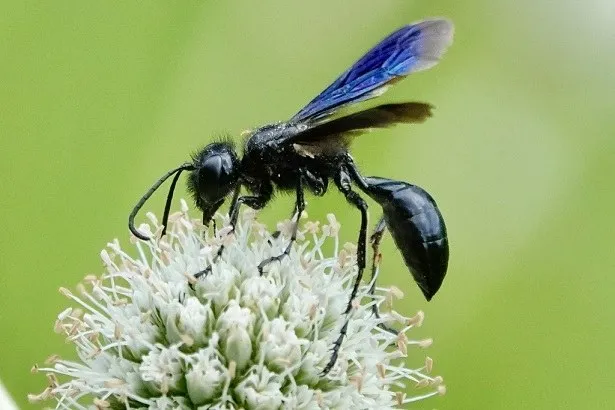
This striking solitary wasp can reach more than an inch long, with an entirely black body and beautiful blue-violet iridescence on its wings. Adults are frequent flower visitors, sipping nectar from plants such as mountain mint, milkweed, goldenrod, thoroughwort, and other nectar-rich native wildflowers. As they travel between blooms, they can transfer pollen and contribute to pollination.
🌸 More Than a Pollinator
The Great Black Wasp also plays another important ecological role. Females hunt katydids and other members of the grasshopper family, paralyzing their prey and carrying it to underground nests as food for their developing young. Because these wasps are solitary rather than social, they do not have a large colony or hive to defend and generally aren’t aggressive toward people.
🌿 Welcome Wasps to Your Pollinator Garden
You can support Great Black Wasps and other native beneficial insects by:
• Planting a diversity of native flowers
• Providing blooms from spring through fall
• Leaving some areas of bare, undisturbed soil for ground-nesting insects
• Avoiding unnecessary pesticide use
• Including native plants such as mountain mint, milkweed and goldenrod
Pollinator gardens aren’t just for butterflies and bees. Native wasps are part of the incredible diversity that keeps our ecosystems working.
Next time you see a large, shimmering black wasp visiting your flowers, take a closer look—you may be watching one of our most impressive native pollinators at work!
🌱 Plant native. Support pollinators. Build habitat.
Photo: Penn State Extension
#GreatBlackWasp #SphexPensylvanicus #PollinatorSpotlight #NativePollinators #NativeWasps #Pollinators #PollinatorGarden #NativePlants #PlantNative #HabitatGardening #NatureontheBrink