
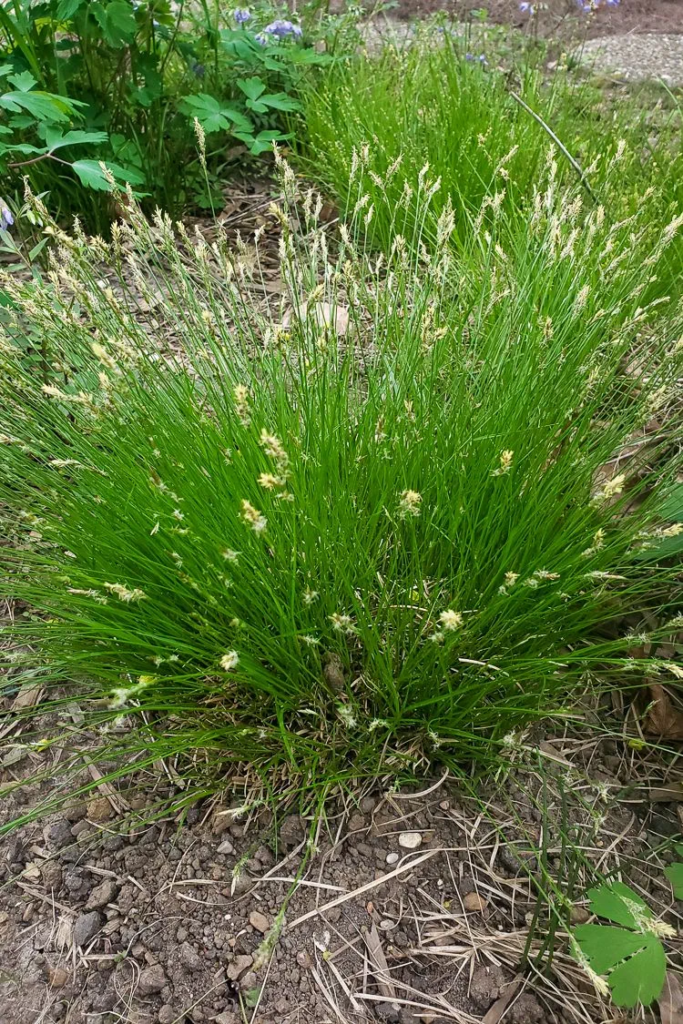
🌿 Native Plant Highlight: White-Tinged Sedge (Carex albicans) 🌿
Looking for a native plant that brings texture and year-round interest to a shady garden? White-tinged sedge (Carex albicans) is a graceful, clump-forming native sedge with fine, arching green foliage. It performs especially well in part shade to shade and can tolerate relatively dry conditions once established, making it a useful native alternative to traditional ornamental groundcovers.
Unlike showier wildflowers, Carex albicans demonstrates that a pollinator-friendly landscape needs more than nectar plants. White-tinged sedge benefits pollinators by contributing to the habitat they need throughout their life cycles. Sedges provide low-growing cover and shelter for insects, while Carex species can also serve as larval host plants for certain butterflies and moths. Adding sedges beneath trees and among flowering perennials creates a more layered, diverse habitat where pollinators and other beneficial insects can find protection and resources.
🌱 Why add White-Tinged Sedge to your landscape?
• Native to much of the eastern United States
• Grows approximately 8–12 inches tall
• Thrives in part shade and shade
• Tolerates dry woodland conditions
• Provides attractive, grass-like texture
• Works well along woodland edges and beneath deciduous trees
• Adds valuable structure and diversity to pollinator habitat
Native plant gardens aren’t just about flowers. Sedges, grasses, shrubs, trees, and wildflowers work together to create a complete ecosystem.
🐝 Plant native. Support pollinators. Build habitat.
Photo: Prairie Nursery
#CarexAlbicans #WhiteTingedSedge #NativePlants #PollinatorGarden #PollinatorHabitat #PlantNative #NativeSedges #HabitatGardening #Pollinators #NatureontheBrink