Is it a hummingbird? A bumble bee? A moth?
If you’ve ever seen a fuzzy little creature hovering in front of a flower and wondered what you were looking at, you may have encountered a Hummingbird Clearwing Moth (Hemaris thysbe).
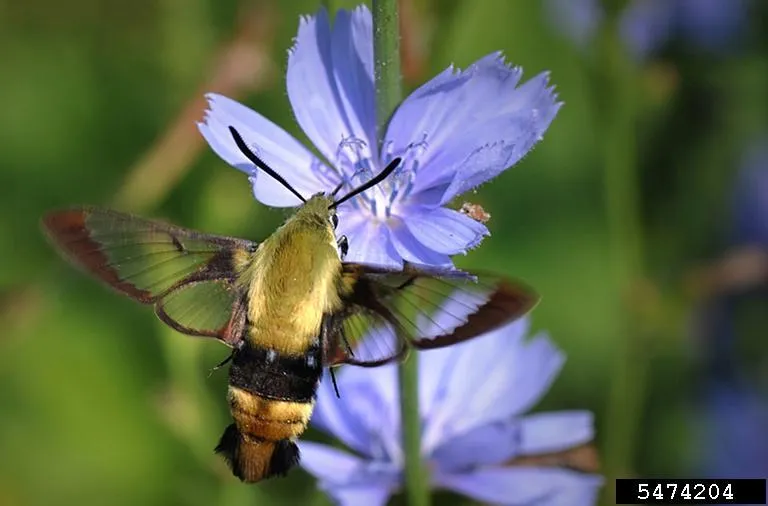
Unlike many moths that emerge after dark, this remarkable native moth is active during the day. It hovers in front of flowers much like a hummingbird, using its long proboscis to drink nectar while its wings beat rapidly.
🔎 LOOK CLOSELY
The Hummingbird Clearwing gets its name from the transparent areas of its wings. Its fuzzy body, rapid flight, and hovering behavior can make identification tricky—but that’s part of what makes spotting one so much fun!
🌸 A POLLINATOR ON THE MOVE
As adults travel from flower to flower drinking nectar, they can transfer pollen along the way. They visit a variety of flowers, including native favorites such as bee balm, mountain mint, phlox, and other nectar-rich blooms.
But supporting an adult moth requires more than planting flowers.
🐛 DON’T FORGET THE CATERPILLARS!
Female Hummingbird Clearwings need the right plants on which to lay their eggs. Caterpillars feed on several native shrubs and trees, including viburnums, hawthorns, and cherries.
That’s an important lesson for every pollinator garden:
Nectar plants feed the adults. Host plants raise the next generation.
🌿 Plant a diversity of native flowers, shrubs, and trees, reduce pesticide use, and leave room for insects to complete their entire life cycles.
The next time something resembling a tiny hummingbird zips through your flowers, grab your camera and take a closer look.
You might have a moth hiding in plain sight! 🦋
#PollinatorSpotlight #HummingbirdClearwing #HemarisThysbe #ClearwingMoth #NativeMoths #Pollinators #HostPlants #NativePlants #PollinatorGarden #HabitatAtHome #NatureOnTheBrink
🦋🌸 POLLINATOR SPOTLIGHT: Hummingbird Clearwing Moth
Is it a hummingbird? A bumble bee? A moth?
If you’ve ever seen a fuzzy little creature hovering in front of a flower and wondered what you were looking at, you may have encountered a Hummingbird Clearwing Moth (Hemaris thysbe).
Unlike many moths that emerge after dark, this remarkable native moth is active during the day. It hovers in front of flowers much like a hummingbird, using its long proboscis to drink nectar while its wings beat rapidly.
🔎 LOOK CLOSELY
The Hummingbird Clearwing gets its name from the transparent areas of its wings. Its fuzzy body, rapid flight, and hovering behavior can make identification tricky—but that’s part of what makes spotting one so much fun!
🌸 A POLLINATOR ON THE MOVE
As adults travel from flower to flower drinking nectar, they can transfer pollen along the way. They visit a variety of flowers, including native favorites such as bee balm, mountain mint, phlox, and other nectar-rich blooms.
But supporting an adult moth requires more than planting flowers.
🐛 DON’T FORGET THE CATERPILLARS!
Female Hummingbird Clearwings need the right plants on which to lay their eggs. Caterpillars feed on several native shrubs and trees, including viburnums, hawthorns, and cherries.
That’s an important lesson for every pollinator garden:
Nectar plants feed the adults. Host plants raise the next generation.
🌿 Plant a diversity of native flowers, shrubs, and trees, reduce pesticide use, and leave room for insects to complete their entire life cycles.
The next time something resembling a tiny hummingbird zips through your flowers, grab your camera and take a closer look.
You might have a moth hiding in plain sight! 🦋
Photo: Penn State Extension
#PollinatorSpotlight #HummingbirdClearwing #HemarisThysbe #ClearwingMoth #NativeMoths #Pollinators #HostPlants #NativePlants #PollinatorGarden #HabitatAtHome #NatureOnTheBrink