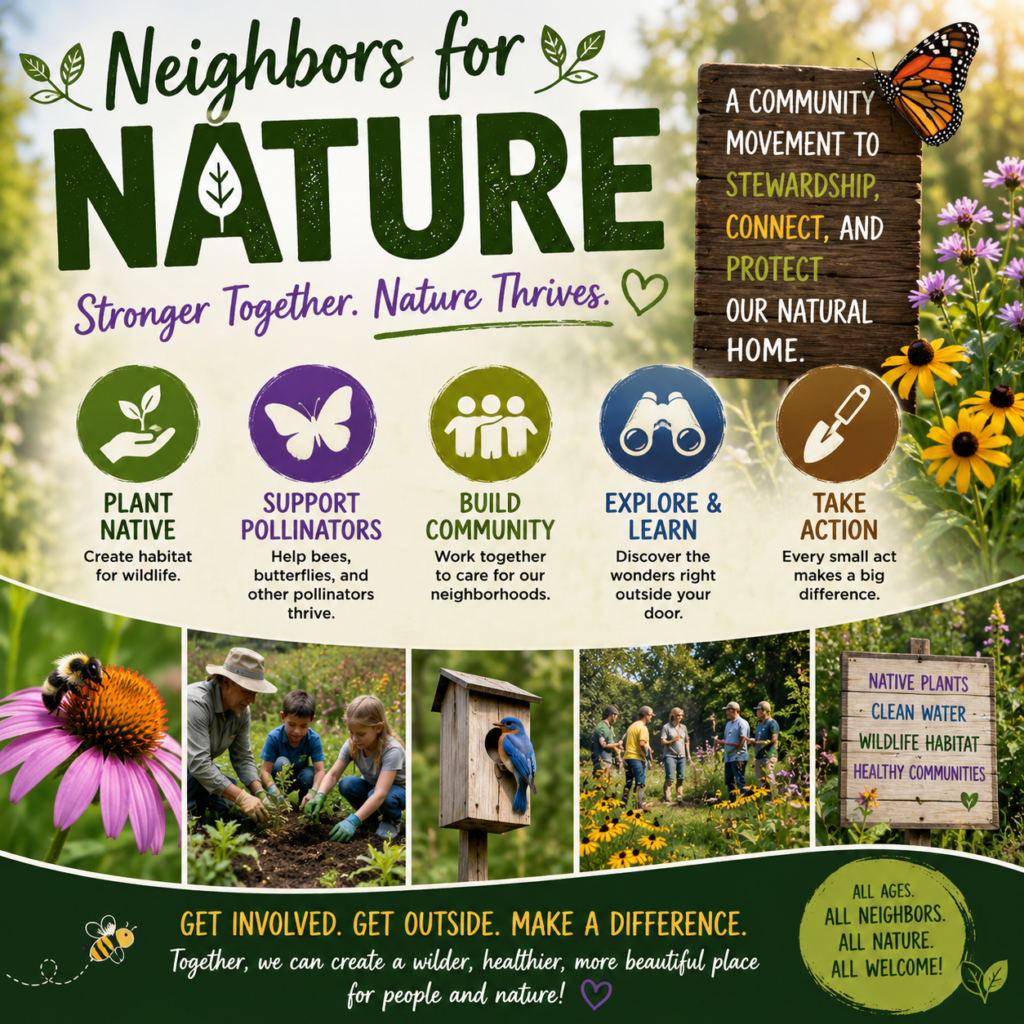
What happens when neighbors come together to restore the natural spaces they love?
In Minneapolis, Minnesota, community volunteers are proving that you don’t need to be a professional ecologist to make a meaningful difference for wildlife!
Through partnerships with Friends of the Mississippi River (FMR), neighborhood groups are transforming neglected parks, restoring native habitats, and building stronger communities—all through the power of local volunteers!
🌱 A COMMUNITY-LED APPROACH TO CONSERVATION
Instead of relying entirely on professional restoration crews, FMR is helping neighborhood groups develop long-term habitat management plans.
These plans break restoration projects into manageable seasonal tasks that small groups of volunteers can accomplish over 5–10 years.
FMR provides ecological expertise and guidance, while neighbors take the lead in caring for their local natural areas.
🌳 REAL NEIGHBORHOODS MAKING A DIFFERENCE!
🌿 James I. Rice Park: Neighborhood volunteers are following a restoration plan to improve the ecological health of this beloved riverside park.
🌱 Bassett’s Creek Park: Volunteers have removed invasive buckthorn and planted native trees and shrubs to restore wildlife habitat and help stabilize eroding soil.
🐦 Father Hennepin Bluff Park: Dedicated neighborhood stewards have invested hundreds of volunteer hours removing invasive plants, maintaining trails, and implementing a long-term restoration plan.
🌼 Sheridan Memorial Park: What began with caring for a rain garden has grown into a larger neighborhood effort to restore native vegetation and improve riverbank habitat.
These projects demonstrate something powerful: when communities take ownership of their natural spaces, restoration becomes an ongoing commitment rather than a one-time event.
🦋 WHY DOES THIS MATTER FOR WILDLIFE?
Restoring native habitats can:
🌸 Provide food and shelter for pollinators.
🐛 Support insects that native birds depend on.
🌳 Improve woodland and streamside habitats.
🌱 Reduce erosion and support healthier soils.
🐦 Strengthen habitat connections between natural areas.
🤝 Bring neighbors together through a shared purpose.
One particularly important example is Bassett’s Creek Park, which helps connect Theodore Wirth Park with the Mississippi River, creating a valuable link for wildlife.
🌎 NEIGHBORS FOR NATURE CHALLENGE!
Look around your own community.
Is there a neglected park, streambank, neighborhood entrance, or shared green space that could become better wildlife habitat?
💚 Start a conversation with your neighbors.
🌿 Identify invasive plants that need management.
🌸 Explore opportunities to introduce native plants.
🤝 Contact the property owner or local parks department about restoration opportunities.
📅 Organize a volunteer group and develop a long-term plan.
You don’t need to restore everything at once. Small, consistent efforts can create lasting ecological change!
🌱 THE BIGGER PICTURE
Habitat restoration isn’t just about improving the land.
It’s about creating connections—between native plants and wildlife, between neighborhoods and natural spaces, and between people who care about the future of their environment.
💚 One neighbor can start a conversation. A group of neighbors can restore a habitat. An entire community can help nature thrive!
📖 Read the inspiring article:
Guiding Community-Led Habitat Restoration Efforts
#NeighborsForNature #NatureOnTheBrink #CommunityConservation #HabitatRestoration #NativePlants #WildlifeHabitat #PollinatorHabitat #VolunteerConservation #EnvironmentalStewardship #InvasiveSpeciesManagement #HabitatCorridors #CommunityRestoration #PlantNative