As autumn leaves begin to fall and our gardens wind down for winter, many of us reach for the rake, pruning shears, and leaf blower.
But what if one of the best things we could do for wildlife this fall is a little less yard work?
Those dried stems, fallen leaves, and fading flowers aren’t just garden debris. They’re valuable habitat for insects, birds, amphibians, and other wildlife!
🍁 LEAVE THE LEAVES
Fallen leaves create a natural blanket that protects soil and provides shelter for overwintering insects.
🦋 Some butterflies and moths spend winter as eggs, caterpillars, chrysalises, or cocoons tucked among fallen leaves.
🐸 Frogs, salamanders, and other small creatures use leaf litter for moisture, protection, and shelter.
🌱 As leaves decompose, they return nutrients to the soil and support fungi, microorganisms, and other decomposers.
🌾 LET THE STEMS STAND
Those dried flower stalks and hollow stems may look lifeless, but they can provide important habitat!
🐝 Some native bees nest in standing or broken plant stems.
🐞 Other beneficial insects use stems and surrounding vegetation for shelter.
🐦 Standing vegetation also provides cover for birds and other wildlife.
Consider leaving stems standing through winter and well into spring, giving wildlife time to emerge.
🌻 SAVE THE SEED HEADS
Don’t be too quick to cut back coneflowers, black-eyed Susans, native sunflowers, asters, and native grasses.
🐦 Goldfinches, sparrows, and other seed-eating birds may visit dried seed heads for food.
🌱 Seeds that fall naturally can help establish the next generation of native plants.
🍂 CREATE A WILDLIFE-FRIENDLY CORNER
You don’t have to leave your entire yard untouched!
Choose a quiet corner, woodland edge, or garden bed where leaves can remain, stems can stand, and nature can follow its seasonal rhythm.
Keep walkways, drains, and areas around buildings clear where necessary, and move leaves into garden beds instead of removing them entirely.
🌎 THE HABITAT CONNECTION
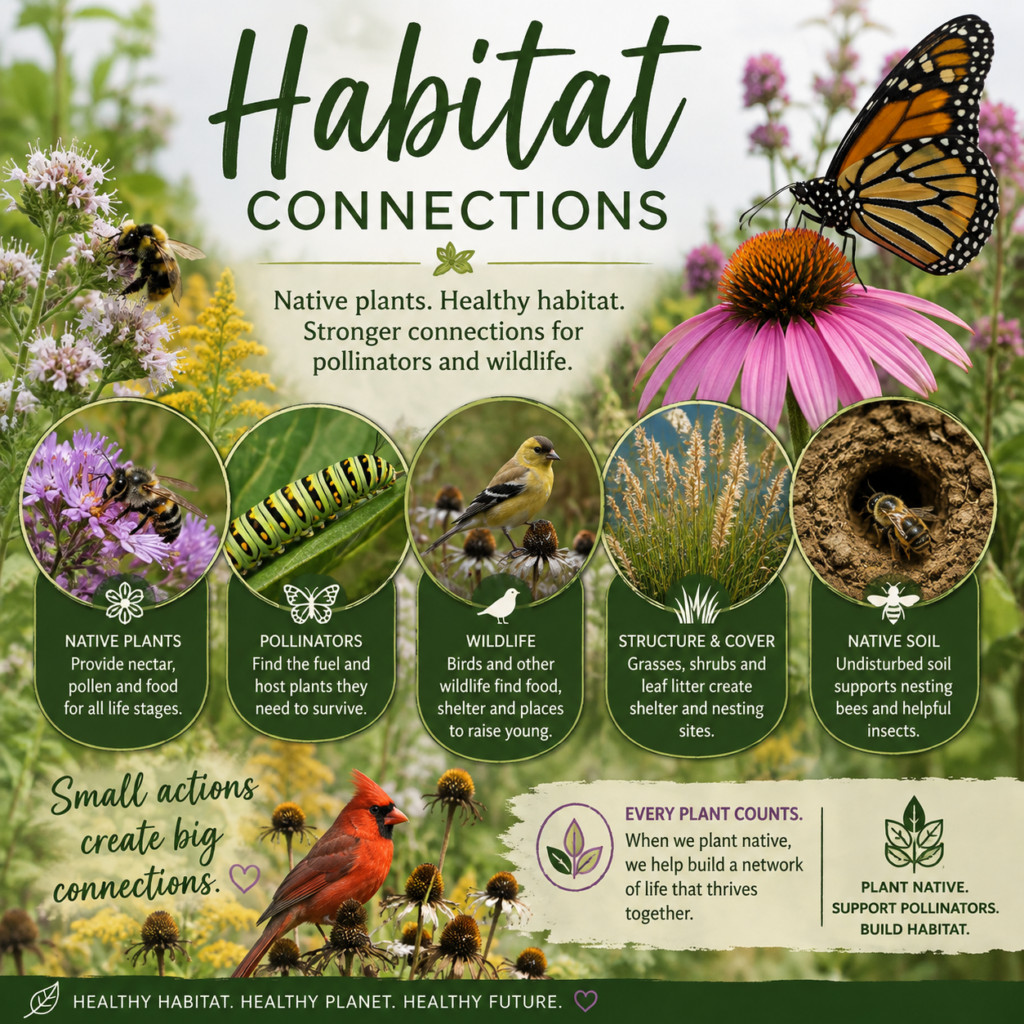
🌿 Native plants provide food and shelter.
🐛 Insects depend on leaves, stems, and plant material.
🐦 Birds depend on insects and seeds.
🍂 Decomposers recycle organic matter into healthy soil.
🌱 Healthy soil supports the next generation of plants.
Everything is connected—even the parts of the garden we once considered messy!
🔎 HABITAT CONNECTIONS CHALLENGE:
This fall, choose one area of your landscape to leave a little wild.
🍁 Leave the leaves.
🌾 Let the stems stand.
🌻 Save the seed heads.
🐝 Protect overwintering wildlife.
Then revisit that area in spring. Watch for emerging insects, visiting birds, and new plants beginning to grow.
💚 A tidy yard may look nice to us, but a little natural mess can mean survival for wildlife.
This fall, don’t just clean up your garden. Make room for nature! 🍂🦋
#HabitatConnections #NatureOnTheBrink #RethinkFallCleanup #LeaveTheLeaves #LeaveTheStems #SaveTheSeedHeads #NativePlants #PollinatorHabitat #WildlifeHabitat #OverwinteringInsects #GardenForWildlife #FallGardening #PlantNative