
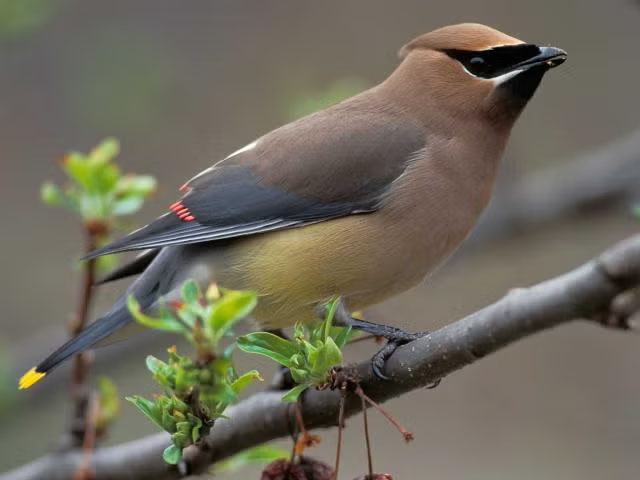
Have you ever spotted a flock of elegant birds descending upon a berry-covered tree or shrub, seemingly appearing out of nowhere?
You may have encountered one of North America’s most beautiful and social songbirds — the Cedar Waxwing (Bombycilla cedrorum)!
With its silky plumage, striking black mask, bright yellow tail tips, and remarkable appetite for fruit, the Cedar Waxwing is a delightful visitor to our winter landscapes.
And there’s a wonderful connection to this week’s featured native plant — Winterberry (Ilex verticillata)!
🌿 Meet the Cedar Waxwing
Cedar Waxwings are sleek, medium-sized songbirds that often travel in flocks, especially during fall and winter.
Their soft brown heads, pale yellow bellies, and smooth gray wings give them an almost painted appearance.
🔍 Species Profile
- Scientific Name: Bombycilla cedrorum
- Family: Bombycillidae
- Length: Approximately 6–7 inches
- Wingspan: Approximately 9–12 inches
- Habitat: Woodland edges, open woodlands, parks, gardens, and neighborhoods with fruit-bearing trees and shrubs
- Diet: Primarily fruit, supplemented with insects, especially during the breeding season
- Range: Widespread across North America, including Georgia
✨ How to Identify a Cedar Waxwing
Look for these distinctive features:
🖤 Black Eye Mask: A bold black mask outlined in white gives the bird its mysterious appearance.
👑 Elegant Crest: A pointed crest rises from the back of its head.
💛 Yellow Tail Tips: A bright yellow band decorates the end of its tail.
❤️ Red Wing Tips: Some individuals have tiny, waxy-looking red tips on their secondary wing feathers — the feature that inspired their name!
🤎 Silky Plumage: Soft shades of brown, gray, and pale yellow blend beautifully across the bird’s body.
🍒 A Winter Buffet: Cedar Waxwings and Native Berries
Unlike many songbirds that rely heavily on insects, Cedar Waxwings are exceptionally well adapted to eating fruit.
During fall and winter, they search for berry-producing trees and shrubs, sometimes gathering in large flocks to feast.
Native plants that may provide food include:
❤️ Winterberry (Ilex verticillata) — Brilliant red fruits that may persist into winter.
💙 Serviceberry (Amelanchier species) — Early-season fruits that are eagerly consumed by birds.
💜 American Beautyberry (Callicarpa americana) — Clusters of purple fruits that provide seasonal food.
🔴 Flowering Dogwood (Cornus florida) — Red autumn fruits that support migrating and resident birds.
🌿 Eastern Red Cedar (Juniperus virginiana) — Blue, berry-like cones that are an important food source and helped give Cedar Waxwings their name.
By incorporating a variety of native fruit-producing plants, we can help provide food resources across multiple seasons.
🐦 Nature’s Traveling Seed Dispersers
Cedar Waxwings do more than enjoy a berry buffet — they also help plants reproduce!
As waxwings swallow fruits, many seeds pass through their digestive systems and are deposited in new locations.
This process, called endozoochory, is a form of seed dispersal in which animals transport seeds internally.
A flock of Cedar Waxwings moving between woodland edges, neighborhood gardens, and natural areas can help spread the seeds of the plants they consume.
It’s a wonderful example of how birds and native plants are connected in nature’s living tapestry.
🤝 The Social Side of Cedar Waxwings
Cedar Waxwings are famous for their social behavior.
You may observe them:
🐦 Gathering in large, chattering flocks.
🍒 Feeding together in fruit-bearing trees.
🌳 Resting close together on branches.
💞 Passing berries from one bird to another during courtship.
Their high-pitched, thin whistles are often heard before the birds are spotted.
Listen for their delicate, almost insect-like calls overhead!
🐛 More Than Berry Lovers
Although fruit makes up a large portion of their diet, Cedar Waxwings also eat insects, particularly during the warmer months.
They may catch flying insects such as midges, mayflies, and other small insects.
This seasonal flexibility helps them take advantage of changing food resources throughout the year.
🌎 Are Cedar Waxwings Migratory?
Cedar Waxwings occur in Georgia throughout the year, but their numbers and movements can change with the seasons.
During fall and winter, flocks often wander widely in search of abundant fruit.
Rather than following a predictable route through every neighborhood, they may appear wherever suitable food resources are available.
That’s why a berry-laden native shrub can suddenly become the center of attention when a flock arrives!
🏡 Five Ways to Welcome Cedar Waxwings to Your Neighborhood
- Plant native berry-producing shrubs. Include Winterberry, American Beautyberry, and other regionally appropriate species.
- Preserve native fruit-bearing trees. Flowering Dogwood, Eastern Red Cedar, and serviceberries provide valuable seasonal food.
- Create layered wildlife habitat. Combine canopy trees, understory trees, shrubs, and native groundcovers.
- Avoid unnecessary pesticide use. Protect insects and maintain healthy food webs.
- Keep birds safe. Reduce window collisions using bird-safe window treatments and keep cats indoors.
💡 Did You Know?
Cedar Waxwings sometimes develop orange tail tips instead of the usual yellow!
Researchers have linked this unusual coloration to pigments obtained from certain introduced fruits, including invasive honeysuckles.
It’s a fascinating example of how an animal’s diet can influence its appearance — and another reason to understand the ecological effects of non-native plants.
🔍 Your Wildlife Challenge: Search for a Winter Berry Buffet!
Take a walk through your neighborhood, local park, or native plant garden.
Look for fruit-bearing trees and shrubs, especially those displaying bright red, purple, or blue fruits.
Spend a few minutes quietly observing.
- Can you spot birds feeding on the fruits?
- Are they feeding alone or in flocks?
- Can you identify the plants providing food?
- Do you hear the high-pitched whistles of Cedar Waxwings?
- What other wildlife might benefit from these native plants?
Record your observations in a nature journal or share them with eBird or iNaturalist.
You never know when a flock of Cedar Waxwings might make a surprise appearance!
💚 The Bigger Picture
The relationship between Cedar Waxwings and native berry-producing plants reminds us that wildlife conservation is about more than providing habitat during the growing season.
Native plants support wildlife through flowers, foliage, insects, fruits, seeds, and shelter — often at different times of the year.
From the native bees visiting Winterberry’s spring flowers to the Cedar Waxwings feeding on its brilliant red fruits, each season reveals another connection in nature’s living tapestry.
By planting native trees and shrubs, we can help create neighborhoods where birds and other wildlife find the resources they need throughout the year.
Plant Native. Share Nature’s Winter Buffet. Welcome the Waxwings!
🌿 Nature on the Brink
Inspiring the Next Generation of Environmental Stewards
Photo: Missouri Department of Conservation
Explore. Discover. Connect. Protect.
#NatureOnTheBrink #WildlifeSpotlight #CedarWaxwing #BombycillaCedrorum #Winterberry #IlexVerticillata #NativeBerries #WinterBirds #BirdFriendlyGardens #NativePlants #GeorgiaWildlife #SeedDispersal #WildlifeHabitat #BirdConservation #PlantNative