Fall is a wonderful time to explore nature—not just for colorful leaves, but for seeds! As summer flowers fade, plants are busy preparing for the next generation.
This week’s Explore Outdoors Challenge is to head outside and see how many different kinds of seeds you can discover.
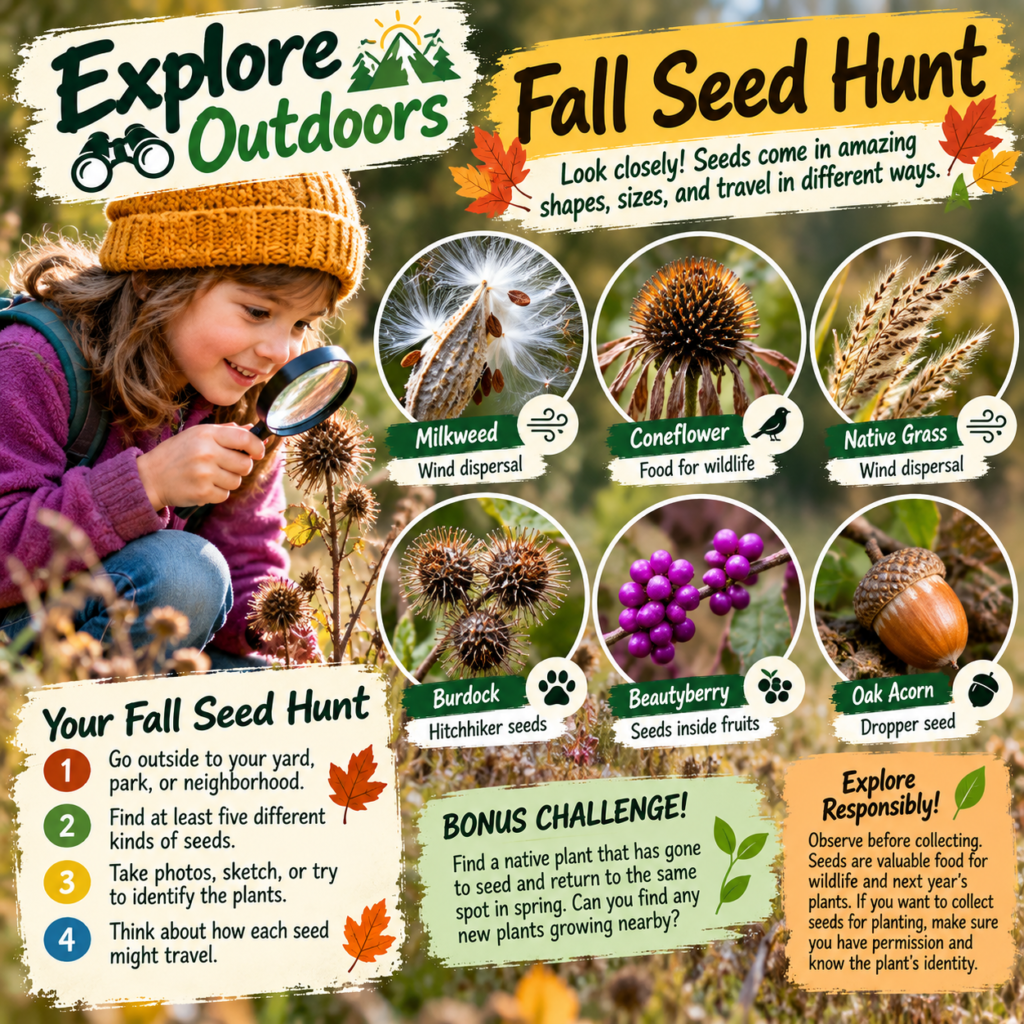
🔎 Look closely! Seeds come in an amazing variety of shapes and sizes.
🌬️ Floaters & Flyers — Milkweed and asters produce lightweight seeds that can travel on the wind.
🐦 Seeds for Wildlife — Native grasses, coneflowers, sunflowers, and other plants produce seeds that provide food for birds and small animals.
🐾 Hitchhikers — Some seeds have hooks or bristles that attach to fur, feathers, or clothing and get carried to a new location.
🍒 Seeds Inside Fruits — Berries and other fruits attract wildlife. Animals eat the fruit and can help disperse the seeds.
🌰 Droppers & Rollers — Acorns, nuts, and other heavier seeds fall to the ground, where animals may carry or bury them.
🍁 Your Fall Seed Hunt
Take a walk through your yard, neighborhood, park, meadow, or garden and look for at least five different kinds of seeds. Take photos, sketch what you find, or try to identify the plants they came from.
Ask yourself: How might this seed travel? Wind? Water? Wildlife? Gravity? Or maybe on your socks?
⚠️ Explore responsibly: Observe before collecting. Seeds are valuable food for wildlife and are also next year’s plants. If you want to collect seeds for planting, make sure you have permission and know the plant’s identity first.
🌱 BONUS CHALLENGE: Find a native plant that has gone to seed and return to the same spot in spring. Can you find any new plants growing nearby?
💚 Every seed has a journey—and every seed holds the possibility of a new plant.
Get outside. Look closely. Discover what’s waiting to grow!
#ExploreOutdoors #NatureOnTheBrink #FallSeedHunt #SeedSeason #NativePlants #NatureChallenge #SeedDispersal #OutdoorLearning #ExploreNature #GetOutside #NatureEducation