How Well Do You Know Your Native Plants, Pollinators & Wildlife Habitats?
Did you know that a single native plant can help support an entire butterfly life cycle? Or that some of our most important pollinators spend the winter right beneath our feet?
This week, Nature on the Brink explored the fascinating connections between Golden Alexander, Black Swallowtail butterflies and caterpillars, and ground-nesting native bees.
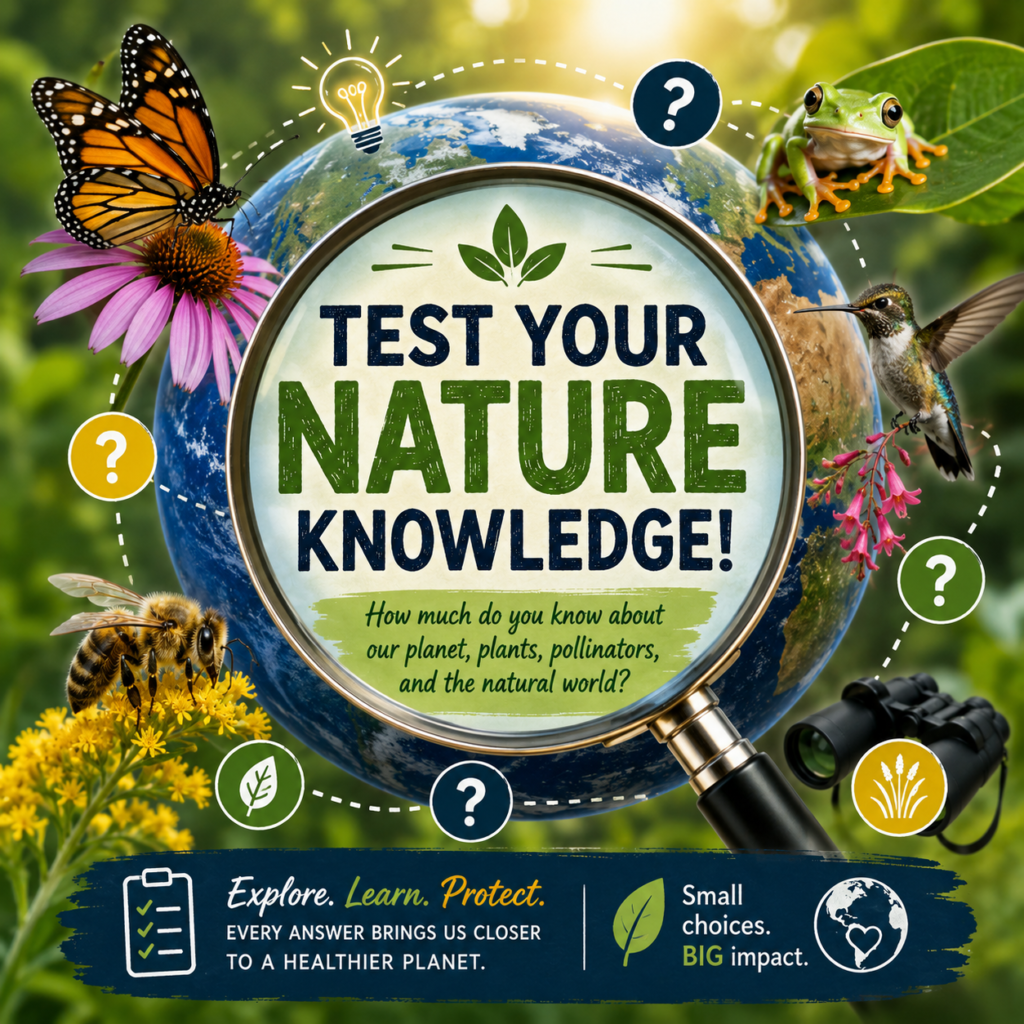
Now it’s time to put your nature knowledge to the test!
🔎 ARE YOU READY FOR THE CHALLENGE?
🌼 QUESTION 1: THE NATIVE PLANT CONNECTION
Golden Alexander (Zizia aurea) is an important native host plant for which butterfly?
A) Monarch Butterfly
B) Black Swallowtail Butterfly
C) Eastern Tiger Swallowtail
D) Red Admiral Butterfly
🐛 QUESTION 2: WHAT’S ON THE MENU?
What do Black Swallowtail caterpillars eat when developing on Golden Alexander?
A) Nectar from its flowers
B) Pollen collected by bees
C) The plant’s leaves and other tender foliage
D) Only the plant’s seeds
🦋 QUESTION 3: A REMARKABLE DEFENSE!
When threatened, Black Swallowtail caterpillars can extend a bright orange, forked organ that releases an unpleasant odor.
What is this specialized defensive organ called?
A) Proboscis
B) Osmeterium
C) Spiracle
D) Chrysalis
🐝 QUESTION 4: WHAT’S SLEEPING BENEATH YOUR FEET?
Approximately what percentage of North America’s native bee species nest in the ground?
A) 10%
B) 25%
C) 50%
D) 70%
🍂 QUESTION 5: PROTECTING UNDERGROUND POLLINATORS
Which fall gardening practice helps protect ground-nesting native bees?
A) Tilling every garden bed before winter
B) Covering all exposed soil with landscape fabric
C) Leaving some bare, undisturbed soil
D) Applying insecticides before the first frost
🌿 BONUS QUESTION: CONNECTING THE DOTS!
Why is planting native butterfly host plants just as important as planting nectar-rich flowers?
A) Host plants provide food for developing caterpillars.
B) Host plants help butterflies complete their life cycles.
C) Host plants support wildlife food webs.
D) All of the above!
HOW DID YOU SCORE?
🌟 6 Correct: Native Nature Expert!
🦋 4–5 Correct: Pollinator Protector!
🐝 2–3 Correct: Budding Naturalist!
🌱 0–1 Correct: Every Naturalist Starts with Curiosity!
💚 THIS WEEK’S BIG TAKEAWAY
A healthy habitat is more than a beautiful collection of flowers.
🌼 Golden Alexander provides floral resources for pollinators and foliage for Black Swallowtail caterpillars.
🦋 Black Swallowtails remind us that butterflies need both nectar plants and caterpillar host plants.
🐝 Ground-nesting native bees remind us that essential wildlife habitat exists beneath the soil as well as above it.
When we protect native plants, caterpillars, pollinators, and their habitats, we’re protecting the connections that keep ecosystems thriving!
🌎 YOUR NATURE CHALLENGE!
This week, identify one way you can improve your garden for wildlife.
Could you plant Golden Alexander, protect a caterpillar host plant, or leave a small patch of soil undisturbed for native bees?
Small actions. Stronger habitats. Healthier ecosystems! 🌿
💬 Share your score in the comments! How many questions did you answer correctly?
#TestYourNatureKnowledge #NatureOnTheBrink #GoldenAlexander #BlackSwallowtail #BlackSwallowtailCaterpillar #GroundNestingBees #NativeBees #ButterflyHostPlants #NativePlants #PollinatorConservation #HabitatConnections #BuzzAndBloom #WildlifeHabitat #NatureEducation #Biodiversity