Native Berries, Winter Birds, and Woodland Habitats
When winter arrives, our woodlands and gardens may appear quiet, but nature is still busy!
Brilliant red Winterberries decorate bare branches, Cedar Waxwings gather in search of fruit, and native trees and shrubs provide food and shelter for wildlife.
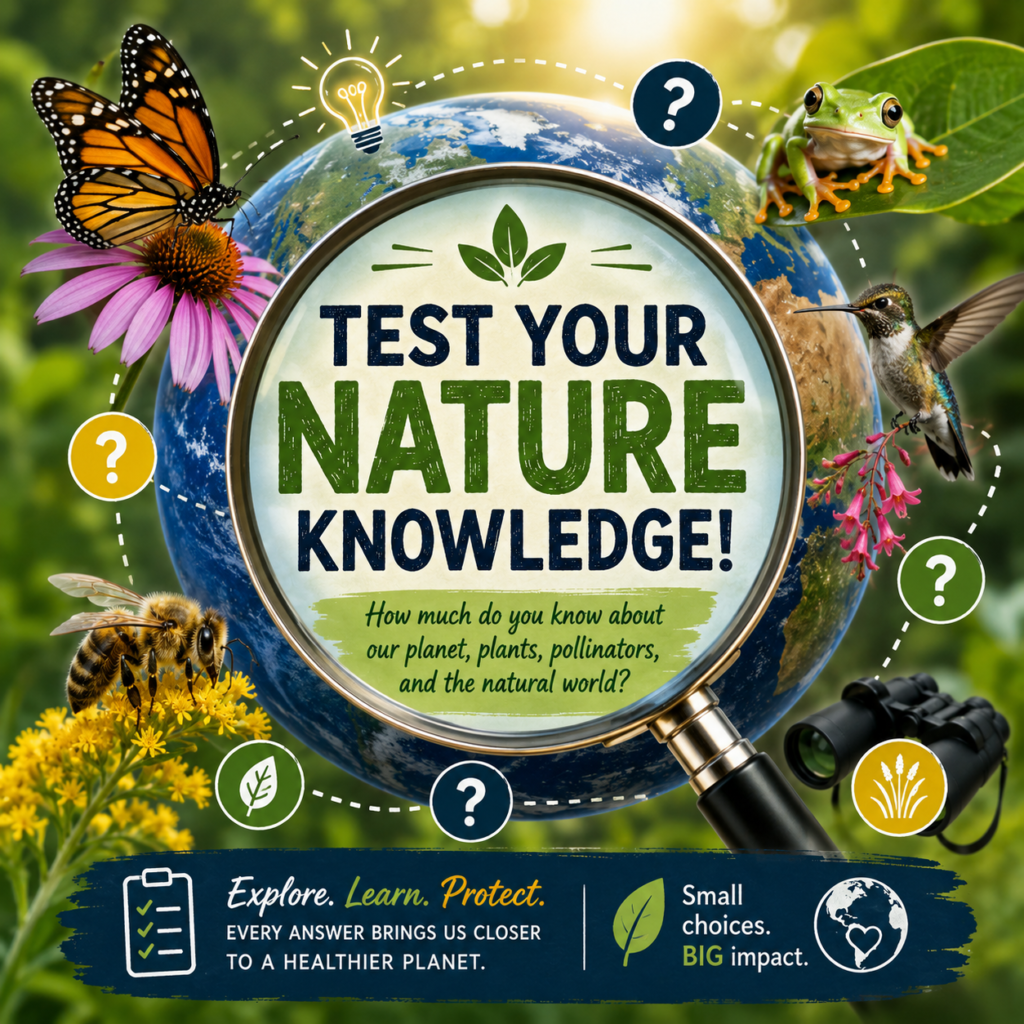
But how much do you know about the fascinating connections between native berries, winter birds, and healthy woodland habitats?
It’s time to put your nature knowledge to the test!
🔍 Are You Ready for the Challenge?
Grab a pencil, gather your family or friends, and see how many questions you can answer correctly!
🍒 Question 1: The Winterberry Mystery
Winterberry (Ilex verticillata) is a native holly known for its brilliant red berries.
What makes Winterberry different from many familiar hollies?
A. It produces blue flowers in winter.
B. It loses its leaves in autumn.
C. It grows only in tropical climates.
D. It never produces flowers.
🐦 Question 2: Who’s Coming to Dinner?
Which bird is especially well known for gathering in flocks and feeding on berries?
A. Ruby-throated Hummingbird
B. Red-tailed Hawk
C. Cedar Waxwing
D. Great Blue Heron
🐝 Question 3: From Flowers to Berries
What important role do native bees and other pollinating insects play in Winterberry’s life cycle?
A. They carry seeds to new locations.
B. They transfer pollen between flowers.
C. They protect berries from birds.
D. They turn green berries red.
🌳 Question 4: Nature’s Winter Shelter
Which native evergreen provides both protective cover and blue, berry-like cones that birds eat?
A. Eastern Red Cedar
B. Flowering Dogwood
C. American Beech
D. Eastern Redbud
🌱 Question 5: The Traveling Seed
When a Cedar Waxwing eats a berry and later deposits its seeds in another location, what ecological process has occurred?
A. Photosynthesis
B. Pollination
C. Seed dispersal
D. Germination
🌸 Question 6: The Winterberry Partnership
Why might a healthy female Winterberry shrub produce no berries?
A. Winterberry only produces fruit every ten years.
B. It may lack a nearby compatible male plant for pollination.
C. Its flowers must be pollinated by birds.
D. Winterberry produces berries only in summer.
🍂 Question 7: A Healthy Winter Habitat
Which gardening practice best supports wildlife during winter?
A. Removing all leaves, stems, and natural debris.
B. Replacing native shrubs with large areas of lawn.
C. Planting native trees and shrubs while preserving leaf litter and standing stems.
D. Cutting down berry-producing plants after autumn.
🐦 Question 8: More Than a Berry Buffet
Why is planting a variety of native berry-producing plants better than relying on just one species?
A. Every plant produces berries at exactly the same time.
B. Different plants provide food and habitat resources across different seasons.
C. Birds eat only one kind of berry.
D. Native berries eliminate the need for insects.
🌿 Question 9: The Woodland Connection
How do native understory trees and shrubs contribute to healthy woodland habitats?
A. They provide food, nesting sites, shelter, and additional vegetation layers.
B. They prevent all sunlight from reaching the forest floor.
C. They eliminate the need for canopy trees.
D. They discourage birds from entering woodlands.
🍒 Question 10: The Winter Wildlife Buffet
Which statement about native berries is most accurate?
A. All native berries remain available throughout winter.
B. Birds eat berries only during migration.
C. Native fruits can provide valuable seasonal food, but availability varies by plant and weather conditions.
D. Only Cedar Waxwings eat native berries.
🏆 What’s Your Nature Knowledge Score?
🌱 0–3 Correct: Curious Nature Explorer!
Every great naturalist begins with curiosity. Keep exploring!
🐝 4–6 Correct: Budding Naturalist!
You’re discovering some wonderful connections between plants and wildlife!
🐦 7–8 Correct: Woodland Wildlife Detective!
You understand how native plants help support birds and other animals!
🌳 9–10 Correct: Habitat Conservation Champion!
Outstanding! You recognize the importance of native plants and healthy habitats throughout the year!
🌟 Bonus Challenge: Think Like an Ecologist!
Imagine a neighborhood where most native berry-producing trees and shrubs have been replaced by lawns and ornamental plants.
What might happen to the birds and other wildlife that depend on those native plants?
Think about food availability, shelter, nesting opportunities, and seed dispersal.
Then consider what neighbors could do together to restore those important habitat connections.
🔍 Your Outdoor Nature Challenge
This week, take a walk through your neighborhood, park, or woodland trail.
Look for three native plants that provide winter food or shelter.
Can you find:
🍒 A shrub with berries?
🌲 An evergreen tree offering protective cover?
🐦 A bird feeding on fruits or seeds?
🍂 A patch of fallen leaves or standing stems providing habitat for overwintering insects?
Record your discoveries in a nature journal or photograph them for iNaturalist.
💚 The Bigger Picture
A Winterberry shrub covered in brilliant red fruits represents much more than seasonal beauty.
Its spring flowers connect with native bees. Its summer fruits develop into autumn and winter berries. Birds consume those fruits and may disperse seeds into new habitats.
Meanwhile, native trees, shrubs, grasses, and leaf litter provide the food and shelter wildlife needs throughout the year.
These connections remind us that a healthy habitat is a living tapestry — woven together by plants, pollinators, birds, and countless other organisms.
Every native plant we protect or add to our landscapes helps strengthen that tapestry.
How many questions did you answer correctly? Share your score in the comments! 🐦🍒
🌿 Nature on the Brink
Inspiring the Next Generation of Environmental Stewards
Explore. Discover. Connect. Protect.
#NatureOnTheBrink #TestYourNatureKnowledge #NatureQuiz #NativeBerries #WinterWildlife #Winterberry #CedarWaxwing #NativePlants #GeorgiaNativePlants #BirdFriendlyGardens #WoodlandHabitats #NativeBees #SeedDispersal #WildlifeHabitat #HabitatConnections #Biodiversity #PlantNative