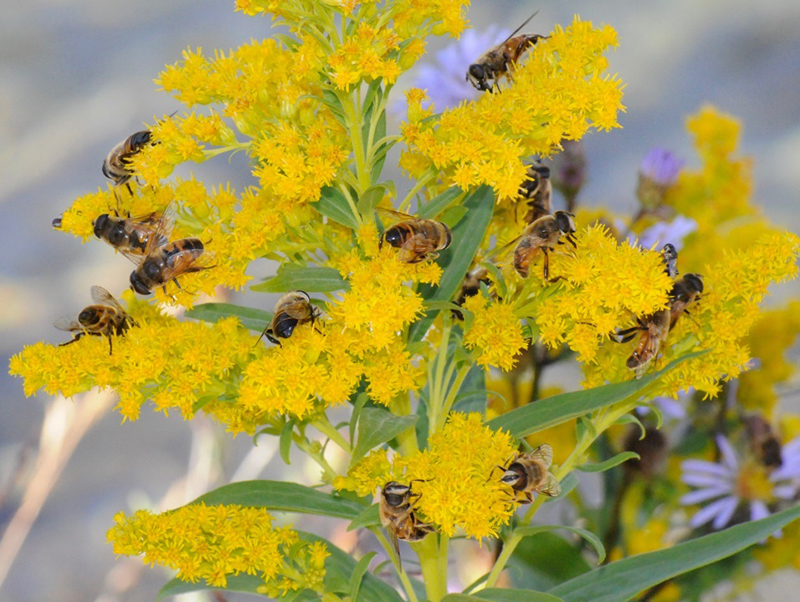
When you see tiny insects hovering effortlessly over late-summer flowers, don’t be so quick to call them bees. Chances are you’ve spotted a hoverfly—one of nature’s unsung pollinators!
With their black-and-yellow stripes, hoverflies mimic bees as a clever defense against predators, but unlike bees, they have only one pair of wings and can’t sting. Their remarkable ability to hover in place and dart from flower to flower makes them efficient pollinators.
One of their favorite late-season nectar sources is goldenrod (Solidago spp.). As summer fades into fall, goldenrod bursts into brilliant golden blooms, providing essential nectar and pollen when many other flowers have finished blooming. This late-season buffet helps fuel hoverflies, native bees, butterflies, and many other beneficial insects preparing for the cooler months ahead.
But hoverflies offer another incredible benefit. Many species lay their eggs near aphid colonies, and once the larvae hatch, they become voracious predators—consuming hundreds of aphids before reaching adulthood. That makes hoverflies valuable allies in both natural areas and home gardens.
Despite its reputation, goldenrod does not cause hay fever. Its pollen is heavy and sticky, relying on insects—not the wind—for pollination. Ragweed, which blooms at the same time and has lightweight windborne pollen, is usually the true culprit behind seasonal allergies.
By planting native goldenrods, you’re doing more than adding vibrant color to your landscape. You’re creating an important late-season habitat that supports pollinators, provides natural pest control, and strengthens the web of life.
🌿 Plant native. Support pollinators. Celebrate the small creatures doing big jobs.
Photo: CAES University of Georgia Extension
#BuzzAndBloom #Hoverfly #Goldenrod #NativePlants #Pollinators #PollinatorGarden #NatureOnTheBrink #HabitatMatters #NativeGardening #GardeningForWildlife