A Fallen Log Is More Than Just Dead Wood—It’s a Thriving Ecosystem!
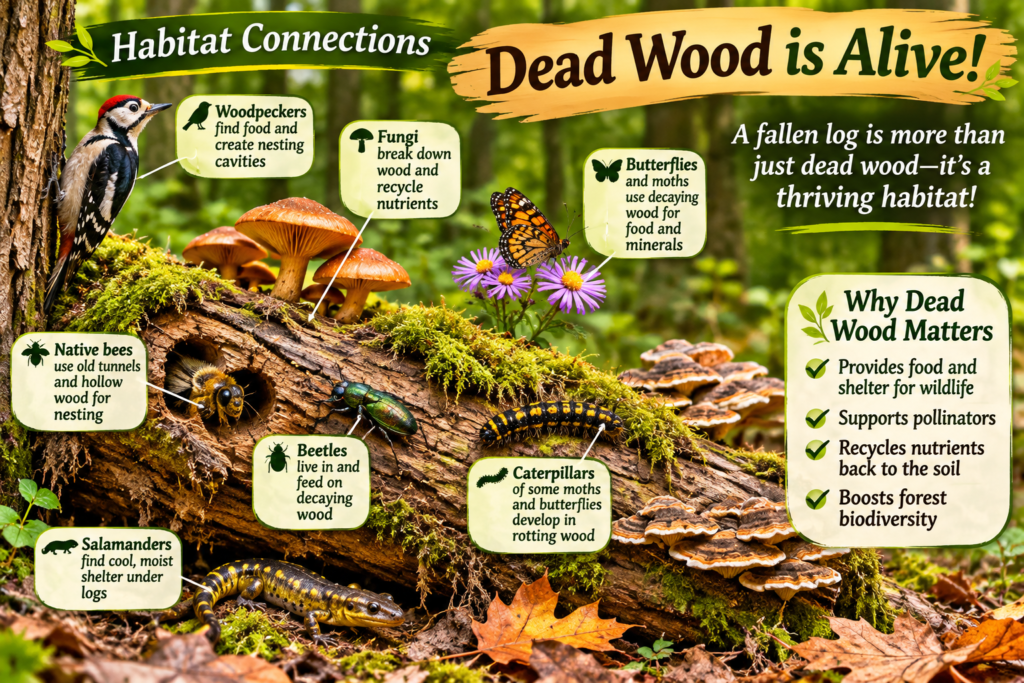
When a tree falls in the forest or a branch breaks off, its story doesn’t end. In fact, a whole new chapter of life begins! What looks like lifeless wood is actually a bustling habitat filled with insects, fungi, microorganisms, and wildlife.
Dead and decaying wood plays an essential role in maintaining healthy forests, supporting biodiversity, and recycling nutrients back into the soil.
🌿 Who’s Living in That Dead Wood?
🍄 Fungi – Nature’s Recyclers!
Mushrooms and other fungi break down wood, releasing nutrients into the soil and helping new plants grow. Without these decomposers, forests would be buried under fallen trees and branches!
🐞 Beetles – The Woodworkers!
Many native beetles, including longhorn beetles and jewel beetles, spend part of their lives inside dead or dying wood. Their larvae create tunnels as they feed, helping break down woody material.
🐝 Native Bees – Finding a Home!
Some solitary bees, including small carpenter bees and mason bees, nest in hollow stems, existing wood cavities, or tunnels left behind by other insects. Dead wood can provide important nesting opportunities!
🦎 Salamanders – Masters of Moisture!
The cool, damp spaces beneath rotting logs provide shelter for salamanders, frogs, millipedes, and other moisture-loving creatures.
🐦 Woodpeckers – Nature’s Carpenters!
Woodpeckers search dead trees for insects and excavate nesting cavities. Later, these cavities may become homes for chickadees, bluebirds, flying squirrels, and other wildlife.
🦋 Butterflies and Moths – Hidden Connections!
Some moth caterpillars develop in decaying wood, while certain butterflies visit damp, decomposing material to obtain moisture and minerals.
🌎 Did You Know?
A standing dead tree is called a snag, and it’s one of the most valuable wildlife structures in a forest! Snags provide nesting cavities, feeding areas, perches, and shelter for numerous species.
Even a small fallen branch can support an entire community of decomposers and other organisms.
🍂 How Can You Help?
✅ Leave a Log: Allow a fallen log to decompose naturally in a quiet corner of your yard.
✅ Create a Brush Pile: Stack fallen branches and twigs to provide shelter for insects, birds, reptiles, and small mammals.
✅ Keep Safe Snags: When possible, leave standing dead trees that pose no danger to people, buildings, or pathways.
✅ Protect the Leaf Litter: Fallen leaves and decaying wood work together to create rich soil and overwintering habitat.
✅ Skip the Chemicals: Avoid unnecessary pesticides that can harm the organisms responsible for decomposition.
🔎 Explore Outdoors Nature Challenge!
Next time you’re walking through the woods, look closely at a fallen log. Can you spot mushrooms, tiny holes made by insects, mosses, or signs of woodpecker activity?
Observe without disturbing the creatures living there. You might be surprised by how much life depends on something that appears to be dead!
💚 Nature on the Brink reminds us that a healthy habitat isn’t always neat and tidy. Sometimes, the most important wildlife homes are the ones we leave behind.
🌳 Dead wood isn’t wasted space. It’s habitat, food, shelter, and the foundation of new life!
💬 Do you leave fallen logs, branches, or snags in your yard to support wildlife? Share your habitat-friendly practices in the comments!
#NatureOnTheBrink #HabitatConnections #DeadWoodIsAlive #DeadWoodHabitat #WildlifeHabitat #Biodiversity #HealthyForests #ForestEcology #Decomposers #NativeBees #Salamanders #Woodpeckers #LeaveTheLeaves #BackyardHabitat #WildlifeConservation #NeighborsForNature