A Dead Tree Is Full of Life—Can You Find Its Hidden Residents?
When you see a standing dead tree in the woods, you might think its story has ended. But look closer! That tree could be one of the busiest wildlife habitats in the forest!
A standing dead tree, called a snag, provides food, shelter, nesting cavities, and resting places for an incredible variety of wildlife. From tiny insects hiding beneath the bark to birds searching for their next meal, a snag is a thriving ecosystem!
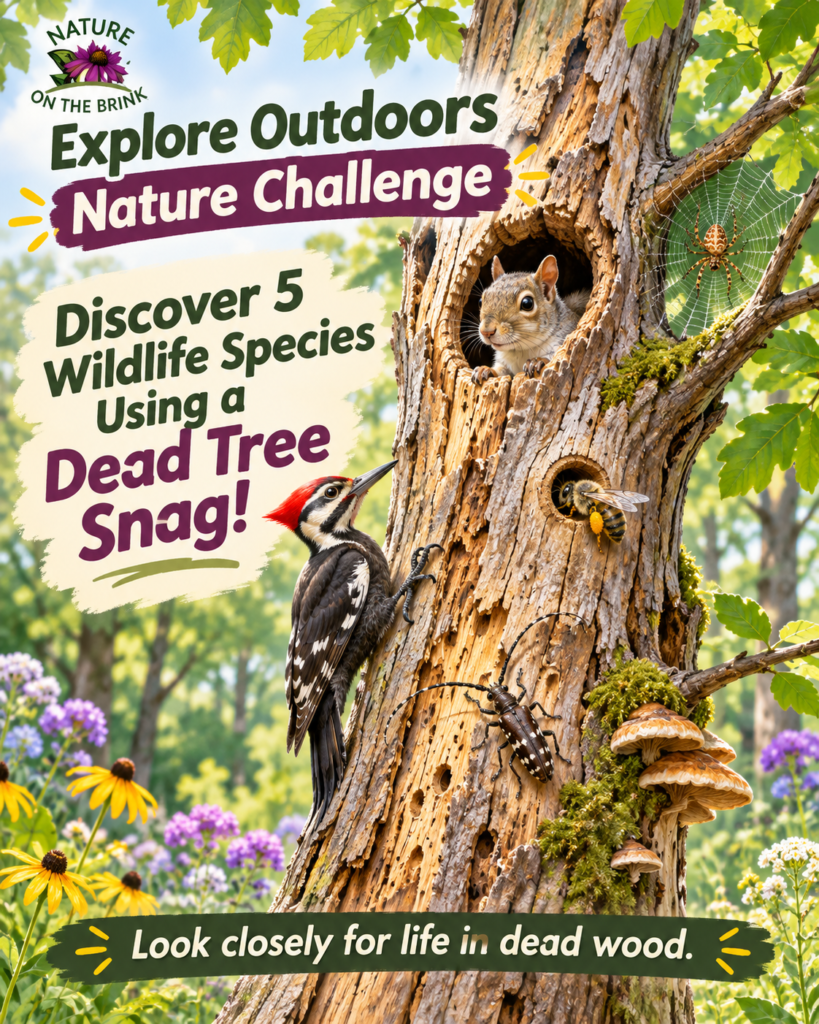
🌿 Your Nature Challenge: Find 5 Signs of Wildlife Using a Snag!
Head outdoors to a local park, nature trail, or wooded backyard and locate a standing dead tree. Observe it carefully and see if you can identify five different insects, animals, or signs of wildlife activity!
🔎 Here Are 5 Wildlife Connections to Look For:
🐦 1. Woodpeckers – Nature’s Carpenters!
Listen for tapping and look for holes in the trunk. Woodpeckers search for insects beneath the bark and excavate nesting cavities that other wildlife may eventually use.
🐞 2. Wood-Boring Beetles – Hidden Recyclers!
Look for tiny round or oval holes in the bark or exposed wood. Many beetle larvae develop inside dead or dying trees, helping break down wood and providing food for birds.
🐝 3. Native Bees – Tiny Tree Tenants!
Some solitary native bees nest in abandoned beetle tunnels and other existing cavities in dead wood. Watch for small bees entering or leaving holes on warm, sunny days.
🐿️ 4. Squirrels – Cozy Cavity Dwellers!
Tree cavities provide shelter and nesting opportunities for squirrels, including flying squirrels. Look for appropriately sized openings or signs of activity around the trunk.
🕷️ 5. Spiders – The Forest’s Pest Controllers!
Examine bark crevices and sheltered spaces for spider webs. Spiders use snags as hunting grounds, helping regulate insect populations.
🌎 Bonus Discoveries!
🍄 Fungi: Look for shelf mushrooms growing on the trunk. These decomposers help recycle nutrients back into the forest ecosystem.
🐦 Chickadees and Nuthatches: Watch for small birds exploring bark crevices or investigating cavities.
🦎 Lizards: On warmer days, some lizards may use standing dead wood for basking, hunting, or shelter.
🦋 Moths: Certain moth species spend part of their life cycle in decaying wood.
🌳 Did You Know?
Woodpeckers are considered ecosystem engineers because the cavities they excavate can later provide homes for birds, mammals, and other wildlife that cannot create their own nesting holes.
One dead tree can support wildlife for years as it gradually decomposes!
📸 Become a Backyard Citizen Scientist!
Bring a notebook, binoculars, or camera and record:
✅ Where you found the snag.
✅ Five wildlife species or signs of activity.
✅ How each animal appears to be using the tree.
✅ Any interesting holes, tunnels, webs, or other evidence.
✅ Photos of your discoveries, if possible!
🌿 Safety First!
Observe snags from a safe distance because dead trees and branches can fall unexpectedly. Never climb, shake, or pull bark from a snag, and avoid disturbing nesting wildlife.
💚 Nature on the Brink reminds us that wildlife habitat isn’t always green and growing. Sometimes, the most valuable tree in the forest is one that has stopped growing but continues giving life to others!
🌳 A Dead Tree Isn’t Empty—It’s an Apartment Building for Wildlife!
💬 Can you discover five wildlife connections on a single snag? Share your observations or photos in the comments! We’d love to see what you find!
#NatureOnTheBrink #ExploreOutdoorsNatureChallenge #DeadWoodIsAlive #WildlifeSnags #NatureExploration #WildlifeHabitat #ForestBiodiversity #CitizenScience #NatureEducation #Woodpeckers #NativeBees #BackyardWildlife #HabitatConnections #GetOutside #DiscoverNature